

Why are the phrases ‘globalise the intifada’ and ‘from the river to the sea’ so contested?
- Written by: Martin Kear, Sessional Lecturer, Department of Government and International Relations, University of Sydney
In the aftermath of the Bondi terrorist attack at a Hanukkah celebration that killed 15 people, the New South Wales government is moving toward banning phrases it argues incite hatred. The Queensland government has said it would do the same.
Chief among these are “globalise the intifada” and “from the river to the sea”.
The meaning and intent of both of these phrases are hotly contested between the Jewish and Muslim communities and their supporters.
The main reason they are so contentious is because they form part of the broader debate over the legitimacy of Israel and Palestine, and whether they can or should exist simultaneously in a two-state solution.
On one side, proponents of these phrases say they are expressions of Palestinian nationalism and their right to equality, freedom and dignity. They indicate support for Palestinians’ right to self-determination and their right to resist Israel’s nearly 60-year occupation of the West Bank, Gaza Strip and East Jerusalem, known as the Occupied Palestinian Territories, which the International Court of Justice has ruled is illegal.
On the other side, those arguing against these phrases say they are antisemitic because they incite violence towards Israel and Jewish people more broadly, and are catchcries for the destruction of Israel.
Given these binary positions and the legislative moves towards banning them, it is important to understand the history and nuances of the phrases, separate from the emotive rhetoric and, at times, disinformation surrounding this debate.
Globalise the intifada
One of the first times this phrase was reportedly used was at an anti-war protest in Washington in 2002.
It has become much more commonplace after Israel’s devastating response to Hamas’ October 2023 terrorist attacks. The war has caused the deaths of more than 75,000 Palestinians in Gaza and is being investigated by the International Court of Justice and the International Criminal Court for alleged war crimes, crimes against humanity and genocide.
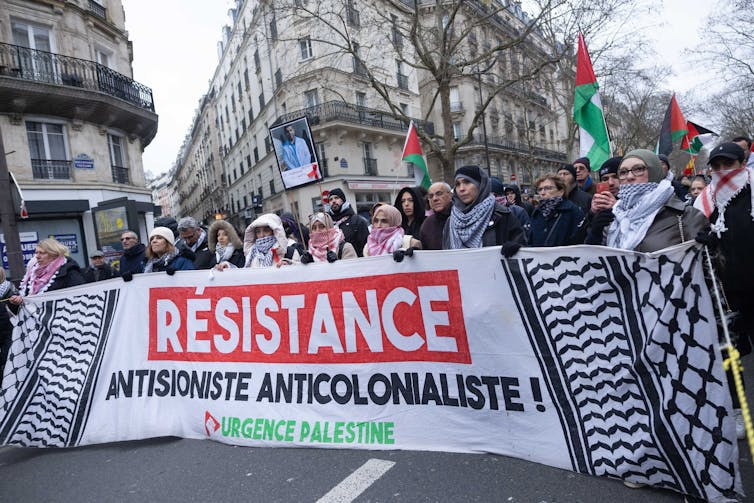
According to the American Jewish Committee, one of the oldest Jewish advocacy groups in the United States:
The phrase is often understood by those who are saying and hearing it as encouraging violence against Israel, Jews and institutions supporting Israel. While the intent of the person saying this phrase may be different, the impact on the Jewish community remains the same.
Key to understanding this phrase is the term “intifada”. In Arabic, the word means “uprising” or “shaking off”. There have been two intifadas against Israel’s occupation of the Palestinian territories, from 1987–93 and 2000–05.
Both intifadas were spontaneous eruptions of discontent and revolt by Palestinians against the violence, harassment, and social, political and economic deprivation they experienced in the Occupied Palestinian Territories.
Additionally, one of the primary motivations of the First Intifada was Palestinian frustration at the inability of the Palestine Liberation Organisation (PLO) to advance the cause of Palestinian statehood.
Notably, the violence of the First Intifada was confined to the Occupied Palestinian Territories and consisted mainly of stone throwing, tire burning, demonstrations and civil disobedience. According to the Jewish human rights group B'Tselem, around 1,400 Palestinians and 270 Israelis were killed.
The Second Intifada has more relevance to how the global Jewish community perceives the term “intifada” today. This is because the Palestinian groups Hamas, Fatah and Palestinian Islamic Jihad launched suicide attacks that deliberately targeted civilians in Israel. According to B'Tselem, more than 680 Israeli civilians and 3,300 Palestinians were killed during the violence.
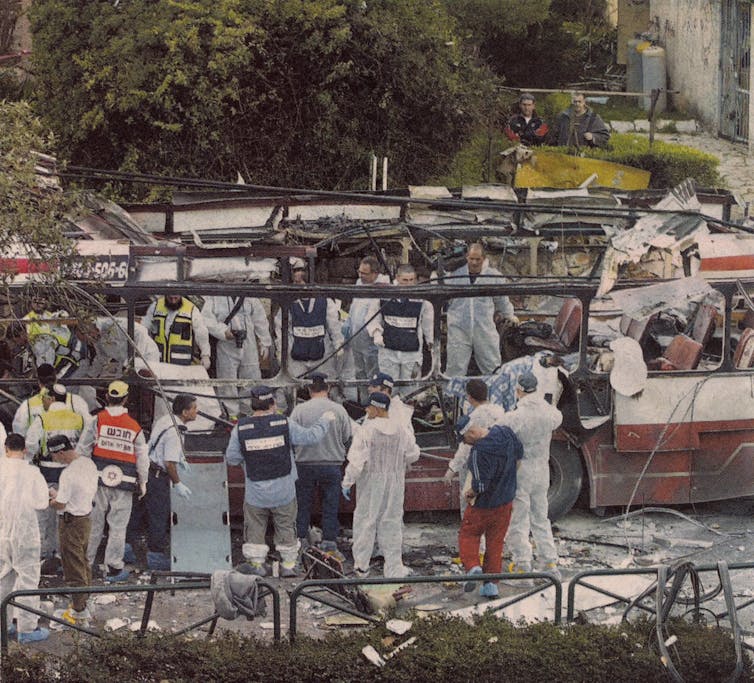
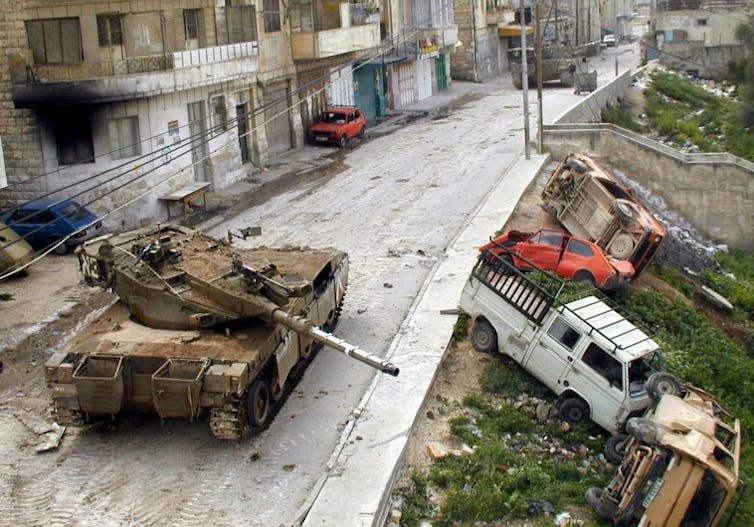
These attacks caused immense fear and feelings of vulnerability among Israelis. Jews were deliberately targeted – a hallmark of antisemitism.
Indeed, the very reason Israel exists is because of the institutionalised antisemitism and political persecution of Jews in Europe, which culminated in the Holocaust. This is the reason Theodor Herzl established the Zionist movement – the realisation that the only way European Jews could be free from this rampant violence and antisemitism was to have a state where they would form the majority. To Jews, this makes Israel more than simply a state – it is an ideal, a sanctuary – a place where they can feel safe.
The memory of the attacks during the Second Intifada – in concert with this long history of persecution and the Holocaust – drives the opposition to this phrase among many Jewish people.
However, Palestinian supporters argue that both intifadas were centred on expressions of Palestinian nationalism, their demands for statehood and resistance against Israel’s occupation.
There is a growing fear among Palestinians that the increasing permanence of Israel’s occupation and creeping annexation of the territories destroys any hope of achieving a state – a place where they can be safe from Israeli violence and persecution.
Therefore, Palestinian activists argue the phrase has legitimacy. According to Ben Jamal, leader of the UK’s Palestine Solidarity Campaign, the phrase is used as a “call for worldwide support for an end to the oppression of the Palestinian people through all means of legitimate resistance”.
He added:
That’s not a call for violence against civilians or Jewish people – and to say that is actually, in my view, a form of anti-Palestinian racism.
From the river to the sea
A similar debate rages over the meaning of the phrase “from the river to the sea”. Again, this taps into the broader debate concerning Palestinian nationalism and advocacy for a Palestinian state, with the full phrase being “from the river to the sea, Palestine will be free”.
The geography refers to the land between the Jordan River and the Mediterranean Sea where Israel and the Occupied Palestinian Territories now sit.
Many Israelis and Jews around the world believe the phrase is antisemitic because of the perception that the establishment of a Palestinian state extending across this entire territory would signal the destruction of Israel. This is not just the state, but more importantly, the ideal.
The phrase was first used around 1964 by the newly formed Palestine Liberation Organisation to advocate for a unitary Palestinian state along the borders of “Mandatory Palestine” – the administrative territory ruled by the British from 1920–48 – that would include Palestinians, Jews and Christians. This would mean the elimination of the state of Israel, but not the Jewish people.
But it’s necessary to unpack how the meaning has changed over time. A key question here: what is the geography of a future Palestinian state?
The PLO accepted the two-state solution in 1988, meaning it acknowledged that any future Palestine would consist only of the Occupied Palestinian Territories, meaning the West Bank, Gaza and East Jerusalem.
Read more: Explainer: what is the two-state solution to the Israeli-Palestinian conflict?
Hamas’ position on the phrase has also evolved over time. While its 1988 charter never mentioned the phrase specifically, it did state “[Hamas] will strive to raise the banner of Allah over every inch of Palestine.”
However, in its 2017 Declaration of Principles, Hamas officially tolerates the idea of a two-state solution. It states:
Hamas rejects any alternative to the full and complete liberation of Palestine, from the river to the sea. However, without compromising its rejection of the Zionist entity and without relinquishing any Palestinian rights, Hamas considers the establishment of a fully sovereign and independent Palestinian state, with Jerusalem as its capital along the lines of the 4th of June 1967 to be a formula of national consensus.
This refers to the ceasefire lines between Israel and the Palestinian territories before the Six-Day War in 1967, when Israel captured and occupied the Palestinian Territories.
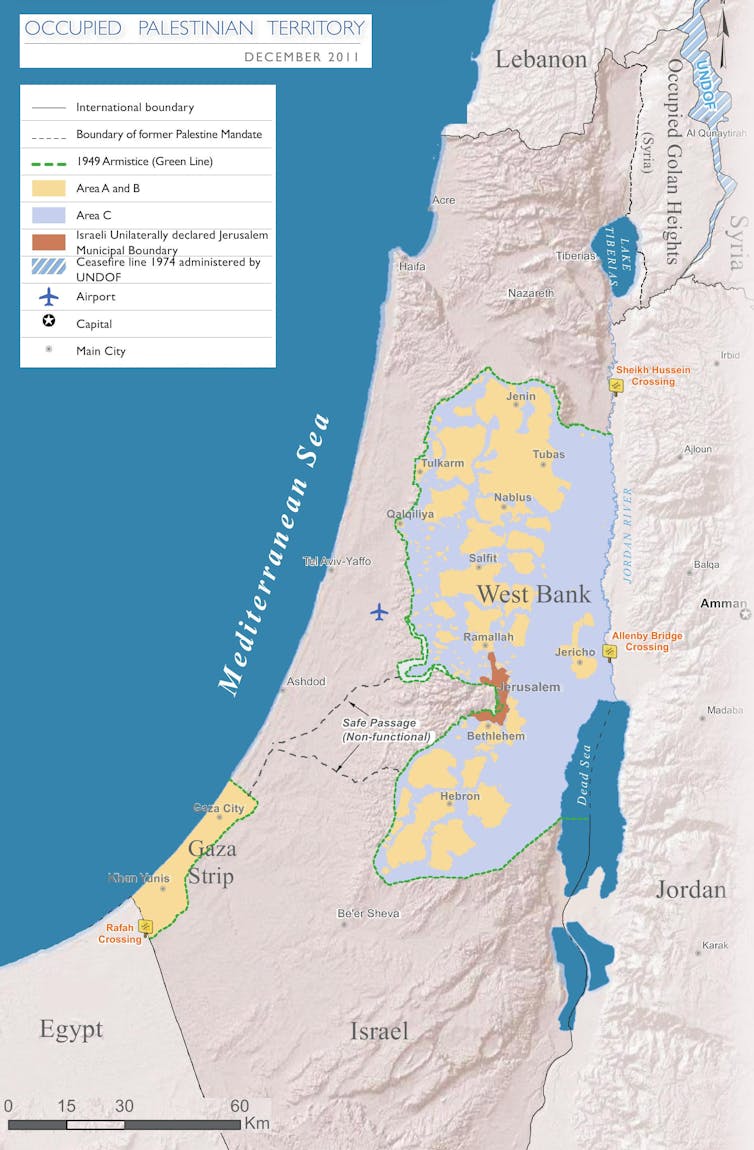
Therefore, Hamas’ position is consistent with United Nations Security Council Resolution 242 (1967) that is used by the international community as the basis for the two-state solution.
The 2017 declaration also highlights the compromise position within Hamas between those who believe Palestine should exist “from the river to the sea” and those willing to tolerate a Palestine only in the Occupied Territories. Hamas now officially treats the former as a guiding principle, not an organisational objective.
As former Hamas Chairman Khaled Meshaal explained in 2017:
Even though we accept and welcome that eventuality of [the two-state solution], this does not mean we would have to recognise Israel or surrender our principle that all of Palestine belongs to the Palestinian people.
Given this, there is an argument that the term’s use is not a call for the destruction of the Israeli state and the expulsion of Jews, but a demand that Israel dismantle its illegal occupation and allow Palestinians the freedom to establish their own state.
Adding to the phrase’s controversy is the fact that Israel’s Likud party, led by Prime Minister Benjamin Netanyahu, used a variation of it in its 1977 party platform:
Between the Sea and the Jordan there will only be Israeli sovereignty.
Though Likud has dropped the phrase from its current platform, it continues to vehemently oppose any Palestinian state.
Read more: Geography and politics stand in the way of an independent Palestinian state
Charting a way forward
This brings us back to the central questions at the heart of the debate over these phrases.
Does support for the Palestinian people and Palestinian statehood, as expressed in these phrases, equate to the threat of violence against Israel as a state and an ideal, and against the Jewish people?
Or are they part of legitimate political debate about Palestinian self-determination?
As Australians, we face a stark choice about whether to criminalise these phrases. Favouring one side will only inflame tensions with the other. It will only entrench – not resolve – societal discord.
Charting a middle course based on democratic ideals will be difficult. Finding a way forward will require a level of political and moral courage from our leaders that has been sadly lacking since the current round of violence began more than two years ago.
Authors: Martin Kear, Sessional Lecturer, Department of Government and International Relations, University of Sydney


 Daily Bulletin


