

Read The Times Australia

Daily Bulletin

From grasslands to killing fields: why trees are bad news for one of Australia’s most stunning birds

  • Written by: Gabriel Crowley, Adjunct Associate Professor in Geography, University of Adelaide
From grasslands to killing fields: why trees are bad news for one of Australia’s most stunning birds

Picture this. A small, rainbow-coloured chick emerges from its nest for the first time. It stretches its wings and prepares to take flight. But before the fledgling’s life in the wild has begun, a sharp-beaked predator swoops in, leaving nothing but a tiny skeleton.

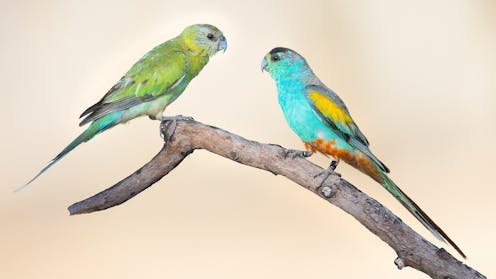
This is the sad scenario playing out on Cape York Peninsula, new analysis shows. There, trees are invading the open, grassy habitat of the endangered golden-shouldered parrot (Psephotellus chrysopterygius). The trees give cover to predators – meaning they can lie in wait, before striking the adult birds and their young.

The golden-shouldered parrot is endangered, now found in just 5% of its original range. The new findings suggest more work is needed to restore grassland habitat to its former open state, to ensure the parrots’ survival.

A vanishing species

The initial decline of the golden-shouldered parrot was likely caused by a loss of food plants and degradation of the termite mounds in which it nests. Birds that remained in two small areas in central Cape York Peninsula faced other issues.

In the 1990s, researchers began studying the parrot on Artemis Station, to better understand why numbers were declining. A new suspect was identified: native woody plants, such as the broad-leaved tea-tree (Melaleuca viridiflora), which had crept into the birds’ grassy habitat.

The change was largely due to overgrazing, which reduced fuel loads and led to fewer fires. This allowed the woodland trees to overtake the grasslands. But exactly how were these trees affecting the survival of the golden-shouldered parrot? New research by my colleagues and I set out to answer this question.

A three-part image showing an open grassy area on the left and wooded areas in the centre and right
The above image shows the three phases of woodland invading the parrots’ habitat. Left, a few scattered trees establish around the nesting mound. Centre, tea trees emerge from the grass layer. Right, dense thickets of tea trees shade out the termite mounds. Gabriel Crowley

Counting eggs, nest by nest

We monitored 108 termite-mound nests over three years, tracking the success of 555 eggs. We visited each nest every few days to record whether chicks successfully fledged (grew strong enough to leave the nest) or died.

We also counted the number of trees around the nests, and recorded signs of interference from predators.

So what did we find? The proportion of nests that produced a fledgling from every egg decreased in proportion to the number of trees around the nest. The percentage of eggs, chicks and adults that were killed or disappeared from a nest also increased in line with tree numbers.

That’s because the trees bring different predators – and places for them to hide.

We suspected reptiles were the main predators. This was due to scratches on the nests and disappearance of eggs without any other signs of damage. While the exact species of reptile predator was hard to pinpoint, we know tree snake numbers increase as woodlands encroach.

However, of all predators, we found butcherbird numbers increased most strongly as trees crept in. Butcherbirds tear prey apart with their strong, hooked beaks. Trees close to the nests give butcherbirds cover, enabling them to wait for adults or their young to emerge.

Tragically, we found skulls of chicks pierced by the butcherbirds’ sharp bills. In one case, the shredded flesh of a bird was wedged atop a termite mound.

A black and white bird on a person's arm
Butcherbirds have strong, hooked beaks, which they use to tear apart prey. Conservation Partners

Parrots successfully fledged from just over half of the 555 eggs we monitored.

In the most dense woodlands, the number of birds that successfully fledged was just one-third of the rate needed to maintain the golden-shouldered parrot’s population.

Adult birds were lost from one-third of the nests we studied. This is especially troubling. Modelling from similar tropical birds shows this rate of adult deaths can push a species towards extinction.

two bright parrots on a termite mound
Unusually, golden-shouldered parrots nest in termite mounds. Peter Valentine

Restoring the parrots’ grassland home

The world’s grassland habitats are under threat. This has devastating consequences for species that depend on them – including the golden-shouldered parrot.

Our findings show Cape York’s grasslands should be maintained and restored to ensure the survival of the golden-shouldered parrot. Much work is needed to ensure the species avoids the fate of its closest relative, the paradise parrot, which is presumed extinct.

Work is already underway. Golden-shouldered parrot habitat in national parks and on Indigenous-owned land has been destocked, and more traditional Indigenous fire regimes reinstated. This will help maintain open grasslands and reverse early woodland encroachment. Such work is also being undertaken at the study site on Artemis Station.

Where woody plant invasion is more advanced, more intensive methods have been deployed. At the study site, this includes using chainsaws and brush-cutters to clear trees, before the stump is poisoned.

aerial view of workers cutting down trees
Where woody vegetation is well established, trees must be felled to help restore grassland habitat. Conservation Partners

Other measures include installing electric fences to keep out reptiles, reseeding grasslands with food plants and providing feeding stations in seasons when food is scarce.

Land managers across Cape York have also been provided guidelines for managing woodland encroachment.

These efforts must be sustained in the long-term, to ensure the golden-shouldered parrot can return to its former range.

Authors: Gabriel Crowley, Adjunct Associate Professor in Geography, University of Adelaide

Read more https://theconversation.com/from-grasslands-to-killing-fields-why-trees-are-bad-news-for-one-of-australias-most-stunning-birds-259898

Business News

Designing Eco-Friendly Custom Water Bottles for Your Next Event

The Evolution of Sustainable Event Merchandise Event planning has undergone a massive transformation over the last decade. Gone are the days when organizers could hand out cheap, single use plastic...

Daily Bulletin - avatar Daily Bulletin

Why Choosing a Professional Florist Melbourne Makes Flower Delivery Impactful

Flowers have a great power to speak when humans cannot express their feelings with right words. Flowers are the best gifts when you are celebrating a birthday or welcoming a newborn child into your fa...

Daily Bulletin - avatar Daily Bulletin

The Business Case for Choosing Australian Fabricators Over Imported Alternatives

For a long time, you might have defaulted to overseas suppliers when sourcing fabricated metal components for a project. The unit price was lower on paper, and the maths seemed straightforward. That...

Daily Bulletin - avatar Daily Bulletin

Australian organisations are relying on business continuity plans built for a far more predictable world

Tariff escalations, supply chain fragility, geopolitical events, and the ongoing threat of cyber disruption have reshaped the risk environment facing Australian organisations. The problem is that ma...

Daily Bulletin - avatar Daily Bulletin

How to Rent a Car for Uber in Melbourne: What Every New Driver Needs to Know

Starting out as an Uber driver in Melbourne is not as complicated as it sounds but getting the vehicle right is where most new drivers get stuck. Uber has strict requirements around vehicle age, condi...

Daily Bulletin - avatar Daily Bulletin

When Should You Speak to a Lawyer About a Legal Issue?

Legal issues can begin with a simple question, then become harder to manage once formal steps are involved. Many people wait until a matter feels urgent before seeking guidance, even though earlier ...

Daily Bulletin - avatar Daily Bulletin

The strategic rise of Bali as Australia’s next essential healthcare support hub

As Australian healthcare providers grapple with unprecedented operational bottlenecks, a new nearshore model is quietly transforming patient care delivery. Forward-thinking organisations,  including...

Daily Bulletin - avatar Daily Bulletin

Cost Savings and Benefits of Using Used Pallets in Logistics

In today’s competitive logistics and supply chain industry, businesses are constantly looking for ways to reduce operational costs without compromising efficiency and reliability. One of the most prac...

Daily Bulletin - avatar Daily Bulletin

How Fulfilment Services in Australia Help Businesses Scale Efficiently

The growth of e-commerce and modern retail has transformed customer expectations. Consumers now expect fast shipping, accurate order processing, and seamless delivery experiences regardless of where...

Daily Bulletin - avatar Daily Bulletin

The Daily Magazine

Why Businesses Are Choosing Virtual Reception Services

In today’s fast-paced digital world, businesses are constantly evolving to meet the needs of their...

Why Concrete Pools Offer Endless Design Possibilities

Imagine stepping into your backyard and being greeted by a stunning pool that reflects your person...

How Legal Advice Can Help with Driving Offences

Driving is a part of everyday life for many people. It allows us the freedom to travel, commute, a...

How Experienced Lawyers Support Criminal Defence

Facing criminal charges can be one of the most daunting experiences in a person's life. The stakes...

How media and Digital Marketing agencies Help Brands Stand Out

In today’s hyper-connected world, standing out is more challenging than ever. Brands are competing...

How to Choose the Perfect Honeymoon Destination

Your wedding day is just the beginning of an incredible journey together. After saying "I do," it’...

Walking Shoes vs Running Shoes: Which Are Better for Daily Walking?

Running shoes have become the default athletic footwear for a lot of people who rarely run. That ...

What Happens to Your Rubbish After It Leaves the Kerb

Most of us don’t think much about rubbish once the bin lid closes. The truck arrives, the bins are e...

Thermoplastic vs. Paint: The True Long-Term Cost Comparison

Line marking looks like a simple line item on a school maintenance budget, until the true cost of ...