

What would change your mind about climate change? We asked 5,000 Australians – here’s what they told us
- Written by: Kelly Kirkland, Research Fellow in Psychology, The University of Queensland
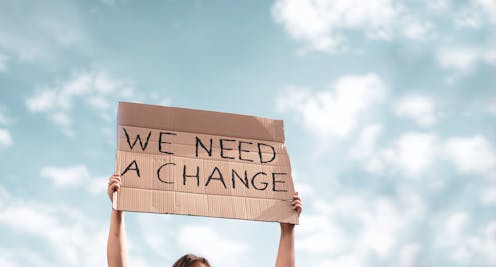
Australia just sweltered through one of its hottest summers on record, and heat has pushed well into autumn. Once-in-a-generation floods are now striking with alarming regularity. As disasters escalate, insurers are warning some properties may soon be uninsurable. Yet, despite these escalating disasters — and a federal election looming — conversation around climate change remains deeply polarising.
But are people’s minds really made up? Or are they still open to change?
In research out today, we asked more than 5,000 Australians a simple question: what would change your mind about climate change? Their answers reveal both a warning and an opportunity.

On climate, Australians fall into six groups
Almost two thirds (64%) of Australians are concerned about the impact of climate change, according to a recent survey.
But drill deeper, and we quickly find Australians hold quite different views on climate. In fact, research in 2022 showed Australians can be sorted into six distinct groups based on how concerned and engaged they are with the issue.
At one end was the Alarmed group – highly concerned people who are convinced of the science, and already taking action (25% of Australians). At the other end was the Dismissive group (7%) – strongly sceptical people who often view climate change as exaggerated or even a hoax. In between were the Concerned, Cautious, Disengaged and Doubtful – groups who varied in belief, awareness and willingness to engage.
In our nationally representative survey, we asked every participant what might change their opinion about climate change? We then looked at how the answers differed between the six groups.
For those already convinced climate change is real and human-caused, we wanted to know what might make them doubt it. For sceptical participants, we wanted to know what might persuade them otherwise. In short, we weren’t testing who was “right” or “wrong” – we were mapping how flexible their opinions were.
Our views aren’t set in stone
People at both extremes – Alarmed and Dismissive – were the most likely to say “nothing” would change their minds. Nearly half the Dismissive respondents flat-out rejected the premise. But these two groups together make up just one in three Australians.
What about everyone in the middle ground? The rest – the Concerned (28%), Cautious (23%), Disengaged (3%) and Doubtful (14%) – showed much more openness. They matter most, because they’re the majority — and they’re still listening.

What information would change minds?
What would it take for people to be convinced? We identified four major themes: evidence and information, trusted sources, action being undertaken, and nothing.
The most common response was a desire for better evidence and information. But not just any facts would do. Participants said they wanted clear, plain-English explanations rather than jargon. They wanted statistics they could trust, and science that didn’t feel politicised or agenda-driven. Some said they’d be more convinced if they saw the impacts with their own eyes.
Crucially, many in the Doubtful and Cautious groups didn’t outright reject climate change – they just didn’t feel confident enough to judge the evidence.
The trust gap
Many respondents didn’t know who to believe on climate change. Scientists and independent experts were the most commonly mentioned trusted sources – but trust in these sources wasn’t universal.
Some Australians, especially in the more sceptical segments, expressed deep distrust toward the media, governments and the scientific community. Others said they’d be more receptive if information came from unbiased or apolitical sources. For some respondents, family, friends and everyday people were seen as more credible than institutions.
In an age of widespread misinformation, this matters. If we want to build support for climate action, we need the right messengers as much as the right message.
What about action?
Many respondents said their views could shift if they saw real, meaningful action – especially from governments and big business. Some wanted proof that Australia is taking climate change seriously. Others said action would offer hope or reduce their anxiety.
Even some sceptical respondents said coordinated, global action might persuade them – though they were often cynical about Australia’s impact compared to larger emitters. Others called for a more respectful, depoliticised conversation around climate.
In other words, for many Australians, it’s not just what evidence and information is presented about climate change. It’s also how it’s said, who says it, and why it’s being said.
Of course, the responses we gathered reflect what people say would change their minds. That’s not necessarily what would actually change their minds.
 What does concrete evidence of climate action look like?
Piyaset/Shutterstock
What does concrete evidence of climate action look like?
Piyaset/Shutterstock
Why does this matter?
As climate change intensifies, so does misinformation — especially online, where artificial intelligence and social media accelerate its spread.
Misinformation has a corrosive effect. Spreading doubt, lies and uncertainty can erode public support for climate action.
If we don’t understand what Australians actually need to hear about climate change – and who they need to hear it from – we risk losing ground to confusion and doubt.
After years of growth from 2012 to 2019, Australian backing for climate action is fluctuating and even dropping, according to Lowy Institute polling.
Climate change may not be the headline issue in this federal election campaign. But it’s on the ballot nonetheless, embedded in debates over how to power Australia, jobs and the cost of living. If we want public support for meaningful climate action, we can’t just shout louder. We have to speak smarter.
Authors: Kelly Kirkland, Research Fellow in Psychology, The University of Queensland


 Daily Bulletin


