

Read The Times Australia

Daily Bulletin

There’s an outbreak of melioidosis in north Queensland. Here’s what to know about this deadly ‘mud bug’

  • Written by: Thomas Jeffries, Senior Lecturer in Microbiology, Western Sydney University
There’s an outbreak of melioidosis in north Queensland. Here’s what to know about this deadly ‘mud bug’

Seven people have now died from melioidosis in flood-ravaged north Queensland this year.

Dozens of cases have been reported in the state in recent weeks, which experts have described as unprecedented.

So what is melioidosis, and why are we seeing a spike in cases now?

How do people get infected?

Melioidosis is caused by the bacterium Burkholderia pseudomallei, a bug which normally lives harmlessly in soil and freshwater. But it can be dangerous when it infects humans or animals.

B. pseudomallei – sometimes called the “mud bug” – enters the body through cuts or scratches. It can also be breathed in and enter the lungs via small airborne water droplets, or by drinking affected water.

Symptoms usually develop within one to four weeks after a person has been infected. The disease can cause either local infections, such as chronic skin ulcers, or, more commonly, a lung infection which can lead to pneumonia.

A petri dish with the bacteria _B. pseudomallei_.
Melioidosis is caused by the bacteria B. pseudomallei. Reddress/Shutterstock

Symptoms of the infection include fever, headache, trouble breathing, chest and muscle pain, confusion and seizures. In rare cases the disease can enter the bloodstream and cause septicaemia.

Treatment involves receiving intravenous antibiotics in hospital for several weeks followed by up to six months of oral antibiotics.

How common is it?

Diagnosis is usually conducted using a specialist bacterial culture. This is where a sample isolated from the patient is grown in a petri dish to identify the bacteria, which can take several days.

Globally, around 165,000 cases of melioidosis are reported annually, and 89,000 deaths. The majority of cases occur in southeast Asia, particularly Thailand.

Because similar symptoms can be caused by so many other diseases, melioidosis is commonly misidentified, meaning reported case numbers are probably far lower than the actual number of infections.

Also, cases often occur in remote communities and resource-poor settings, which can mean they’re less likely to be diagnosed.

The disease is thought to be endemic to northern Australia. It usually infects about 0.6 per 100,000 people annually in Queensland, which would be equivalent to around 30 people.

In the Northern Territory, around 17 people per 100,000 are infected annually, which would be equivalent to about 42 cases. However, this data is several years old.

In Australia, melioidosis is often treated before fatalities occur. The mortality rate has been estimated at less than 10%.

More people die from the disease in lower-resource countries with poorer diagnostic capabilities and hospital facilities. In Thailand the mortality rate is estimated to be around 40%.

Who is at risk?

Anyone can get melioidosis, but certain people are at higher risk. This includes people with diabetes, liver and kidney disease, cancer, or other conditions which might compromise the patient’s immune system.

In Australia, the disease is also significantly more common in First Nations people than among non-Indigenous Australians.

Once infected, people who are Indigenous, older or have chronic health conditions are at higher risk of poorer outcomes.

In the current outbreak in Queensland, at least three of the victims so far have been elderly.

A birds-eye view of flooding in Townsville.
Parts of north Queensland, including Townsville, have recently experienced flooding. Jamie Hervey/AAP

What’s causing the current outbreak?

Recent cases in north Queensland have been identified mainly around Townsville and Cairns.

Cairns and Hinterland Hospital and Health Service has recorded at least 41 cases since January 1, while more than 20 cases have been reported in Townsville in February.

This is most likely related to increased rainfall and flooding in and around these areas.

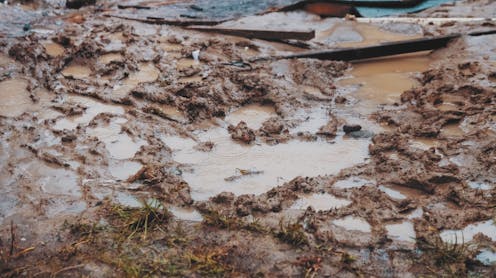
B. pseudomallei lives in soil and mud, and comes to the surface during periods of high rainfall. So recent heavy rain and flooding in north Queensland has likely increased the risk of melioidosis.

In the Northern Territory, 28 cases have been reported since the start of the rainy season last October. However this is lower than recent seasons.

How can you protect yourself?

If you’re in an affected region, you can protect yourself by limiting exposure to mud and water, and using appropriate personal protective equipment such as gloves and boots if spending time in muddy areas. Cover any open wounds and wear a respirator if you’re working closely with water.

Monitor for symptoms and see a doctor if you feel unwell.

Several vaccines are in development for melioidosis, and experts have recently called for it to be recognised as a neglected tropical disease by the World Health Organization.

Particularly seeing as increasing extreme weather events due to climate change may make melioidosis more common, hopefully we’ll see an increase in research into and awareness of this disease in the years ahead.

Authors: Thomas Jeffries, Senior Lecturer in Microbiology, Western Sydney University

Read more https://theconversation.com/theres-an-outbreak-of-melioidosis-in-north-queensland-heres-what-to-know-about-this-deadly-mud-bug-250392

Business News

Designing Eco-Friendly Custom Water Bottles for Your Next Event

The Evolution of Sustainable Event Merchandise Event planning has undergone a massive transformation over the last decade. Gone are the days when organizers could hand out cheap, single use plastic...

Daily Bulletin - avatar Daily Bulletin

Why Choosing a Professional Florist Melbourne Makes Flower Delivery Impactful

Flowers have a great power to speak when humans cannot express their feelings with right words. Flowers are the best gifts when you are celebrating a birthday or welcoming a newborn child into your fa...

Daily Bulletin - avatar Daily Bulletin

The Business Case for Choosing Australian Fabricators Over Imported Alternatives

For a long time, you might have defaulted to overseas suppliers when sourcing fabricated metal components for a project. The unit price was lower on paper, and the maths seemed straightforward. That...

Daily Bulletin - avatar Daily Bulletin

Australian organisations are relying on business continuity plans built for a far more predictable world

Tariff escalations, supply chain fragility, geopolitical events, and the ongoing threat of cyber disruption have reshaped the risk environment facing Australian organisations. The problem is that ma...

Daily Bulletin - avatar Daily Bulletin

How to Rent a Car for Uber in Melbourne: What Every New Driver Needs to Know

Starting out as an Uber driver in Melbourne is not as complicated as it sounds but getting the vehicle right is where most new drivers get stuck. Uber has strict requirements around vehicle age, condi...

Daily Bulletin - avatar Daily Bulletin

When Should You Speak to a Lawyer About a Legal Issue?

Legal issues can begin with a simple question, then become harder to manage once formal steps are involved. Many people wait until a matter feels urgent before seeking guidance, even though earlier ...

Daily Bulletin - avatar Daily Bulletin

The strategic rise of Bali as Australia’s next essential healthcare support hub

As Australian healthcare providers grapple with unprecedented operational bottlenecks, a new nearshore model is quietly transforming patient care delivery. Forward-thinking organisations,  including...

Daily Bulletin - avatar Daily Bulletin

Cost Savings and Benefits of Using Used Pallets in Logistics

In today’s competitive logistics and supply chain industry, businesses are constantly looking for ways to reduce operational costs without compromising efficiency and reliability. One of the most prac...

Daily Bulletin - avatar Daily Bulletin

How Fulfilment Services in Australia Help Businesses Scale Efficiently

The growth of e-commerce and modern retail has transformed customer expectations. Consumers now expect fast shipping, accurate order processing, and seamless delivery experiences regardless of where...

Daily Bulletin - avatar Daily Bulletin

The Daily Magazine

Why a Cordless Rebar Tying Machine Is a Smart Investment for Australian Construction Projects

Tying reinforcing steel by hand means spending hours bent over while making the same twisting moti...

How to Get a Document Notarised in Sydney: What to Bring, What It Costs and How Long It Takes

If an overseas bank, embassy, university, employer or land registry has asked you for a notarised ...

The 2026 Used-Car Market

For a few strange years, the used-car market rewrote its own rules. Supply shortages sent second-h...

Why CCTV Alone Is Not Enough for Modern Business Security

Cameras are usually the initial step that companies take to strengthen their physical security. If...

Why Every Workplace Should Take Emergency Preparedness Seriously

Emergency planning is one of those things many workplaces know they should think about, but it oft...

Why Clearer Communication Still Matters in a Digital-First Business

It’s never been easier for businesses to communicate, but that doesn’t mean they’re always communica...

What Happens After You Lodge a BYDA Enquiry? The Step Most Excavation Projects Miss

Every excavation project in Australia — from a backyard deck footing to a multi-storey commercial bu...

How to Choose the Right Dentist on the Gold Coast

Finding a dentist you trust is one of those decisions that quietly affects your health for years, ye...

The Hidden Engineering Problem Inside Australia's Older Housing Stock

A significant share of Australian homes were built for a way of living that no longer exists. Houses...