

‘Survival sex’, ‘mob justice’ and more: the first independent study of abuse in the Australian Defence Force is damning
- Written by: Mia Martin Hobbs, Research Fellow, Deakin University
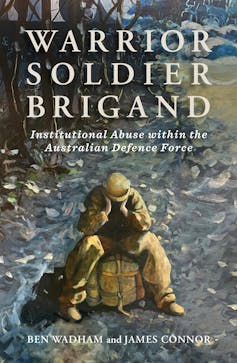
“Participants expected the costs of war, but they were not prepared for the costs of service,” explain Ben Wadham and James Connor in their new book, the first independent study of military institutional abuse in the Australian Defence Force.
Warrior, Soldier, Brigand draws on interviews with nearly 70 survivors and analyses every review and inquiry into military culture (35 in total) since the Vietnam War.
It’s a harrowing account of more than a century of widespread institutional abuse in Australia’s military forces. Brutality was systematically inflicted on junior cadets, who were beaten, violated and humiliated under the rationale of “bastardisation”. In a hypersexualised culture, misogyny and gender-based violence was endemic. Women were in constant danger of sexual assault from their peers and superiors. This abuse was often compounded by a “second assault”, where victims were punished for reporting, with administrative abuse and “mob justice”.
Review: Warrior, Soldier, Brigand: Institutional Abuse within the Australian Defence Force – Ben Wadham and James Connor (Melbourne University Press)
The terms “warrior, soldier, brigand”, which describe different military identities, are contested (as the authors concede). The Brereton report, which found “credible” information to implicate 25 current or former Australian special forces personnel in the unlawful killing of 39 people in Afghanistan, also found that alleged war criminals self-identified as “warrior heroes”.

 Ben Roberts-Smith’s uniforms exhibited at the Australian War Memorial.
Mick Tsikas/AAP
Hazing or torture?
Bastardisation is explained as a form of fraternal violence. It brutalises those perceived to be inferior to foster a brotherhood that is “exclusive, defensive, and aggressive in sustaining its dominance”.
The authors trace the origins of bastardisation to “fagging” at British private schools: a tradition of older boys using younger boys as servants and ritually humiliating them. When the Royal Military College was established at Duntroon in 1911, similar practices immediately emerged.
Bastardisation is rationalised by the belief that breaking down individuals allows them to be rebuilt into a cohesive unit. These hazing rituals form lifelong bonds among perpetrators: “As young men gain rank and status, their brotherhood extends to command and the governance of the ADF.”
Ben Roberts-Smith’s uniforms exhibited at the Australian War Memorial.
Mick Tsikas/AAP
Hazing or torture?
Bastardisation is explained as a form of fraternal violence. It brutalises those perceived to be inferior to foster a brotherhood that is “exclusive, defensive, and aggressive in sustaining its dominance”.
The authors trace the origins of bastardisation to “fagging” at British private schools: a tradition of older boys using younger boys as servants and ritually humiliating them. When the Royal Military College was established at Duntroon in 1911, similar practices immediately emerged.
Bastardisation is rationalised by the belief that breaking down individuals allows them to be rebuilt into a cohesive unit. These hazing rituals form lifelong bonds among perpetrators: “As young men gain rank and status, their brotherhood extends to command and the governance of the ADF.”
 ‘Fagging’, a ritual humiliation tradition of British private schools, emerged when the Royal Military College was established at Duntroon.
Alan Porritt/AAP
The details of bastardisation are horrific. Many times I thought the word “torture” would have been more apt to describe the physical, sexual and psychological violence wrought upon Australian service personnel by each other.
Collective hazing rituals included being belted with knotted wet towels and belts, knocked off ladders and tables with fire hoses, strapped to moving vehicles, doused with foul chemicals, and forced to consume bodily waste. Blanket bashings, sleep deprivation and gang rape were described as routine.
Sexual violence was particularly pronounced. Bastardisation is “heavily invested in certain arrangements of the body”, including penetrating body parts with objects, injuring genitals and forcing victims to perform sexual acts on superiors. Wadham and Connor argue the prevalence of bastardisation forces ADF members to “choose between being a victim or an offender”. Members often become a perpetrator to “escape being the victim of violence”, they write.
The authors excluded “lower levels of bastardisation” from their study because “they are generally intended for training”. In this sense, the book parallels the Brereton report, in which only clear-cut cases of war crimes were examined and “fog of war” incidents were excluded.
Yet, just as examining “fog of war” incidents reveals how deliberate war crimes were disguised as legitimate operations, examining how these “lower levels” of violence developed, operate, and are justified would reveal how brutality evolved to become standard practice in ADF training.
‘Fagging’, a ritual humiliation tradition of British private schools, emerged when the Royal Military College was established at Duntroon.
Alan Porritt/AAP
The details of bastardisation are horrific. Many times I thought the word “torture” would have been more apt to describe the physical, sexual and psychological violence wrought upon Australian service personnel by each other.
Collective hazing rituals included being belted with knotted wet towels and belts, knocked off ladders and tables with fire hoses, strapped to moving vehicles, doused with foul chemicals, and forced to consume bodily waste. Blanket bashings, sleep deprivation and gang rape were described as routine.
Sexual violence was particularly pronounced. Bastardisation is “heavily invested in certain arrangements of the body”, including penetrating body parts with objects, injuring genitals and forcing victims to perform sexual acts on superiors. Wadham and Connor argue the prevalence of bastardisation forces ADF members to “choose between being a victim or an offender”. Members often become a perpetrator to “escape being the victim of violence”, they write.
The authors excluded “lower levels of bastardisation” from their study because “they are generally intended for training”. In this sense, the book parallels the Brereton report, in which only clear-cut cases of war crimes were examined and “fog of war” incidents were excluded.
Yet, just as examining “fog of war” incidents reveals how deliberate war crimes were disguised as legitimate operations, examining how these “lower levels” of violence developed, operate, and are justified would reveal how brutality evolved to become standard practice in ADF training.
 Chief of the Australian Defence Force General Angus Campbell delivers the findings from the Brereton Report in Canberra.
Mick Tsikas/AAP
Date rape, morning porn and ‘survivor sex’
In the 1980s, women constituted 6.5% of the ADF. By the 1990s, that percentage had nearly doubled, and today, women make up around 20% of the Australian military. As gender demographics in the ADF shifted, sexual violence was increasingly deployed against women. Wadham and Connor argue the growing presence of women intensified the sexualised culture of the military to reiterate the “white, hypermasculinist” fraternity.
Date rape was a strategy for humiliating women and destroying their reputation. Sexual assault was often done by superiors, in view of other serving members, and always followed by a “code of silence, victim-blaming and discouragement from commanders and military police”. One interviewee sought support after being assaulted, but was warned by the military psychologist: “Defence doesn’t look fondly on people that see a psychologist.”
Constant threats and acts of violence from peers led some women to be coerced into “survival sex” in exchange for protection. In one of the saddest testimonies of the book, a young aviator was coerced into sleeping with her sergeant for years to prevent other abuse. “Then I found out that he was actually one of the people behind the stalking and sexual assault that had happened […] that went on for years.”
Sexual violence against women was underpinned by a deeply misogynist culture. Harassment of women was a “daily occurence” in the 1980s. By the 1990s, women reported practices such as “pornos in the mornos” – watching porn at morning tea in communal spaces. Harassment and intimidation continue to this day: in 2018, one woman reported she was “choosing not to eat, not to go out, not to do any sites” to avoid the executive officer constantly harassing her. When she reported him, she was told “I would have had a better case if I let it progress to rape”.
Chief of the Australian Defence Force General Angus Campbell delivers the findings from the Brereton Report in Canberra.
Mick Tsikas/AAP
Date rape, morning porn and ‘survivor sex’
In the 1980s, women constituted 6.5% of the ADF. By the 1990s, that percentage had nearly doubled, and today, women make up around 20% of the Australian military. As gender demographics in the ADF shifted, sexual violence was increasingly deployed against women. Wadham and Connor argue the growing presence of women intensified the sexualised culture of the military to reiterate the “white, hypermasculinist” fraternity.
Date rape was a strategy for humiliating women and destroying their reputation. Sexual assault was often done by superiors, in view of other serving members, and always followed by a “code of silence, victim-blaming and discouragement from commanders and military police”. One interviewee sought support after being assaulted, but was warned by the military psychologist: “Defence doesn’t look fondly on people that see a psychologist.”
Constant threats and acts of violence from peers led some women to be coerced into “survival sex” in exchange for protection. In one of the saddest testimonies of the book, a young aviator was coerced into sleeping with her sergeant for years to prevent other abuse. “Then I found out that he was actually one of the people behind the stalking and sexual assault that had happened […] that went on for years.”
Sexual violence against women was underpinned by a deeply misogynist culture. Harassment of women was a “daily occurence” in the 1980s. By the 1990s, women reported practices such as “pornos in the mornos” – watching porn at morning tea in communal spaces. Harassment and intimidation continue to this day: in 2018, one woman reported she was “choosing not to eat, not to go out, not to do any sites” to avoid the executive officer constantly harassing her. When she reported him, she was told “I would have had a better case if I let it progress to rape”.
 Copies of the 2012 Review into the Treatment of Women in the Australian Defence Force.
Paul Miller/AAP
Wadham and Connor cite a 1993 book of cadet slang that included over 300 abusive terms that reduced women to literal sexual objects. These included: “a body to wank into, cum bucket, fuck bag, life support system for a cunt”. This language was part of daily training, imbued in the culture from the top down.
One veteran reported that her instructor “would talk about where to get the cheapest sex in Asia and how to get the daughter thrown in for a dollar”. The authors analyse the function of banter in the military, explaining that “lingo” works to “create a shared culture”, but can also be used to “target, exclude, belittle”. Sexualised “banter” was frequently used to alienate women and was “the first step in creating cultures of abuse and violence”.
The attention to gender dynamics in the military is a key strength of the book. However, race is not afforded the same scrutiny.
Wadham and Connor emphasise the whiteness of Australian military identity, and acknowledge the deaths (suicide and murder) of non-white soldiers. But the book would have benefited from closer attention to the racial dynamics of institutional abuse – particularly given the strategic importance of placed cultural diversity in the ADF.
Copies of the 2012 Review into the Treatment of Women in the Australian Defence Force.
Paul Miller/AAP
Wadham and Connor cite a 1993 book of cadet slang that included over 300 abusive terms that reduced women to literal sexual objects. These included: “a body to wank into, cum bucket, fuck bag, life support system for a cunt”. This language was part of daily training, imbued in the culture from the top down.
One veteran reported that her instructor “would talk about where to get the cheapest sex in Asia and how to get the daughter thrown in for a dollar”. The authors analyse the function of banter in the military, explaining that “lingo” works to “create a shared culture”, but can also be used to “target, exclude, belittle”. Sexualised “banter” was frequently used to alienate women and was “the first step in creating cultures of abuse and violence”.
The attention to gender dynamics in the military is a key strength of the book. However, race is not afforded the same scrutiny.
Wadham and Connor emphasise the whiteness of Australian military identity, and acknowledge the deaths (suicide and murder) of non-white soldiers. But the book would have benefited from closer attention to the racial dynamics of institutional abuse – particularly given the strategic importance of placed cultural diversity in the ADF.
 Gender dynamics in the military are a strength of this book, but race is not afforded the same scrutiny.
Dean Lewins/AAP
Punishing the victims
One of the most significant findings of the book is the prevalence of administrative abuse in the ADF, as a “second assault” after reporting physical or sexual abuse. This is the deliberate misuse of hierarchy and disciplinary systems to punish victims for breaking the code of silence.
This top-down abuse is often reinforced with “mob justice” in the form of alienation, harassment, sabotage and physical violence by peers. Administrative abuse is intended to break the spirit of anyone who has had the courage to speak out about institutional violence. It shows institutional aversion to addressing other forms of abuse.
The book’s overwhelming evidence of administrative abuse contradicts the ADF’s narrative of leading cultural change and weeding out “bad apples”.
Wadham and Connor show that the ADF has overlooked, condoned, minimised and covered up widespread institutional abuse “for more than a century”. They conclude that the ADF responds to scandals by merely “tinkering around the edges”. Efforts at redress, they conclude, were poorly implemented.
Following the Skype sex scandal in 2011, for instance, the Defence Abuse Task Force response was described by the Victims of Abuse in the ADF Association as “more concerned with keeping a lid on things rather than fully supporting victims”. Ongoing efforts toward military reform, they say, are more about “slowing scrutiny and defusing critique” than addressing the core problems.
Meanwhile, they show that cultures of bastardisation, gender-based violence and mob justice persist at Duntroon.
Gender dynamics in the military are a strength of this book, but race is not afforded the same scrutiny.
Dean Lewins/AAP
Punishing the victims
One of the most significant findings of the book is the prevalence of administrative abuse in the ADF, as a “second assault” after reporting physical or sexual abuse. This is the deliberate misuse of hierarchy and disciplinary systems to punish victims for breaking the code of silence.
This top-down abuse is often reinforced with “mob justice” in the form of alienation, harassment, sabotage and physical violence by peers. Administrative abuse is intended to break the spirit of anyone who has had the courage to speak out about institutional violence. It shows institutional aversion to addressing other forms of abuse.
The book’s overwhelming evidence of administrative abuse contradicts the ADF’s narrative of leading cultural change and weeding out “bad apples”.
Wadham and Connor show that the ADF has overlooked, condoned, minimised and covered up widespread institutional abuse “for more than a century”. They conclude that the ADF responds to scandals by merely “tinkering around the edges”. Efforts at redress, they conclude, were poorly implemented.
Following the Skype sex scandal in 2011, for instance, the Defence Abuse Task Force response was described by the Victims of Abuse in the ADF Association as “more concerned with keeping a lid on things rather than fully supporting victims”. Ongoing efforts toward military reform, they say, are more about “slowing scrutiny and defusing critique” than addressing the core problems.
Meanwhile, they show that cultures of bastardisation, gender-based violence and mob justice persist at Duntroon.
 Former ADFA cadets Daniel McDonald (centre) and Dylan Deblaquiere (rear) leaving the ACT Supreme Court with his defence team after being found guilty in the ADFA Skype sex trial.
Penny Bradfield/AAP
A damning indictment
Warrior, Soldier, Brigand is a damning indictment of the Australian Defence Force. Many survivors live with immense trauma and had their careers destroyed by an institution that ostensibly protects Australians. Many did not survive.
The book shows that military institutional abuse weakens Australia’s defence capability. Vigilant for attacks by their peers and superiors, individuals are unable to focus on the job at hand. Many are forced to leave the service – either by discharge, or suicide.
Among those who remain, institutional abuse cultivates a military force inclined to use excessive and unlawful violence. And while the authors question whether an ethical military can exist, their own research suggests the Australian military simply has not tried.
Authors: Mia Martin Hobbs, Research Fellow, Deakin University
Former ADFA cadets Daniel McDonald (centre) and Dylan Deblaquiere (rear) leaving the ACT Supreme Court with his defence team after being found guilty in the ADFA Skype sex trial.
Penny Bradfield/AAP
A damning indictment
Warrior, Soldier, Brigand is a damning indictment of the Australian Defence Force. Many survivors live with immense trauma and had their careers destroyed by an institution that ostensibly protects Australians. Many did not survive.
The book shows that military institutional abuse weakens Australia’s defence capability. Vigilant for attacks by their peers and superiors, individuals are unable to focus on the job at hand. Many are forced to leave the service – either by discharge, or suicide.
Among those who remain, institutional abuse cultivates a military force inclined to use excessive and unlawful violence. And while the authors question whether an ethical military can exist, their own research suggests the Australian military simply has not tried.
Authors: Mia Martin Hobbs, Research Fellow, Deakin University


 Daily Bulletin


