

Chance to reform the allocation of staff in federal parliament has been lost
- Written by: Maria Maley, Senior Lecturer in Politics, School of Politics and International Relations, Australian National University
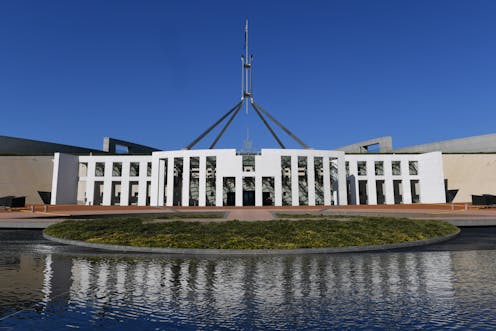
How should staff resources be allocated to members of parliament to carry out their legislative and deliberative functions? Disappointingly, the newly released review of the Members of Parliament (Staff) Act fails to shift the status quo on this key question.
The review of the MOPS Act was the first in its 38 years of operation. It was done behind closed doors by the Department of Prime Minister and Cabinet. The report was delivered to the prime minister and released on October 7, together with the news the government accepted in principle all its recommendations.
Remarkably, parliament has had no formal role yet in the review of the act under which parliamentarians’ staff are employed. The government says it will work with the Parliamentary Leadership Taskforce to drive the “necessary” reforms to the act.
Currently, the prime minister has the power to allocate staff numbers and determine the conditions for staff employment. This means parliament has no role in managing and leading the workforce that supports its members. The review recommends leaving this power structure intact.
While it suggests the new independent human resources body consider principles that may inform staffing allocations, these will not be binding on the PM.
The power of the prime minister to allocate staff numbers, not just for ministerial staff but for all parliamentarians, is anomalous compared to other countries and the states, where they are determined by independent bodies. In Canada, for example, the House of Commons determines the resources needed for fulfilling parliamentary duties.
Read more: Cutting crossbench MPs’ staffing would be a setback for democracy
In the Australian parliament, the allocation to crossbenchers of parliamentary staff has been closely related to potential balance-of-power status rather than parliamentary function. It has fluctuated accordingly.
In 2010, crossbenchers holding the balance of power in the House of Representatives negotiated for two additional parliamentary staff, while crossbenchers in the Senate were allocated only one. In 2013, this was reversed, when crossbenchers no longer held the balance of power in the lower house. In 2016, when the Turnbull government was returned with the slimmest of majorities, the staff allocated to crossbenchers in both houses was increased to three, while the Morrison government increased it again to four.
The Albanese government’s current reduction of staff for crossbenchers clearly relates to their lack of potential balance-of-power status in the House of Representatives. Reports that independent MPs are resorting to crowdfunding to pay for parliamentary staff indicate the size of the problem.
The prime minister should only hold authority over staffing for ministers. In other countries, and in the states, staff of legislators are employed under different legal authority from staff of the executive.
Employment of parliamentary and electorate staff should be within the purview of parliament. Because the federal parliament lacks this authority in the act, it cannot currently determine staff allocations, set conditions or enact consequences for staff in its workplace. The review presented an opportunity to establish appropriate authority for staffing under the act.
A comprehensive review of the MOPS Act was one of the recommendations of Sex Discrimination Commissioner Kate Jenkins in her landmark 2021 report on Commonwealth parliamentary workplaces, Set the Standard. Disappointingly, the long-awaited review of the act has failed to address some of its fundamental deficiencies. These include not only the power of the prime minister to control the number and conditions for parliamentary staffing, but also the power of parliamentarians in the employment relationship with their staff.
The Jenkins report found that problems arise from the extreme power imbalance in parliamentary offices. It argued that professionalising practices in these offices was critical to creating safer workplaces. The MOPS Act review recommends some requirements be placed on parliamentarians as employers. These include:
- recruiting staff against position descriptions and justifying their appointments
- consulting the independent HR body before terminating staff employment as a way of slowing down the process
- establishing “employment principles” in the act.
While these are useful changes, they do not include mandating practices such as probation, induction or performance review. They also do not require vacant positions to be advertised externally, which would bring more diversity into the parliamentary workplace. Nor does the review recommend that entitlement to employ staff be tied to compliance with professional practice as an employer.
There is currently great optimism about the implementation of the recommendations of the Jenkins report, as well as the work of the multi-party cross-chamber Parliamentary Leadership Taskforce and the Joint Select Committee on Parliamentary Standards. The changes involve an interlocking set of new rules and institutions. They require mechanisms for setting standards of behaviour, holding people to account for their conduct and professionalising the parliamentary workplace.
These changes are designed to address the problems of bullying, sexual harassment and sexual assault of staff revealed in the Jenkins report. The new institutional architecture is designed to try to prevent these forms of misconduct in the parliamentary workplace.
The review of the MOPS Act includes some thoughtful discussion. Its recommendations would be an improvement. But it does not go far enough in recommending changes to the problematic power imbalances exposed in the Jenkins report.
The review does not recommend any change to the anomalous power of the prime minister over all aspects of parliamentary staffing. Nor has it recommended parliamentarians be properly accountable as employers for professional practices in their offices.
The fact the PM’s own department conducted the MOPS review may explain why it does not recommend changes to the basic power structure in the act. This may be a lost opportunity for significant and sensible reform.
Authors: Maria Maley, Senior Lecturer in Politics, School of Politics and International Relations, Australian National University


 Daily Bulletin


