

A robot breaks the finger of a 7-year-old: a lesson in the need for stronger regulation of artificial intelligence
- Written by: Maria O'Sullivan, Associate Professor, Faculty of Law, and Deputy Director, Castan Centre for Human Rights Law, Monash University
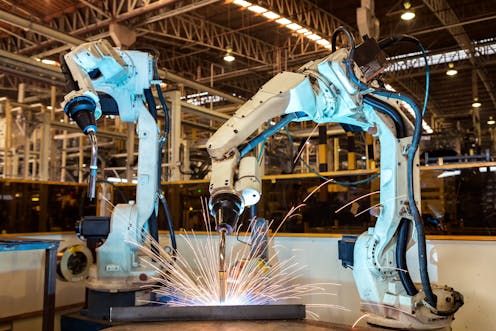
Disturbing footage emerged this week of a chess-playing robot breaking the finger of a seven-year-old child during a tournament in Russia.
Public commentary on this event highlights some concern in the community about the increasing use of robots in our society. Some people joked on social media that the robot was a “sore loser” and had a “bad temper”.
Of course, robots cannot actually express real human characteristics such as anger (at least, not yet). But these comments do demonstrate increasing concern in the community about the “humanisation” of robots. Others noted that this was the beginning of a robot revolution – evoking images that many have of robots from popular films such as RoboCop and The Terminator.
While these comments may have been made in jest and some images of robots in popular culture are exaggerated, they do highlight uncertainty about what our future with robots will look like. We should ask: are we ready to deal with the moral and legal complexities raised by human-robot interaction?
Human and robot interaction
Many of us have basic forms of artificial intelligence in our home. For instance, robotic vacuums are very popular items in houses across Australia, helping us with chores we would rather not do ourselves.
But as we increase our interaction with robots, we must consider the dangers and unknown elements in the development of this technology.
Examining the Russian chess incident, we might ask why the robot acted the way it did? The answer to this is that robots are designed to operate in situations of certainty. They do not deal well with unexpected events.
So in the case of the child with the broken finger, Russian chess officials stated the incident occurred because the child “violated” safety rules by taking his turn too quickly. One explanation of the incident was that when the child moved quickly, the robot mistakenly interpreted the child’s finger as a chess piece.
Whatever the technical reason for the robot’s action, it demonstrates there are particular dangers in allowing robots to interact directly with humans. Human communication is complex and requires attention to voice and body language. Robots are not yet sophisticated enough to process those cues and act appropriately.
Read more: Researchers trained an AI model to 'think' like a baby, and it suddenly excelled
What does the law say about robots?
Despite the dangers of human-robot interaction demonstrated by the chess incident, these complexities have not yet been adequately considered in Australian law and policies.
One fundamental legal question is who is liable for the acts of a robot. Australian consumer law sets out robust requirements for product safety for goods sold in Australia. These include provisions for safety standards, safety warning notices and manufacturer liability for product defects. Using these laws, the manufacturer of the robot in the chess incident would ordinarily be liable for the damage caused to the child.
However, there are no specific provisions in our product laws related to robots. This is problematic because Australian Consumer law provides a defence to liability. This could be used by manufacturers of robots to evade their legal responsibility, as it applies if
the state of scientific or technical knowledge at the time when the goods were supplied by their manufacturer was not such as to enable that safety defect to be discovered.
To put it simply, the robot manufacturer could argue that it was not aware of the safety defect and could not have been aware. It could also be argued that the consumer used the product in a way that was not intended. Therefore, I would argue more specific laws directly dealing with robots and other technology are needed in Australia.
Law reform bodies have done some work to guide our lawmakers in this area. For instance, the Australian Human Rights Commission handed down a landmark Human Rights and Technology Report in 2021. The report recommended the Australian government establish an AI safety commissioner focused on promoting safety and protecting human rights in the development and use of AI in Australia. The government has not yet implemented this recommendation, but it would provide a way for robot manufacturers and suppliers to be held accountable.
Implications for the future
The chess robot’s acts this week have demonstrated the need for greater legal regulation of artificial intelligence and robotics in Australia. This is particularly so because robots are increasingly being used in high-risk environments such as aged care and to assist people with a disability. Sex robots are also available in Australia and are very human-like in appearance, raising ethical and legal concerns about the unforeseen consequences of their use.
Read more: Six ways robots are used today that you probably didn't know about
Using robots clearly has some benefits for society – they can increase efficiency, fill staff shortages and undertake dangerous work on our behalf.
But this issue is complex and requires a complex response. While a robot breaking a child’s finger may be seen as a once-off, it should not be ignored. This event should cause our legal regulators to implement more sophisticated laws that directly deal with robots and AI.
Authors: Maria O'Sullivan, Associate Professor, Faculty of Law, and Deputy Director, Castan Centre for Human Rights Law, Monash University


 Daily Bulletin


