

Noir and nostalgia inform Chris Womersley's tale of forgery, grief, and the seamy side of urban life
- Written by: Suzie Gibson, Senior Lecturer in English Literature, Charles Sturt University

Before prospective readers can get to the opening chapter of Chris Womersley’s new novel The Diplomat, they will find themselves assailed with several pages listing past awards received by the author and supplying a range of accolades cut and pasted from reviews of his earlier works.
Such testimonials prime the audience to embrace this latest fiction as one in a long line of remarkable achievements; they also confirm that the book and author has the backing of a powerful publishing machine.
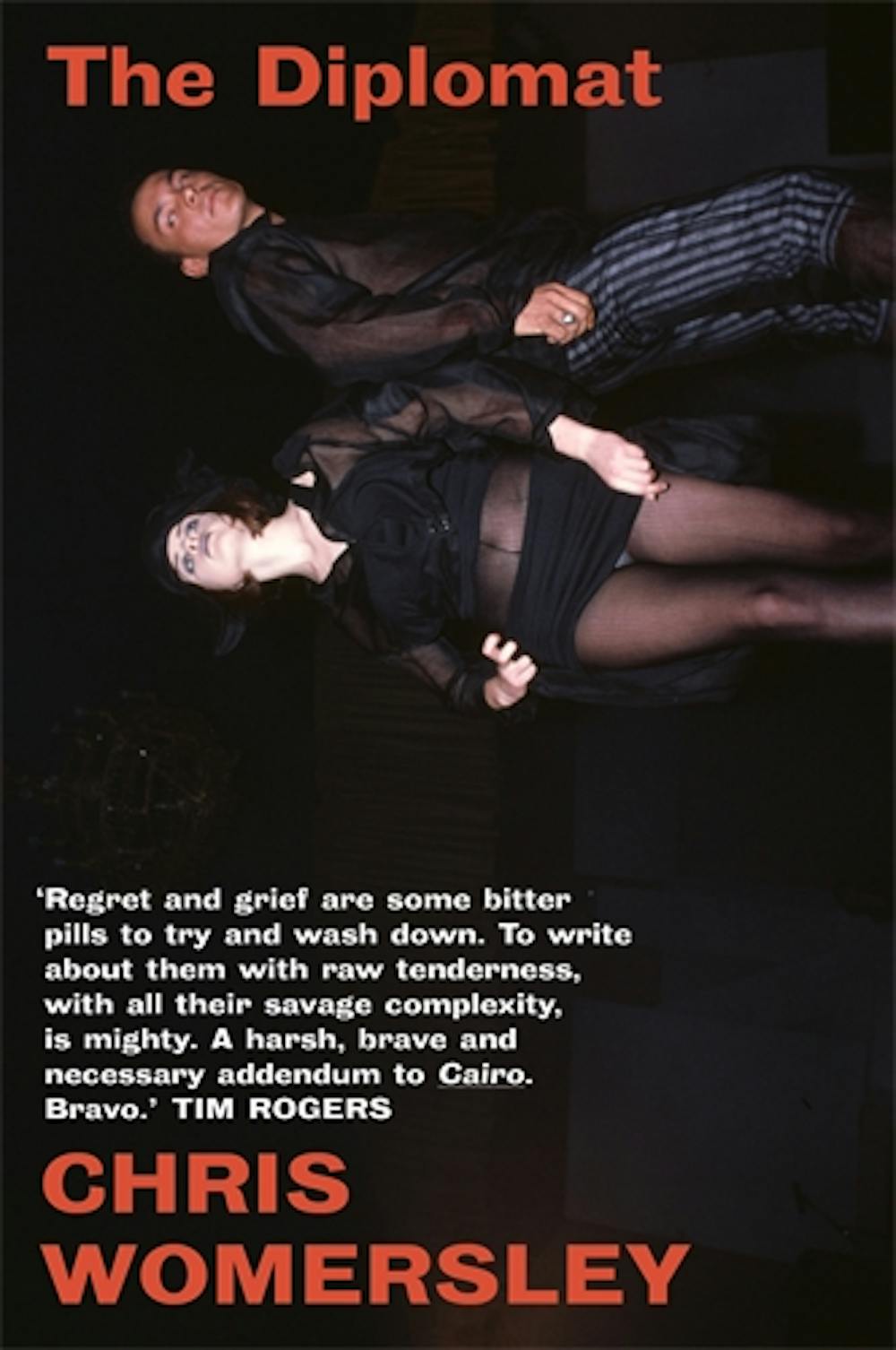
Review: The Diplomat – Chris Womersley (Picador)
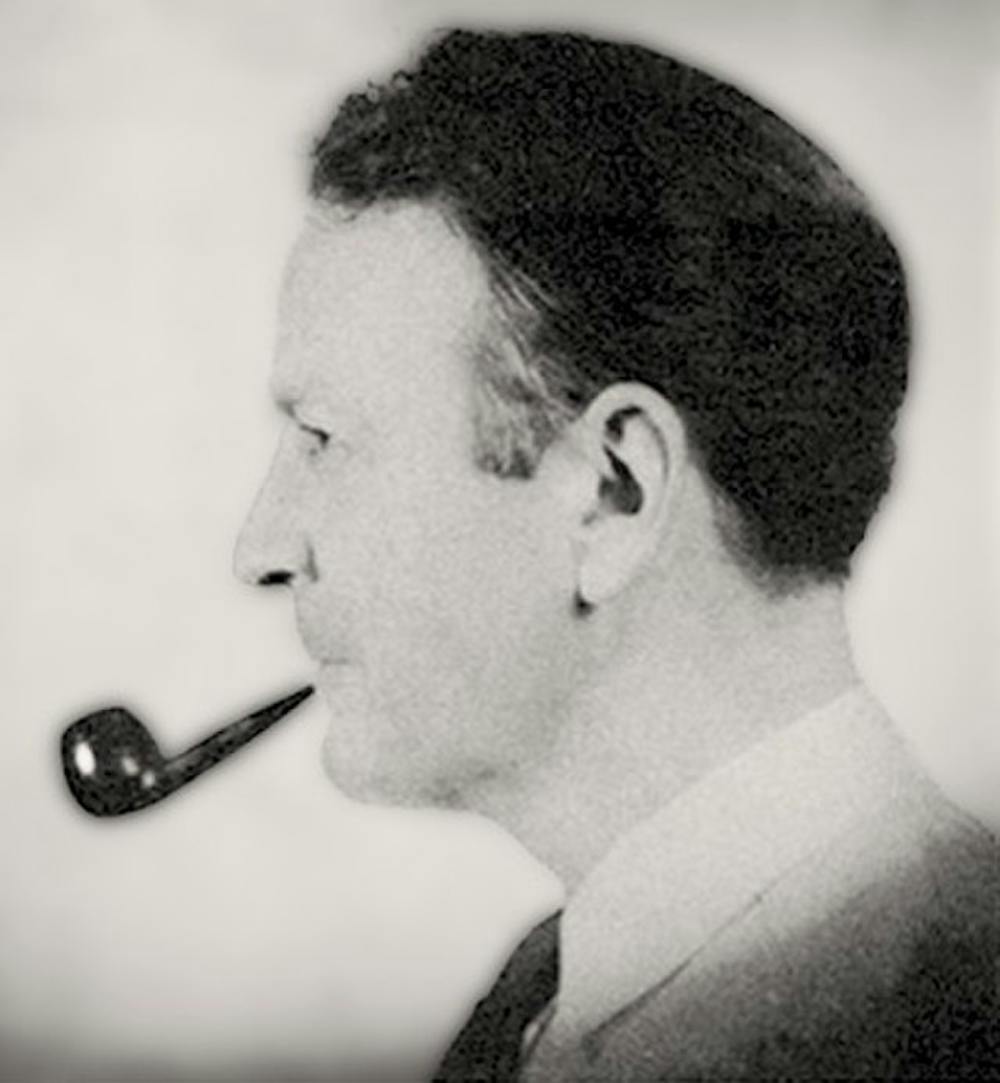 Raymond Chandler (1888-1959).
Public domain
The urban influence can also be traced to the renowned mid-20th century writer of detective fiction, Raymond Chandler. Chandler’s acclaimed works The Big Sleep (1939) and The Long Goodbye (1953) – both successfully adapted into films – are set in a tawdry Los Angeles. In Chandler’s work, the American metropolis serves as an allegorical manifestation of damaged lives.
Chandler’s visually charged mode of storytelling laid down the ground rules for later 20th and 21st century crime fiction, and Womersley upholds some of these conventions, including Chandler’s technique of meticulous description. In The Big Sleep, Chandler’s hard-boiled detective Philip Marlowe says:
I lit a cigarette and blew a lungful at him and he sniffed at it like a terrier in a rat-hole.
Eighty years on Womersley’s narrator says:
I lit a cigarette and lay down and tried not to think about all the horrible and dangerous tasks I had to complete in the next few days.
In these passages, the act of smoking is the epitome of a now outdated cool. The cigarette theme continues when The Diplomat’s narrator crosses paths with his sister-in-law Gloria; he likens her smoking to that of a “femme fatale from an old black-and-white movie”.
The observation reveals more about the narrator than Gloria. His alcohol and drug infused lifestyle is consonant with the noir genre: he is an anti-hero who once had fantasies of being an existential artist. The atmosphere of disillusionment and the flashback style of narration come with a strong sense of the cinematic. Through the mist and haze of many nicotine hits, Womersley’s narrator vividly recollects his old life in London, the industrial capital of the nineteenth century – a place still gloomy a century later.
Read more:
True Blue? Crime fiction and Australia
What’s in a name?
When the protagonist’s mind travels back to London and relives a difficult telephone conversation, we finally learn that his proper name is Edward Degraves. The delay in revealing this detail connects with the novel’s central crime: forgery.
Raymond Chandler (1888-1959).
Public domain
The urban influence can also be traced to the renowned mid-20th century writer of detective fiction, Raymond Chandler. Chandler’s acclaimed works The Big Sleep (1939) and The Long Goodbye (1953) – both successfully adapted into films – are set in a tawdry Los Angeles. In Chandler’s work, the American metropolis serves as an allegorical manifestation of damaged lives.
Chandler’s visually charged mode of storytelling laid down the ground rules for later 20th and 21st century crime fiction, and Womersley upholds some of these conventions, including Chandler’s technique of meticulous description. In The Big Sleep, Chandler’s hard-boiled detective Philip Marlowe says:
I lit a cigarette and blew a lungful at him and he sniffed at it like a terrier in a rat-hole.
Eighty years on Womersley’s narrator says:
I lit a cigarette and lay down and tried not to think about all the horrible and dangerous tasks I had to complete in the next few days.
In these passages, the act of smoking is the epitome of a now outdated cool. The cigarette theme continues when The Diplomat’s narrator crosses paths with his sister-in-law Gloria; he likens her smoking to that of a “femme fatale from an old black-and-white movie”.
The observation reveals more about the narrator than Gloria. His alcohol and drug infused lifestyle is consonant with the noir genre: he is an anti-hero who once had fantasies of being an existential artist. The atmosphere of disillusionment and the flashback style of narration come with a strong sense of the cinematic. Through the mist and haze of many nicotine hits, Womersley’s narrator vividly recollects his old life in London, the industrial capital of the nineteenth century – a place still gloomy a century later.
Read more:
True Blue? Crime fiction and Australia
What’s in a name?
When the protagonist’s mind travels back to London and relives a difficult telephone conversation, we finally learn that his proper name is Edward Degraves. The delay in revealing this detail connects with the novel’s central crime: forgery.
 Chris Womersley.
Pan Macmillan Australia
Names authorise documents, including artworks. Degraves and his late wife Gertrude were skilled in the art of falsification and were audacious (or stupid) enough to steal and duplicate one of Pablo Picasso’s masterworks, The Weeping Woman (1937). This detail is based on a real theft took place at Melbourne’s gallery of Victoria in 1986. Womersley’s earlier novel Cairo (2013) dramatised the unsolved robbery.
This places The Diplomat in conversation with the earlier work: it could even be its “sequel”. But it can still be read as a stand alone novel, where the burglary is compounded by the crime of forgery.
Although imitating the Spanish master is daring, it borders on cliché as everyone has heard of Picasso – his name is more renowned than his artworks. But Edward and Gertrude are not without imagination. During their time in London, they survive “Maggie Thatcher’s brutal neoliberalism” by inventing a Polish artist with Russian heritage – “Josef Soroko” – and peddling their artworks under this pseudonym.
Various characters enter and exit The Diplomat, leaving a trail of names that flesh out the contours of Degraves’s earlier life: his ex-friend James, pretentious Damon Wood, the detox bully Randall, drug dealer Tony, and Gertrude’s parents Ron and Betty. Another key name is the Diplomat Motel, the location of a potential drug deal that holds Edward’s financial future in the balance.
But the most important name of all is Gertrude. She is the reason Degraves is wracked with grief and guilt, as he was sectioned in a detox clinic at the time of her death. Her death haunts Degraves as he struggles to forge a new life through the fog of mourning:
I turned her name over and over […] The shape of the word was sharp and painful […] Gertrude, Gertrude.
At times, names are invoked in a way that reveals Degraves’s dismissal of what he perceives to be fake forms of brilliance, such as when a fellow artist is despised for embracing “Foucault” and “Derrida”. This hatred of pomposity hints at Edward’s desire for authenticity. There is an incongruity in this, as his career has been quite literally forged through the names of others.
Names support the novel’s linguistic world, but their surface value conceals a deep sense of loss. Edward is also mourning his failure to establish a legitimate art career, Gertrude’s secret pregnancy, and the realisation of his own mediocrity.
In spite of such crippled wisdom, The Diplomat does not quite live up to its imposing literary and cinematic predecessors. Its foregrounding of the flimsy relationship between names and reality encourages the reader to ponder art as fiction and fiction as artifice, but the final chapter is underwhelming and slightly perplexing.
Read more:
The case for Randolph Stow's To the Islands
Authors: Suzie Gibson, Senior Lecturer in English Literature, Charles Sturt University
Chris Womersley.
Pan Macmillan Australia
Names authorise documents, including artworks. Degraves and his late wife Gertrude were skilled in the art of falsification and were audacious (or stupid) enough to steal and duplicate one of Pablo Picasso’s masterworks, The Weeping Woman (1937). This detail is based on a real theft took place at Melbourne’s gallery of Victoria in 1986. Womersley’s earlier novel Cairo (2013) dramatised the unsolved robbery.
This places The Diplomat in conversation with the earlier work: it could even be its “sequel”. But it can still be read as a stand alone novel, where the burglary is compounded by the crime of forgery.
Although imitating the Spanish master is daring, it borders on cliché as everyone has heard of Picasso – his name is more renowned than his artworks. But Edward and Gertrude are not without imagination. During their time in London, they survive “Maggie Thatcher’s brutal neoliberalism” by inventing a Polish artist with Russian heritage – “Josef Soroko” – and peddling their artworks under this pseudonym.
Various characters enter and exit The Diplomat, leaving a trail of names that flesh out the contours of Degraves’s earlier life: his ex-friend James, pretentious Damon Wood, the detox bully Randall, drug dealer Tony, and Gertrude’s parents Ron and Betty. Another key name is the Diplomat Motel, the location of a potential drug deal that holds Edward’s financial future in the balance.
But the most important name of all is Gertrude. She is the reason Degraves is wracked with grief and guilt, as he was sectioned in a detox clinic at the time of her death. Her death haunts Degraves as he struggles to forge a new life through the fog of mourning:
I turned her name over and over […] The shape of the word was sharp and painful […] Gertrude, Gertrude.
At times, names are invoked in a way that reveals Degraves’s dismissal of what he perceives to be fake forms of brilliance, such as when a fellow artist is despised for embracing “Foucault” and “Derrida”. This hatred of pomposity hints at Edward’s desire for authenticity. There is an incongruity in this, as his career has been quite literally forged through the names of others.
Names support the novel’s linguistic world, but their surface value conceals a deep sense of loss. Edward is also mourning his failure to establish a legitimate art career, Gertrude’s secret pregnancy, and the realisation of his own mediocrity.
In spite of such crippled wisdom, The Diplomat does not quite live up to its imposing literary and cinematic predecessors. Its foregrounding of the flimsy relationship between names and reality encourages the reader to ponder art as fiction and fiction as artifice, but the final chapter is underwhelming and slightly perplexing.
Read more:
The case for Randolph Stow's To the Islands
Authors: Suzie Gibson, Senior Lecturer in English Literature, Charles Sturt University


 Daily Bulletin


