

Shortages, price increases, delays and company collapses: why NZ needs a more resilient construction industry
- Written by: Suzanne Wilkinson, Professor of Construction Management, Massey University
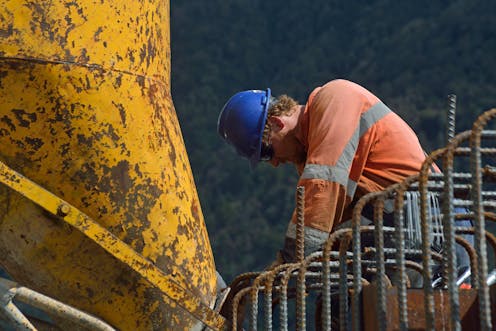
The pandemic has had a considerable impact on all businesses, but New Zealand’s construction sector appears particularly hard hit and is struggling to cope. Firms have failed, prices have gone up, and labour and materials are in short supply.
In the past few weeks alone, one construction company has gone under and building projects have ground to a halt due to shortages of Gib board.
These kinds of problems should not surprise anyone. Material and labour shortages, companies failing, red tape and poor quality outcomes for companies and consumers are not new for the sector.
The big question is why such shocks and stresses create problems for the New Zealand construction industry so regularly. More immediately, how can the sector deliver reliably on the significant building and infrastructure projects in the current pipeline?
A potted history of crises
A few key examples tell the tale. In 2002 there was the leaky building crisis, with predictions of a serious downturn and the “potential for a major systemic breakdown across the industry”.
In 2012, the building sector again faced a “bleak year”, in part due to delays in the Canterbury rebuild and low volumes of work elsewhere.
Read more: The pandemic exposes NZ’s supply chain vulnerability – be ready for more inflation in the year ahead
Forecasts in early 2013 of boom times ahead as the Christchurch rebuild finally appeared to take off were followed by cost increases, skills shortages and increasing defects.
By 2015, there were reports of more than 60 construction-related Christchurch companies in liquidation that year, owing creditors an estimated NZ$40 million.
Planning for resilience
Even in unremarkable times, the industry tends to be slow to innovate and has poor productivity. Firms win tenders with prices so low they often cannot make any profit. The industry does not spend enough on research and development, and it reacts rather than plans.
What is needed is the development of a resilient construction sector that’s able to cope with adverse events, recover well and continue to operate effectively.
We began researching organisational and construction sector resilience in the early 2000s. Since then, we have worked on a number of government projects in New Zealand and overseas, helping to develop infrastructure network, organisation and sector resilience.
Read more: Rebuilding post-eruption Tonga: 4 key lessons from Fiji after the devastation of Cyclone Winston
Our past research tells us organisations are likely to be more resilient when they have leadership and a culture that actively plans and allows for constant change.
A resilient organisational culture is one where staff are engaged in resolving problems and are given time and training to develop innovative thinking. Resilient companies learn from the past and use those lessons to focus on what matters.
They also maintain effective relationships with other relevant organisations. They understand their position in the construction supply chain, including who they depend on and who depends on them. A resilient supply chain makes the industry less fragmented and more connected.
Moving to a new model
Our research leads us to believe that developing closer-to-home resourcing – not relying on so many imported skills and materials – would create greater resilience and a more sustainable industry.
And there are current initiatives making a difference. Educational programs focusing on training and career development are an excellent step towards creating workforce resilience. Similarly, a construction sector accord is creating partnerships between government and industry to achieve (among other things) a co-ordinated voice on industry reforms.
The Ministry of Business, Innovation and Employment (MBIE) and the New Zealand Infrastructure Commission are both involved in improving the sector’s climate change planning, skills and productivity, and risk management.
Read more: Unless we improve the law, history shows rushing shovel-ready projects comes with real risk
Our research aims to build on such developments by helping organisations in the construction sector understand their own resilience and to plan accordingly.
In particular, a five-year grant from MBIE’s Endeavour Fund will allow us to develop the CanConstructNZ project to help manage industry capacity and better understand how to manage shocks and stresses.
The hope is that all such initiatives will contribute to a more resilient construction sector that can deliver the multiple projects within the national pipeline forecasts.
With a more co-ordinated approach to planning and the ability to withstand shocks and setbacks, it’s hoped the industry can avoid the problems that have dogged it – and the country – for too long.
Authors: Suzanne Wilkinson, Professor of Construction Management, Massey University


 Daily Bulletin


