

How to look after your mental health if you're at home with COVID
- Written by: Louise Stone, General practitioner; Associate Professor, ANU Medical School, Australian National University
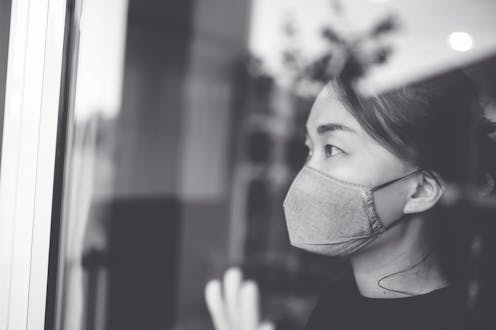
For many of us, catching COVID and isolating at home can be a lonely, scary and distressing experience.
For those with a pre-existing mental illness, it can be even more difficult.
The following strategies are designed to help you look after your mental health if you get COVID and are isolating at home.
Remember the basics
When living in a time of great uncertainty and threat, it can be difficult to remember and practice simple strategies to maximise wellness.
If you’re isolating at home with COVID, it’s important to:
manage fever and other symptoms like aches, pains and sore throat with paracetamol or ibuprofen
maintain a healthy diet
keep your fluid intake up, particularly if you have a fever
stop exercise for at least 10 days, and depending on the severity of your symptoms, return to exercise slowly (if you have any questions about returning to exercise, ask your GP)
deep breathing, which can help lung function and help you stay calm during isolation and recovery, but this should be done in consultation with your doctor
practise mindfulness to help cope with the inevitable anxiety around illness and isolation
find distractions like reading, watching movies or doing a creative activity, which can help keep your brain from fixating on worry (this is particularly important for children)
and stay connected with friends and family, online or over the phone.
It’s important to monitor your COVID symptoms. The Royal Australian College of General Practitioners has a useful symptom diary to assist with this. Or use the Healthdirect symptom checker to decide whether you need medical help.
If you live alone, you should arrange for someone to contact you regularly to make sure you are managing.
Some coping strategies to avoid
During times of anxiety and uncertainty, such as isolating at home with COVID, it’s understandable people may turn to drugs and alcohol, unhealthy eating, gambling, or other addictions to manage psychological discomfort.
These strategies may temporarily alleviate stress. But they can cause more mental health issues in the longer term.
It’s also important to avoid “doom scrolling”, which is the tendency to continue to scroll through bad news on your mobile phone, even though the news is saddening, disheartening or depressing.
You might want to disengage from mainstream or social media if it has become harmful to your mental health.
It’s been extra hard for those with mental illnesses
The COVID pandemic has made living with mental illness even more difficult. The last few years have been challenging and exhausting for many. People with mental illnesses, and other chronic conditions, have had to adapt their normal management strategies to cope, shifting care and some forms of therapy online.
Recovery from, and management of, mental illness often involves activities like exercise, positive social engagement and therapy – all of which may be limited due to COVID restrictions, financial constraints and staff shortages.
Acute services, including hospitals and general practice, are struggling to meet demand.
Isolation can be particularly difficult for people who don’t have a safe and secure home. People experiencing domestic violence have more difficulty accessing care as they may not be safe interacting with health professionals in their homes.
Children are at increased risk of harm if they live with domestic violence. They may have no safe places to go when schools or childcare facilities are closed, so family, friends and services like Kids Helpline play an important role in supporting children.
Seeking help
There are many resources available to assist you if you’re isolating due to COVID.
Your GP can provide advice, help you navigate the health system and treat physical and mental health symptoms, via telehealth over the phone or online. Medicare rebates for telehealth are available if you have seen the GP face to face in the previous 12 months.
The National Coronavirus Helpline is a 24-hour service that provides free advice on how to seek medical help.
Beyond Blue offers a series of resources for adapting to the pandemic, including for Australians living overseas and people who speak languages other than English. The organisation also offers free counselling during the pandemic. Call 1800 512 348 to speak with a trained mental health professional, or chat online.
Read more: Not again ... how to protect your mental health in the face of uncertainty and another COVID variant
The federal government provides a free mental health service for people in Victoria, NSW and the ACT who’ve been affected by the pandemic. Call 1800 595 212 from Monday to Friday, 8:30am-5pm.
The Raising Healthy Minds app has information, ideas and guidance for parents to help them support their child’s mental health and well-being.
People who are experiencing domestic violence can access support through calling 1800RESPECT on 1800 737 732 or visiting the organisation’s website.
Each state and territory also offers a mental health service to help you access local support:
ACT — Canberra Health Services Access Mental Health on 1800 629 354 or 02 6205 1065 (available 24/7)
NSW — Mental Health Line on 1800 011 511 (available 24/7)
NT — Northern Territory Mental Health Line on 1800 682 288 (available 24/7)
Queensland — Mental health access line on 1300 642 255 (available 24/7)
SA — SA COVID-19 Mental Health Support Line on 1800 632 753 (available 8am-8pm)
Tasmania — Mental Health Service Helpline on 1800 332 388
Victoria — Head to Help on 1800 595 212 (available 8:30am-5pm, Monday to Friday)
WA — Mental Health Emergency Response Line on 1300 555 788 (metro) or 1800 676 822 (Peel) (available 24/7).
If this article has raised issues for you, or if you’re concerned about someone you know, call Lifeline on 13 11 14.
Authors: Louise Stone, General practitioner; Associate Professor, ANU Medical School, Australian National University
Read more https://theconversation.com/how-to-look-after-your-mental-health-if-youre-at-home-with-covid-174536


 Daily Bulletin


