

The Killing’s Sarah Lund: an anti-hero for our COVID moment
- Written by: Julian Meyrick, Professor of Creative Arts, Griffith University
Our writers nominate the TV series keeping them entertained during a time of COVID.
Her face is long and austere. Her dark hair is pulled back over a high forehead, and her eyes are large and unblinking. When she moves, she lowers her head and pushes forward, purposeful and soft, like an animal padding through a forest.
In season one of the Danish television series The Killing, when detective Sarah Lund (Sofie Gråbøl) learns of the death of her colleague, Jan Meyer — a death she is partly responsible for — she is standing next to a Russian container ship called Alexa. It means “defender of man”. Lund is a common Scandinavian surname. It means “grove”.
This is the real beginning of the series, the dark waters of ethical awareness Lund never tries to escape thereafter. Even before, she was alone. Now she is doubly so, existentially isolated in the manner of the protagonists of Greek tragedy — Antigone, Iphigenia, Phaedra — figures marked out for an outsize portion of loss and grief. Their response is not anger or resentment, a hardening of the psyche, but the opposite: a deeper vulnerability, fluid and super-sensitive.
This is what is made available to us through Lund’s face: a universal point of identification and address. Not everyone is Sarah Lund. But anyone might be.
Read more: Rutherford Falls: a laugh-out-loud funny TV show about colonisation
A forensic gaze
The Killing (Forbrydelsen) is a three-season, Scandi-noir detective drama spread over a 15-year (ish) time span, that first aired in 2007 (an American version was made in 2011). Season one consists of 20 50-minute episodes, which is long even by the standards of long-form drama. The story does not move quickly. There is time to examine an aspect of murder downplayed by more conventional police procedurals: its human consequences.
Each season has a triangular shape. As the narratives unfold, they switch between corners, showing their interrelationship. In season one, the triangle is the government, the police and an ordinary Danish family. In season two, the government, the police and a Danish army unit. In season three, the government, the police and a Danish oil company.
Gradually, the political focus shifts higher: from an aspiring mayoral candidate, to a newly appointed Minister of Justice, to a Prime Minister facing the next election.
Lund is what my son when he was small would have called “very look-y”. She soaks in everything happening around her through her quiet stare. She is the opposite of hypercritical. The intent of her gaze is forensic not judgemental. What happened? Who did it? Why?
In respect of delivering a final verdict, only in the last episode, does she claim that right. It destroys both the man she judges and her own life.
Politicians avoiding responsibility
What makes The Killing right for this moment is its portrayal of how contemporary politics infects contemporary life, a politics of constant displacement and mendacity. Governments avoid responsibility, then avoid taking responsibility for taking responsibility. It’s not so much that they lie. Rather the truth is not an epistemological category, only a strategic factor.
Over three seasons, The Killing’s politicians juggle different narrative framings to find one that will stick. The line between plausibility and veracity is obliterated. Perception is all. Public debate collapses into popular opinion. Politicians do the right thing up to a point. When media attention is averted, or if one of them looks like getting into trouble, it is immediately abandoned.
These are the politicians we have largely come to accept as our own: a morally plastic breed whose every move is about obtaining or retaining power.
Read more: Five of the best crime dramas to be banged up with under lockdown – from a screenwriter
To be adequate to our moment — one marked by the long term health and economic effects of COVID-19, the terror of the latest IPCC report, and the failure of US post-millennial military excursions — requires the sort of courage Sarah Lund shows.
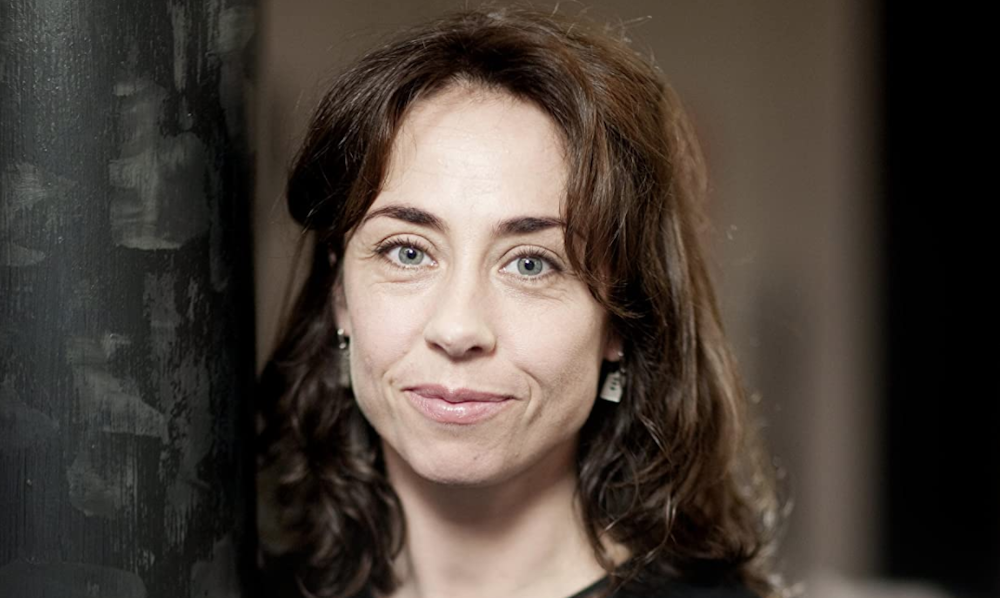 Lund (seen here with a rare smile) is courageous but not ‘special’ like a Hollywood hero.
Danmarks Radio (DR), Norsk Rikskringkasting (NRK), Sveriges Television (SVT)
Lund (seen here with a rare smile) is courageous but not ‘special’ like a Hollywood hero.
Danmarks Radio (DR), Norsk Rikskringkasting (NRK), Sveriges Television (SVT)
Yet she is without heroic properties. She isn’t “special” in the way Hollywood heroes are. She is ordinary. She does not “recover”. She is not “resilient”. She grows, ethically, emotionally, spiritually. Every killing marks her more deeply. That’s a lesson we can take to heart.
A home for grief
Lund has no luck with men. In season one, her engagement founders as she is swallowed up by an investigation into a murdered girl. In season two, she falls for a detective who turns out to be a psychopathic killer. In season three, an old flame appears and it’s on. But she wrecks everything and has to flee from the beginnings of a happy life.
Lund has no memorable quirks, unless you count being unable to cook and a taste for chunky knit jumpers (now famous in their own right). She is not witty, or especially charismatic. When annoyed, she rarely shouts. Instead, she purses her lips and pushes on with whatever she’s doing, like a truculent child. She makes mistakes, sometimes big ones. If she does the right thing it’s because she chooses to, never because it’s easy.
“When people are killed, it’s important” she says to a weary Afghan army officer in season two, when she is investigating the murder of a family in the middle of a war-zone.
Lund can be abrupt, cutting people off mid-sentence, or mid-phone call, or suddenly walking out of a room. Later, she will shrink into herself, aware of what she has done. Her face shows remorse in ways that don’t involve her having to open her mouth and say “I’m sorry”. She has the courage to feel overwhelmed.
In season three, a couple whose daughter has been kidnapped visit a Lutheran pastor who tells them, “Grief is love that has become homeless”. In Lund, grief finds a home again and turns back into love. It isn’t her fault that nature, to balance her analytical gifts, deprives her of expressive ones.
Lund is the least political creature. She does what we all do. She gets on with the job. Only at the end does she see what she is up against, and act to save the future when no one else will. Knowingly, sufferingly, she walks into hell.
The Killing is airing on SBS on demand.
Authors: Julian Meyrick, Professor of Creative Arts, Griffith University
Read more https://theconversation.com/the-killings-sarah-lund-an-anti-hero-for-our-covid-moment-166654


 Daily Bulletin


