

Children in Darwin are more worried about their safety than their grades
- Written by: Amy Graham, Postdoctoral Research Fellow, UNSW
At a time when the world has been in chaos, it’s easy to forget young people might have completely different, yet significant and real, worries. We asked children about their sense of safety and what they worry about in their community.
In July to August 2020 we used anonymous surveys with 176 young people aged between five and 15 from several schools in Darwin, Northern Territory. These data were collected at the time of the COVID-19 pandemic, so it is likely concerns were heightened generally.
Here is what kids want you to know
In the NT, addressing community perceptions of safety and concerns about crime levels has long been a priority. We asked students what they were worried about in their day-to-day lives with some specific questions on their sense of safety in the community.
This was an open question in which students could freely respond with three worries of importance to them.
We put children into two groups: 30 children aged ten and under, and 146 children aged 11 and over. Around 30% who responded were male across both age groups. Overall, the major themes that emerged about their worries were:
More than half of students under ten (66%) and over 11 (53%) worried about safety in their local community.
Some of what children said about personal safety was:
I worry about drinking and fighting outside on the street.
I am scared walking home by myself.
Another common worry was a fear of being exposed to crime and racial violence:
I worry about getting kidnapped while walking home from school.
I am scared of people breaking into our home and attacking us.
Health was also a worry and reflects the timing of the survey with references to parent mental health, COVID-19 and death of family members.
Read more: Young people's mental health deteriorated the most during the pandemic, study finds
This community of schools had delivered some campaigns to support children and their families about domestic violence and resilience. Some children said:
I am worried that mum might hurt herself.
I worry about this pandemic throughout the world.
In the consent process for our surveys, we offered access to supports for children who might have disclosed concerning worries.
School performance and behaviour at school were a concern for 10% of young people aged over 11.
Middle-school students told us:
I worry about passing the year.
I’m worried about what people think of me, my grades and schooling.
How students help themselves
We also wanted to understand how emotionally aware the young people in our survey were. So we asked them: “When you get upset at school, can you make yourself feel OK or good again?”
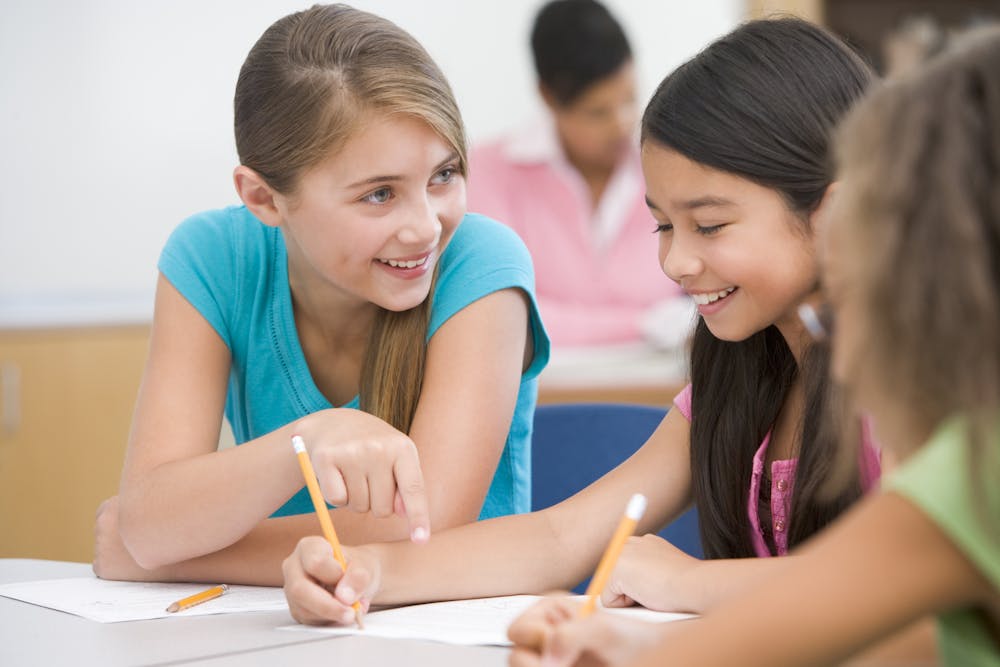 Some children turn to their friends for support.
Shutterstock
Some children turn to their friends for support.
Shutterstock
We also asked where they learnt these strategies and where they sought help.
Only 14% in the over-11 age group reported not being able to feel good again once becoming upset at school. And only 3% of children under ten reported not being able to make themselves feel good again.
Of those who said they were able to calm down in the over-11 group, 58% said they “just know how to do it” and 19% reported “learning it from their family”.
Read more: 'It's real to them, so adults should listen': what children want you to know to help them feel safe
In the under-ten group, 45% “learnt it from a teacher” and 23% “learnt it from their family”.
This suggests young children have greater need for explicit instruction when learning how to self-regulate.
Among children in the under-ten group who said they can’t calm themselves, 42% selected they “get help from a teacher”.
This reinforces the critical role of teachers in these formative years and the time children are likely to be most receptive to help.
Only 3% of students over 11 identified teachers as a source of support. While 39% said they “mostly want to be alone”, 20% “get help from a friend” and another 20% said they “get angry”.
It is reassuring 87% of young people over 11 reported “good” and “very good” family relationships. And 86% said they have three friends they can turn to when in need.
We should appreciate how real children’s concerns are to them and check in with how they are feeling.
Read more: 'The Australian government is not listening': how our country is failing to protect its children
Teachers, parents and other adults need to know how to support young people with their worries, and access information to help them develop self-regulation and problem-solving strategies.
A reliable resource for this information is Be You.
This research was conducted by Charles Darwin University
Authors: Amy Graham, Postdoctoral Research Fellow, UNSW


 Daily Bulletin


