

Older Australians deserve more than the aged care royal commission's COVID-19 report delivers
- Written by: Joseph Ibrahim, Professor, Health Law and Ageing Research Unit, Department of Forensic Medicine, Monash University
Amid the ongoing disaster in Victorian aged-care homes, the Royal Commission into Aged Care Quality and Safety yesterday released its special report into the COVID-19 pandemic.
This report finally states who is responsible for aged care — the federal government — finding its actions were “insufficient” to ensure the aged-care sector was prepared for the pandemic.
But the report doesn’t offer us a clear picture of what went wrong and why.
Importantly, its recommendations largely fall short and come too late.
5 main recommendations that don’t go far enough
The report’s first key recommendation addresses the vexed issue of isolating residents from family and friends during lockdowns. The commissioners have asked the government to fund providers to ensure adequate staff are available to facilitate loved ones to visit.
This addresses the universally recognised need for a humane and proportionate response to lockdown, and the need to reduce the mental and physical harms associated with isolation.
But a better approach would be to introduce a mandatory code for visits to aged-care homes during COVID-19, rather than the voluntary code we currently have. We’d also need a way of enforcing this code, including a process to address family concerns immediately.
Read more: Federal government did not prepare aged care sector adequately for COVID: royal commission
Second, the commission recommends the government create Medicare Benefits Schedule items to increase the provision of allied health services, including mental health services, to aged-care residents.
While this will assist to some degree, a better recommendation would be instituting structured rehabilitation plans for residents with support from care workers. This would ensure the allied health advice provided through these new Medicare items is followed.
This recommendation also fails to address the fact many allied health staff work across multiple services, which increases the risk of infection spread.
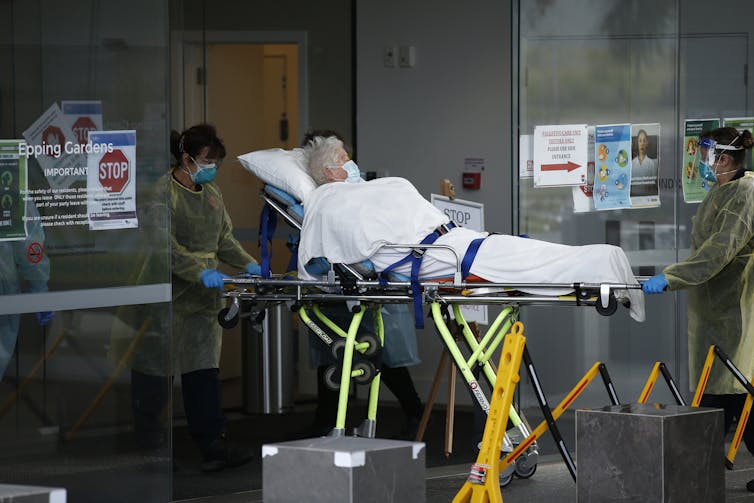 Victoria’s second wave of COVID-19 has been heavily concentrated in aged-care homes.
Daniel Pockett/AAP
Victoria’s second wave of COVID-19 has been heavily concentrated in aged-care homes.
Daniel Pockett/AAP
The third recommendation requires establishing a national aged-care plan for COVID-19, including setting up a national aged-care advisory body. This is the most obvious step in any emergency response.
The commission indicates the plan should establish protocols between the federal government and states and territories, which may reduce some confusion around who is responsible for what. The plan should also set up procedures regarding who decides whether residents with COVID-19 are transferred to hospital.
As part of the plan, significant outbreaks in facilities are to be investigated by an independent expert, and any lessons promptly disseminated to the sector.
But the commission doesn’t provide any detail on what constitutes an independent expert, a major oversight. Ideally, the experts shouldn’t be directly involved with government departments, the regulator or affiliated groups involved in the pandemic response.
Read more: 4 steps to avert a full-blown coronavirus disaster in Victoria's aged care homes
Perhaps most disappointing is the commission did not highlight that multiple outbreaks in aged-care homes reflect systemic issues rather than individual organisational failures. The most useful information is obtained by investigating every aspect of the sector as a whole. This is a missed opportunity and does not serve the best interests of older Australians.
As for the advisory body, the commission was clear the group Prime Minister Scott Morrison established in August was not sufficient — it lacked the right skill mix and was temporary.
But it’s extremely disappointing the commission has not directed that senior nurses, family members and residents (ideally supported by human rights lawyers) be appointed to the group. The people who will be most affected by the decisions should be directly involved in making them.
The fourth recommendation stipulates all aged-care homes should have one or more trained infection control officers as a condition of accreditation.
The fifth is for governments to deploy accredited infection prevention and control experts into aged-care homes to provide training, and assist with preparing for and managing outbreaks.
These are sound recommendations, but should have been in place more than a decade ago, had we learnt from Hong Kong’s experience with SARS.
The challenges with implementing these recommendations will be having the human resources for such a workforce, including addressing the longstanding issue of health professionals’ willingness to work in regional and remote areas.
Some key omissions
The report’s recommendations are worthwhile, yet all are late in arriving and incomplete. Each recommendation provides a solution to an entirely foreseeable problem.
Notably, there’s an absence of strategies to address the known structural problems in aged care. These are issues the commission itself has previously described, around workforce limitations, widespread neglect of residents, and regulatory failures. They represent barriers to implementing the recommendations.
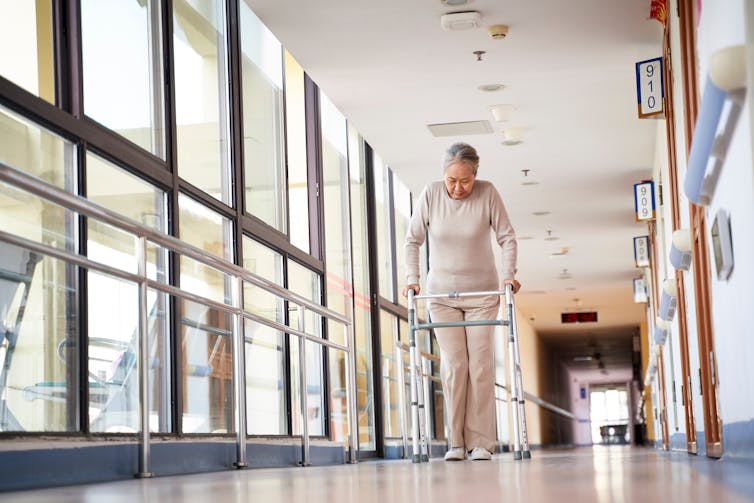 Dedicated staff will be deployed to enhance infection control procedures in nursing homes.
Shutterstock
Dedicated staff will be deployed to enhance infection control procedures in nursing homes.
Shutterstock
The commissioners also fell into the trap of inappropriate comparisons. References to Australia faring better than selected European and North American countries fail to acknowledge our advantages of being an island continent with lower community transmission and an extra three months to prepare. This provides false reassurance to the public.
We should judge our performance on the disparity between what we could have done and what we did do, rather than against countries in different situations.
There’s more to uncover
It’s not surprising the government has accepted all the recommendations, as each of these initiatives should have already been in place well before the second wave hit Victoria.
The commission has recommended the federal government report on the implementation of these recommendations no later than December 1.
Read more: The budget must address aged care — here are 3 key priorities
Ultimately, this report was not designed, nor did it deliver, an understanding of what went wrong in aged care, and why.
Similarly, the recommendations do not go to the heart of the information gleaned from the appalling and tragic lived experiences of residents, families, aged-care workers and health professionals.
With so many outbreaks, many still ongoing, and tragically, several hundred deaths in aged care already, there remains much we need to uncover.
Authors: Joseph Ibrahim, Professor, Health Law and Ageing Research Unit, Department of Forensic Medicine, Monash University


 Daily Bulletin


