

Bushfire education is too abstract. We need to get children into the real world
- Written by: Briony Towers, Research Fellow, Centre for Urban Research, RMIT University
Children and young people have been deeply impacted by the current bushfire crisis. Schools have been destroyed and thousands of houses have burnt down. Hazardous air pollution is causing major public health concerns and the devastating impacts on animals and wildlife is leading to emotional distress.
Many children – like 11-year-old Finn who drove a boat with his mother, brother and dog on board to safety – have been directly involved in the emergency response. Vast numbers of tourists have also been affected, many of them children.
This shows how essential it is for all children and young people, regardless of their geographic location in Australia, to have appropriate education about bushfire prevention, mitigation, preparedness and response.
Recommended for 80 years
The 1939 report of the royal commission into the Victorian Black Friday bushfires noted:
probably the best means of prevention and protection is that of education, both of adults and children.
It recommended that all schools, in the city and country, make “fire prevention a real part of the curriculum”.
Similar recommendations were later made by the Bushfire Review Committee following the 1983 Ash Wednesday fires and the 2004 National Inquiry on Bushfire Mitigation and Management.
But despite this history, the final report of the 2009 royal commission into Victoria’s Black Saturday fires noted those recommendations were never fully implemented. The commission handed down recommendation six, which attempted to rectify those past failures:
Victoria [should] lead an initiative of the Ministerial Council for Education, Early Childhood Development and Youth Affairs to ensure that the national curriculum incorporates the history of bushfire in Australia and that existing curriculum areas, such as geography, science and environmental studies include elements of bushfire education.
Following this, Victoria took the lead during consultations on the Australian Curriculum in 2012. It obtained agreement from other states to include elements of bushfire education in the curriculum.
As a result, year five geography in the Australian Curriculum now includes “the impact of bushfires or floods on environments and communities, and how people can respond”. More specifically, this content includes:
mapping the location, frequency and severity of bushfires or flooding in Australia
explaining the impacts of fire on Australian vegetation and the significance of fire damage on communities
researching how prevention, mitigation and preparedness minimise the harmful effects of bushfires or flooding.
This content, or slight variations of it, is found in all state and territory curricula.
The Australian Curriculum for year six science now includes “recognising that science can inform choices about where people live and how they manage natural disasters”, and science in year nine includes “investigating how ecosystems change as a result of events such as bushfires, drought and flooding”.
Read more: We have already had countless bushfire inquiries. What good will it do to have another?
However, the implementation and effectiveness of this curriculum has not been reviewed at a state, territory or national level since it was developed. Given the curriculum isn’t always taught in the same way as it is written, we should not assume bushfire education is being delivered as intended, or that it is being delivered at all.
What works best
One problem with the Australian Curriculum content statements is that they are relatively abstract and detached from children’s lived experiences.
One of the authors conducted interviews with children aged 8-12 to find out their knowledge of bushfire emergency responses. Children revealed many misconceptions about bushfire safety, which often came from a lack of knowledge about bushfire behaviour.
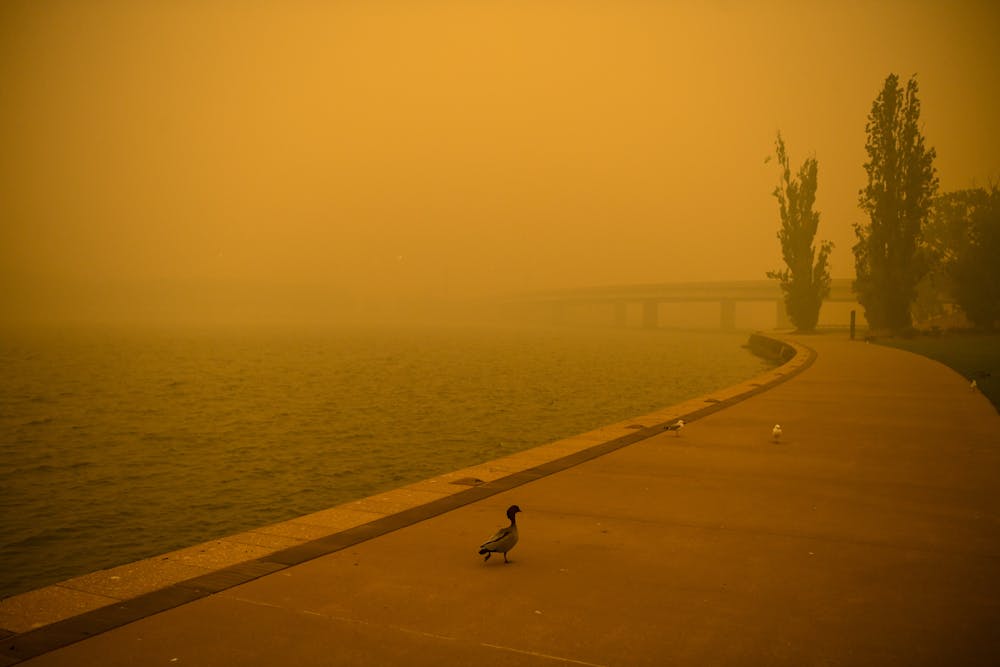 Australian curriculum content statements are abstract and removed from reality.
LUKAS COCH/AAP
Australian curriculum content statements are abstract and removed from reality.
LUKAS COCH/AAP
For example, children often assume bushfires only travel through direct flame contact and think a nonflammable physical barrier (such as a river, a road or a brick wall) will prevent a bushfire from reaching their property. But burning embers can travel many kilometres ahead of the fire front and ember attack is a major cause of home ignitions.
Such misconceptions are best addressed by making bushfire education more relevant to their own lives. Children need to explore and understand vulnerability to bushfire in their own communities as well as their capacity for reducing risk.
Read more: A familiar place among the chaos: how schools can help students cope after the bushfires
Bushfire education in schools is also more effective when taught across the curriculum, rather than as isolated topics. One example is the bushfire education program at Victoria’s Strathewen Primary School for students in grades five and six. It incorporates science, art, civics and citizenship, design, English and geography.
A recent evaluation of the program showed it increased children’s knowledge of local bushfire risks and the actions people can take to manage them. It also helped increase children’s confidence for sharing their knowledge with others, gave them a sense of empowerment and reduced bushfire-related anxieties.
The program’s benefits extended to families, including increased bushfire planning at home with more participation from children in the process.
Other research shows teachers can better develop curricula that is sensitive to local social, environmental and cultural contexts when they have technical support from emergency services. They also need access to local expertise in topics such as bushfire behaviour, emergency management planning, and Indigenous cultural burning.
Read more: Aboriginal fire management – part of the solution to destructive bushfires
Rather than another royal commission, Australia would benefit from an expert panel review of bushfire education. This would examine the best ways to enable teachers to deliver bushfire education that draws on local capacities for bushfire management including Indigenous practices; promotes children’s participation in bushfire safety activities; and leverages community partnerships with schools.
Students need to become life-long bushfire learners, rather than memorising content from 2020 which will go rapidly out of date in our changing climate.
Authors: Briony Towers, Research Fellow, Centre for Urban Research, RMIT University


 Daily Bulletin


