

We organised a conference for 570 people without using plastic. Here's how it went
- Written by: Elizabeth Sinclair, Senior Research Fellow, School of Biological Sciences and The UWA Oceans Institute, University of Western Australia
What did we use before single-use plastics became ingrained in our everyday lives? Before the 1980s, plastic bags were a rarity in our supermarkets. In 2019, excessive plastic use feels not just normal, but necessary to sustain our hectic lifestyles. From takeaway containers and supermarket packaging to cheap, low-quality goods, plastic permeates our daily lives.
However, with every passing year the scale tips further against the immediate convenience of single-use plastics, and towards the extreme inconvenience of piles of waste. The true cost to society and the environment of a “disposal economy” is becoming increasingly stark.
Read more: Will the discovery of another plastic-trashed island finally spark meaningful change?
Finding solutions to eliminate plastic waste in everyday life presents challenges, particularly during large events such as professional conferences. At some time during our careers as academics, scientists, researchers, or industry professionals, we may be part of a conference organising committee. Back in the 1990s, conferences proudly tallied how many coffee cups they used – how times have changed.
As organisers of this week’s national conference of the Australian Marine Sciences Association, we took on the challenge to walk the walk rather than just talk the talk – by holding a plastic-free conference for 570 marine science professionals, academics, and students. But how do you cater for so many people while limiting waste and using no plastic at all?
Turning the tide – be part of the solution
We started this journey 12 months ago, once we knew the challenge we were facing: a marine conference, themed around the blue economy, during July, in the Western Australian port city of Fremantle – the birthplace of the Plastic Free July movement.
From day 1, we were clear we wanted to eliminate plastic and reduce overall waste – everything from day-to-day rubbish to plastic take-home novelties that feature at so many conferences but inevitably make their way into landfill.
Recycling is only a small part of the solution. We need to “refuse, reduce, and recycle” to really tackle plastic.
What we did
We began by selecting a like-minded event organiser to work with us. Then we looked for non-plastic alternatives for obvious conference items. Here’s what we came up with:
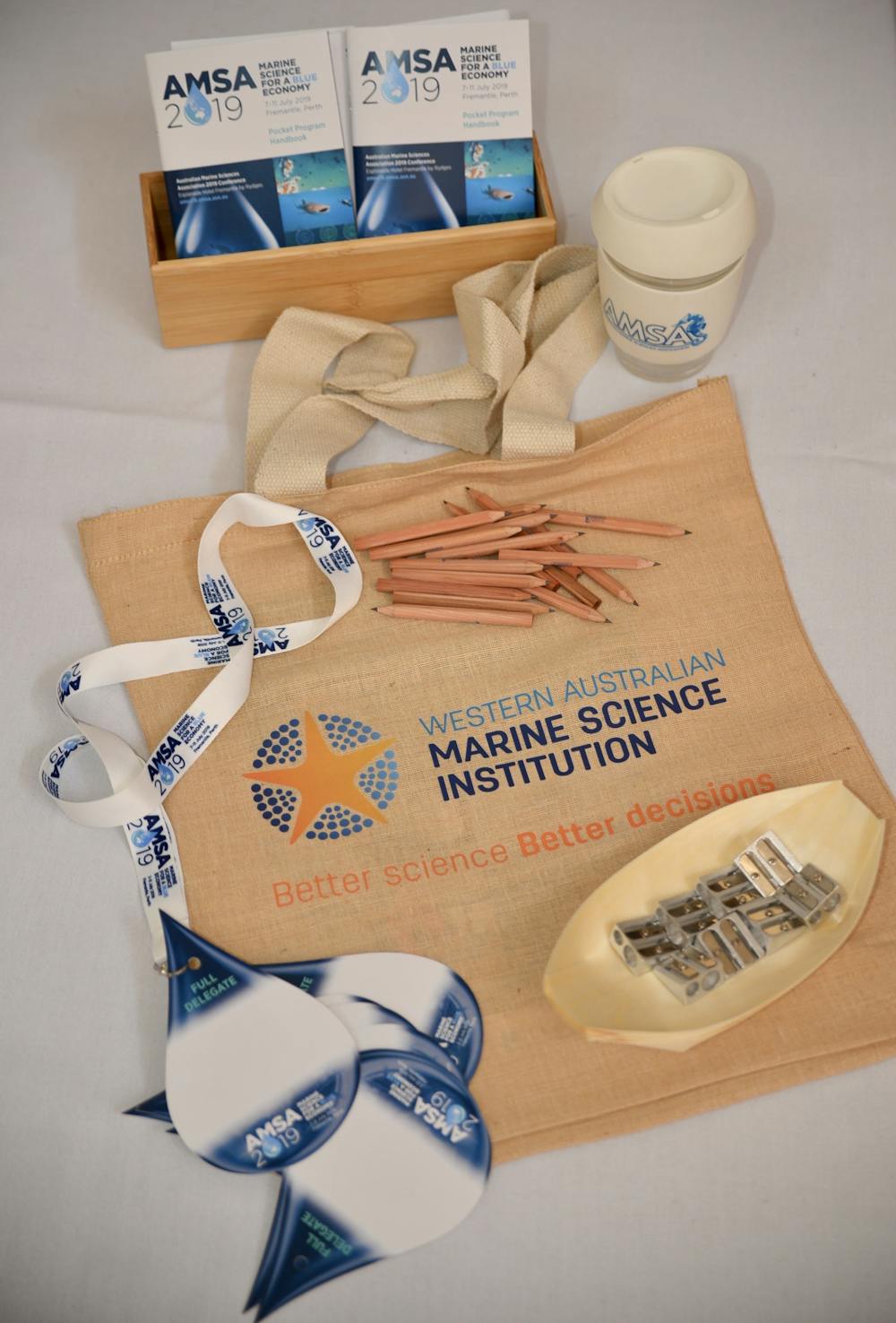 No plastic here at AMSA 2019.
Angela Rossen, Author provided
No plastic here at AMSA 2019.
Angela Rossen, Author provided
stiff cardboard name badges with no plastic pockets
bamboo lanyards with metal clips
100% natural conference tote bags
no printed envelopes for registration packs, and no printed conference abstracts
all necessary printing was done on sustainably sourced paper, by a company using a solar-powered printer
delegates were asked to bring their own reusable water bottles and coffee cups, or pre-register to buy a reusable coffee cup at the conference
coffee carts with returnable cups that can be washed and reused
water jugs with glassware (or to refill personal water bottles) at the back of each presentation room
no packaged mints or lollies
sustainably sourced pencils instead of pens (with sharpening stations provided!)
plates, silverware and glassware for all meal breaks
vegetarian catering for tea breaks
all exhibitors, workshop organisers and additional functions (such as the student night and public lecture) were committed to reducing plastic waste for free giveaway products and catering.
Most importantly, we delivered these changes without increasing the budget or impacting the bottom line.
What we learned
Plan early. Going against the grain can take a bit of work, but there are usually plastic-free options available. Take the extra time and file the solution away for your next event.
Work with everyone. Create a shared goal with your whole team: event organisers, venue, exhibitors, caterers – more ideas make for better solutions. This creates a ripple effect, not only for the event, but in developing more sustainable practice for other events.
Do a site visit. Identify potential problems and devise solutions ahead of time. Rebecca Prince-Ruiz, founder and executive director of Plastic Free July, visited our conference venue and provided valuable insights.
Don’t assume. At another marine conference we attended, plastic water bottles were replaced by jugs of water (great!) and polystyrene cups (not so great!). Not all suppliers are knowledgeable about sustainable materials, so make the effort to talk through what plastic-free and zero-waste really mean.
Removing ‘hidden’ plastics
No matter how much planning you do, there will always be “hidden plastics” in the supply chain. It is impossible to control every aspect of operation of the conference venue, their suppliers (food, linen services, waste removal), and the other hotels used by delegates (who may provide guests with water bottles, drinks, and personal hygiene products in rooms).
Early buy-in by all service providers can help reduce this, but remember the goal is to change people’s attitudes towards waste, not to reinvent the entire events industry in one conference.
But if we can do it for 570 people, then everyone can start making similar changes at their own home and workplace too.
AMSA will host its annual public lecture, sponsored by the UWA Oceans Institute, in Fremantle on Wednesday July 10 at 6.30pm. It addresses the issue of plastic pollution and what can be done about it, both globally and locally.
Authors: Elizabeth Sinclair, Senior Research Fellow, School of Biological Sciences and The UWA Oceans Institute, University of Western Australia


 Daily Bulletin


