

How Bill of Materials Management Software Cuts BOM Errors and Rework
A bill of materials looks like a simple document until it fails. On paper it is a list, a part number, a quantity, a revision, a unit of measure. On the shop floor it is the single reference that procurement, planning, and assembly all trust to be correct at the same moment. When that trust breaks, the cost rarely shows up as a line item called "BOM error." It shows up as a machinist pulling the wrong bracket from stores, a purchase order raised against a superseded revision, or a finished assembly held in quarantine while engineering works out which substitution was actually approved. Understanding how those failures start is the first step toward closing them off, and it is where bill of materials management software earns its place in a manufacturing operation rather than sitting alongside it as an afterthought.
Where BOM errors actually originate
Most BOM errors are not typos. They are timing problems. A design engineer revises a part in CAD, and the change does not propagate cleanly into the engineering BOM, let alone the manufacturing BOM that procurement and production actually work from. The E-BOM describes the product as designed; the M-BOM describes it as built, sequenced, and sourced. Any manual step between the two, a spreadsheet export, a re-typed part list, a copy-paste into an ERP screen, is a point where a wrong part number, a stale revision, or a mismatched unit of measure can enter the record without anyone noticing until the part fails to fit or the invoice does not reconcile.
Unit of measure mismatches are a particularly quiet source of rework because they pass every visual check. A component specified in metres on the engineering side and ordered in feet on the purchasing side will look correct on both documents individually. The mismatch only surfaces at receiving, or worse, at assembly, by which point the wrong quantity has already been committed, invoiced, or built into a subassembly.
Informal substitutions cause a different kind of damage. An engineer or a buyer swaps a part for an equivalent one, often for good reason: a supplier is out of stock, a lead time has blown out, a newer revision is functionally identical. The substitution is reasonable, but if it happens in an email thread or a verbal handover rather than in the record of the BOM itself, the next person to touch that assembly has no way of knowing it happened. In Defence, Aerospace, or MedTech manufacturing, where every component needs a traceable lineage back to an approved source and revision, an undocumented substitution is not a minor process gap, it is a compliance exposure.
Version control as the first line of defence
The most direct way a governed BOM platform prevents these failures is by making the BOM a single, versioned source of truth rather than a document that exists in several slightly different copies at once. MaXXlink, the BOM management platform built by Australian software company Central Innovation, structures every BOM change as a tracked revision with a clear author, timestamp, and change description attached. There is no scenario where two people are working from different versions of the same list without knowing it, because there is only one current version, and every prior one remains visible in the change history rather than disappearing into an old file or a superseded spreadsheet.
That matters most at the exact moment revisions tend to cause damage: the handover between engineering and production. When a part is updated in CAD, the change needs to move into the M-BOM without a re-entry step, because re-entry is where wrong part numbers and quantity errors get introduced. Native CAD-to-E-BOM conversion from SolidWorks and Autodesk Inventor, paired with structured E-BOM to M-BOM mapping, removes that manual translation layer entirely. The manufacturing BOM is built from the same underlying data as the design, not from someone's interpretation of it.
Making substitutions visible instead of informal
Smart part substitution with an audit trail addresses the second failure mode directly. Rather than a substitution happening off the record, the platform requires the change to be made within the BOM itself, which means it is logged, timestamped, and attributed the same way any other revision would be. If a component is swapped for an equivalent part, anyone reviewing that BOM later, whether for a quality audit, a warranty claim, or a regulatory inspection, can see exactly what was substituted, when, and by whom, rather than reconstructing the decision from memory or an old email.
Role-based approvals close the loop on both problems at once. A change to a part number, a revision, or a substitution does not become the active version of the BOM until someone with the authority to approve it has done so. That single requirement removes the most common way informal changes slip through: someone with good intentions and no bad faith making a reasonable-looking edit that nobody with oversight ever reviewed.
Where the record ends up mattering
None of this holds together if the corrected, approved BOM does not reach the systems that actually run the business. Integration with ERP and MRP platforms including MYOB Acumatica, Epicor, NetSuite, and Microsoft Dynamics Business Central means the version of the BOM that procurement orders against and that production builds from is the same version that passed through the approval workflow, not a manual re-entry of it. That closes the last gap where a correct engineering record and an incorrect purchasing or production instruction can coexist.
Central Innovation has operated in the ANZ region for more than three decades, with onshore support and no offshoring of client data, a detail that carries particular weight for Defence and Aerospace manufacturers working under strict data residency and security requirements. For engineering and quality teams in those sectors, the value of bill of materials management software is not that it makes BOM management faster, though it does. It is that it removes the specific, repeatable mechanisms, the untracked revision, the silent substitution, the manual re-entry, through which small errors compound into rework, scrap, and audit findings. Fixing a BOM after the fact is expensive. Structuring the process so the error cannot enter the record in the first place is the more durable answer, and it is the one platforms like MaXXlink are built around.
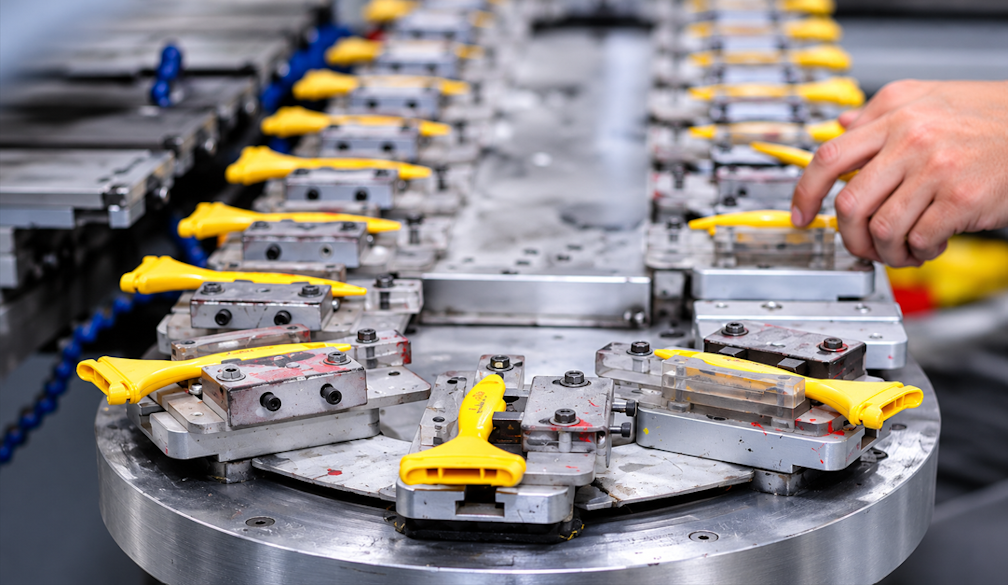
Photo by Cọ Sơn Thanh Bình on Pexels — https://www.pexels.com/photo/yellow-parts-on-production-line-17937669/


 Daily Bulletin


