

What Luxury Watches Actually Hold Their Value in 2026 (Spoiler: It's Not What You'd Guess)
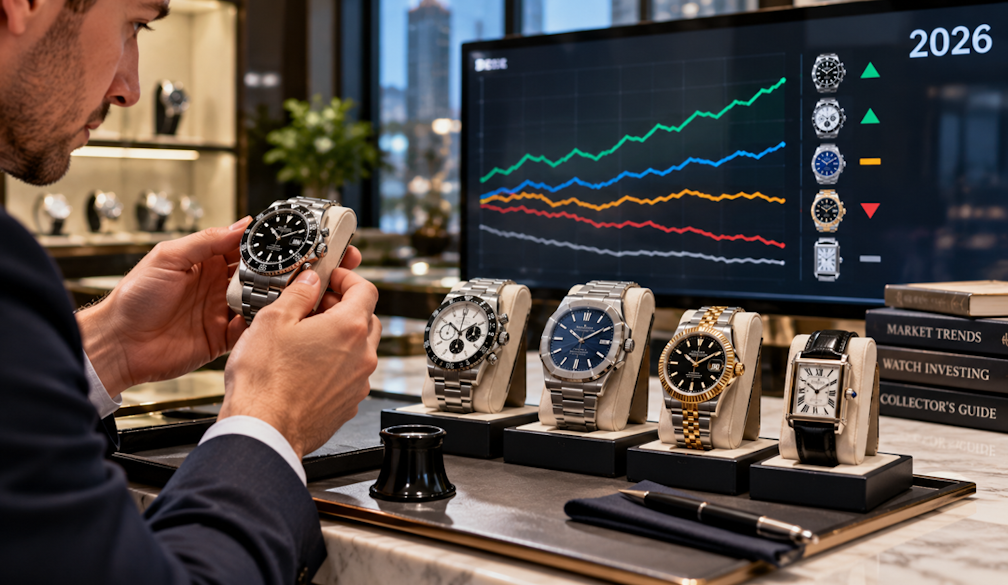
Ask ten people which watches are a "good investment" and you'll get ten confident answers, most of them wrong. Someone will mention a steel Daytona. Someone else swears by gold Day-Dates. Somebody's uncle bought a limited edition dive watch in 2019 and now thinks he's Warren Buffett with a wrist. The truth is messier and honestly more interesting than the usual list of five safe bets that every watch blog recycles.
So what actually happens to a luxury watch's value once it leaves the shop? Real numbers, not vibes.
The Myth That Won't Die
Watches are not investments. Say it with me. They're consumer goods that occasionally, for specific references, under specific conditions, hold or gain value. That's a very different claim than "buy any Rolex and you'll make money." Plenty of people have bought the wrong reference at the wrong time and watched it sit at a twenty percent discount for years.
But here's the thing. Some models genuinely do buck the depreciation curve that hits basically every other luxury good on earth. A new car loses a chunk of its value the second you drive it off the lot. A designer handbag rarely resells for what you paid. Certain watches don't play by those rules, and understanding why is more useful than memorizing a list of "safe" models.
What Actually Drives Resale Value
Three things matter more than anything else: scarcity, brand discipline on production numbers, and whether the piece has genuine wrist appeal beyond just the logo.
Rolex deliberately limits how many of its most desirable sports models it makes each year. Demand at retail massively outstrips supply, which is exactly why you can't just walk into a boutique and buy a steel Submariner or GMT-Master off the shelf. That artificial scarcity is the entire engine behind pre-owned premiums. Patek Philippe runs the same playbook with the Nautilus. Audemars Piguet does it with the Royal Oak. It's not an accident, it's a deliberate strategy that happens to be fantastic news for anyone holding the right reference.
Compare that to brands that produce watches more freely, or models within a brand's own lineup that never developed the same cult following. Plenty of perfectly nice watches simply don't have the same story, the same waitlist mythology, or the same second hand demand. They depreciate like most other manufactured goods do. Nothing wrong with them as watches. Just don't expect them to punch above their retail price on the resale market.
Where The Real Money Sits
Steel sports watches from the big three (Rolex, Patek Philippe, Audemars Piguet) tend to be the strongest performers over the long haul. Think Submariners, Daytonas, Nautilus references, Royal Oaks. These are the pieces that show up in every "grail watch" conversation, and the demand for them barely dips even when the broader secondhand market cools off.
Gold and precious metal dress watches are a different story entirely. They can be gorgeous, beautifully made, genuinely special. But the resale market for them is thinner, the buyer pool smaller, and the metal content itself introduces a weird pricing dynamic where the watch is sometimes worth close to melt value rather than watch value. Not a disaster, just a much softer curve.
Then there's the middle ground. Luxury brands like Omega, Tudor, Breitling, IWC, Panerai and Cartier sit in a fascinating spot. They're not chasing the eye watering multiples of a hot Daytona, but plenty of their references hold value remarkably well, especially discontinued models or ones with a strong following, like the Omega Speedmaster Moonwatch or certain Tudor Black Bay references. The pre-owned demand for these has been climbing steadily as buyers who can't get near a Rolex waitlist look elsewhere for something with real horological credibility.
The Part Nobody Talks About Enough
Condition and completeness matter far more than most first time buyers realize. A watch with its original box, papers, and full service history can be worth thousands more than the identical reference sold without them. Buyers (and especially dealers) treat provenance as part of the product. It's one reason why buying pre-owned from a specialist who actually documents and verifies that history tends to protect your resale value down the line, rather than buying blind from a random online listing where nobody can vouch for what you're actually getting.
So What Should You Actually Do?
If resale value genuinely matters to you (and it's fine if it doesn't, plenty of people just want a watch they love), stick to references with proven track records rather than chasing whatever's trending on social media this month. Steel sports models from the majors, discontinued references, and pieces with documented provenance are consistently the safest bets. Limited editions are a trap more often than they're a windfall, no matter how convincing the marketing pitch sounds.
Plus, don't underestimate the value of buying from someone who actually knows the secondhand market rather than someone just trying to move new stock. A specialist who lives and breathes the pre-owned side of things can tell you honestly which references are genuinely holding their ground and which ones are quietly sliding, because they're watching real sale prices every single day rather than working off a brand's suggested retail figure.
At the end of the day, the watch market rewards patience and homework, not hype. Do your research, buy from people who can back up what they're telling you, and treat any resale gain as a nice bonus rather than the whole point of owning something beautiful on your wrist.
 "Pin It")

 Daily Bulletin


