Expedition maps more than 12,800 square kilometers of seabed and documents deep-sea biodiversity across a little-studied high seas region
SINGAPORE – Media OutReach Newswire – 4 August 2026 – OceanX today announced the completion of High Seas: Revealing Roo Rise, a 22-day scientific expedition aboard R/V OceanXplorer to investigate one of the eastern Indian Ocean's most ecologically significant and under-characterized high seas regions.
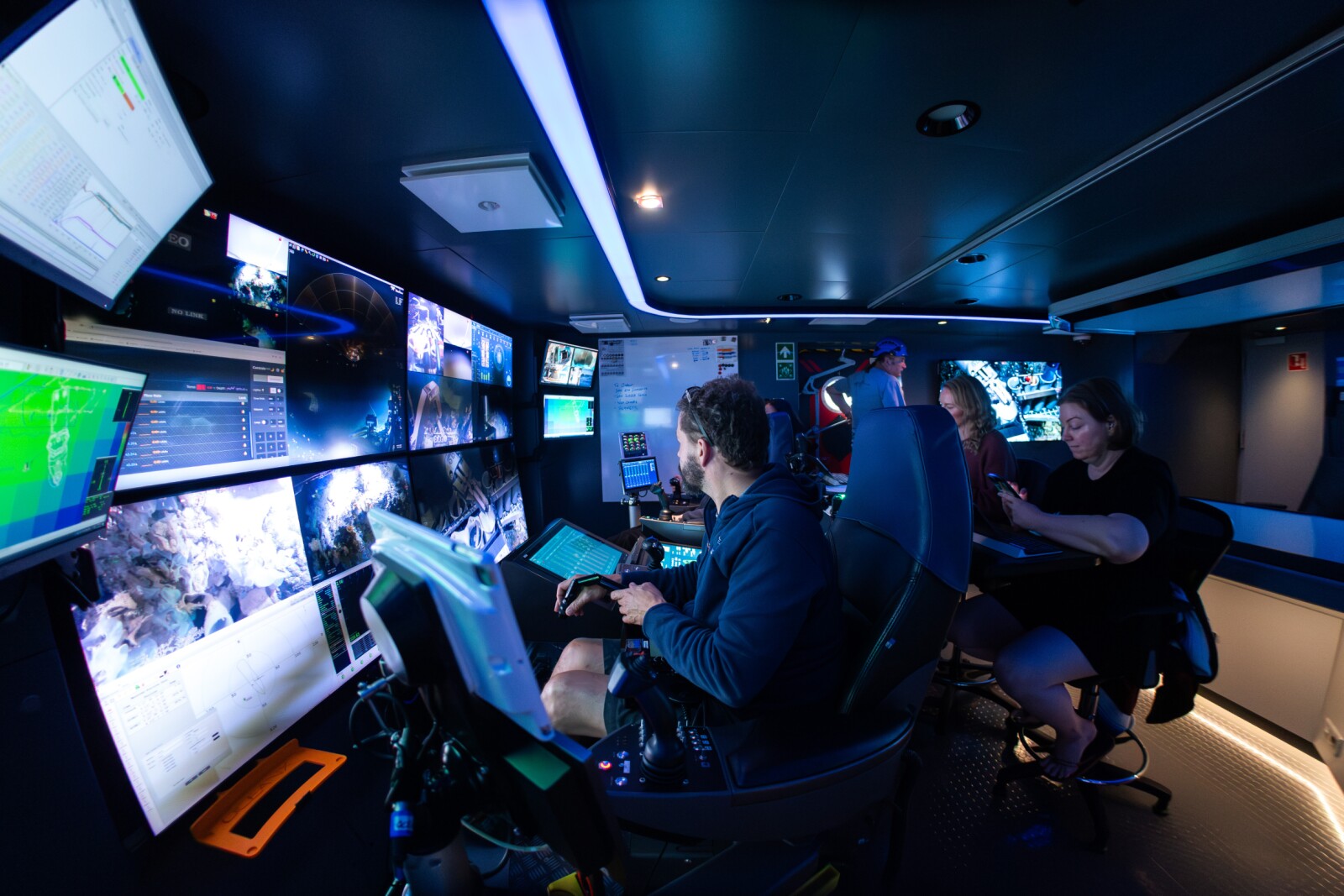
Scientists monitor a deep-sea sampling dive from Mission Control aboard OceanXplorer as an ROV pilot navigates ROV Chimaera.
Conducted in collaboration with Minderoo Foundation, Minderoo OceanOmics Centre at UWA, the Western Australian Museum, and the Living High Seas Initiative, the expedition surveyed two seamount features within Roo Rise. One lies within the South of Java Island Ecologically and Biologically Significant Marine Area [EBSA], while the other is located near its southwestern boundary. Researchers from the Nanyang Technological University, Singapore also participated in the expedition.
The research team used high-resolution seafloor mapping and remotely operated vehicle [ROV] surveys to document the structure and biodiversity of the two features. Environmental DNA [eDNA] sampling, water-column profiling, plankton surveys, and targeted specimen collection produced complementary datasets spanning the seafloor through the upper ocean.
Expedition outputs include:
12,833 square kilometers of seabed mapped, including 9,333 square kilometers in international waters. Approximately 8,232 square kilometers, or 64 percent of the total area, represents new mapping when compared with existing global and Australian datasets.
Eight ROV dives, one submersible dive, nine CTD casts, 15 bongo net deployments, and six XBT deployments. The deepest CTD cast reached 3,845 meters.
2,365 samples recorded across the expedition's scientific workstreams, including 329 specimen lots and 528 eDNA samples collected across ROV transects and CTD stations.
Tissue samples from 243 specimens across nine phyla collected for whole-genome sequencing and the development of genomic reference resources in collaboration with the OceanOmics Centre.
Preliminary observations documented extensive sponge gardens and coral communities across Roo Rise, including large habitat-forming species and taxa recognized as indicators of Vulnerable Marine Ecosystems [VMEs]. Several surveyed areas supported dense coral and sponge assemblages with diverse associated communities of echinoderms, crustaceans, molluscs, annelids, and fishes.
Scientists also identified four xenophyophore morphotypes that may represent undescribed species, subject to further taxonomic and molecular review. An unusual seafloor habitat consisting of probable early diagenetic carbonate colonized by abundant agglutinated foraminifera was documented during a Roo Rise dive.
"Roo Rise sits within a region that is globally important for ocean productivity and fisheries, yet its deep-sea habitats have remained largely under-characterized," said Dr. Alexis Weinnig, Science Program Manager and Expedition Coordinator at OceanX. "Over the past 22 days, our team mapped the structure of these seamounts and documented deep-water communities. We also collected samples from the seafloor through the water column. Bringing these datasets together will give scientists and decision-makers a stronger evidence base for understanding this part of the high seas."
The South of Java Island region is shaped by seasonal upwelling and complex oceanographic processes. It is also associated with the only known spawning area for endangered Southern Bluefin Tuna, although this expedition took place outside the species' peak spawning season. The data collected will help scientists examine how seafloor structure, water-column conditions, and biological communities interact across this productive open-ocean ecosystem.
Minderoo Foundation and Minderoo OceanOmics Centre at UWA led environmental DNA sampling and associated tissue sample collections in support of genomic biodiversity research across the expedition. The ship-based program generated 528 eDNA samples from ROV transects and CTD stations, while representative tissue samples from 243 specimens collected in situ via ROV dives will support whole-genome sequencing and the creation of genomic reference resources. At Christmas Island, an adjacent marine protected area under Australia's jurisdiction, eDNA samples were collected from 90 sites, including 20 locations revisited from a 2023 survey.
"This expedition lays the groundwork to support genomics-based biodiversity monitoring in one of the ocean's most under-studied and difficult-to-reach regions. By combining eDNA and tissue samples from Roo Rise with our growing datasets from Christmas Island, we can compare biodiversity across a clear protection gradient, from a recently established marine park to the less-protected waters of the adjacent high seas. As nations move to implement the BBNJ Agreement, this kind of evidence will be critical for understanding and safeguarding the deep-water habitats that support many vulnerable species. The expedition also gives people a window into places they will likely never see for themselves, offering a way to explore deep-ocean biodiversity in some of the planet's most remote waters and feel connected to it," said Dr Shannon Corrigan, Principal Research Fellow and OceanOmics Centre Lead at the Minderoo OceanOmics Centre at the University of Western Australia.
Western Australian Museum scientists contributed taxonomic expertise and specimen-based research. Voucher specimens will be curated within the Museum's permanent reference collections, supporting species identification, taxonomic description, and open access to specimens for future deep-sea biodiversity research.
The expedition also connected deep-sea science with public audiences through live broadcasts with scientists aboard the R/V OceanXplorer. More than 100 people attended a Live Cross at the Western Australian Museum Boola Bardip, while an earlier event broadcast to Christmas Island brought together approximately 80 to 100 community members and Parks Australia staff. The WA Museum live cross was recorded and is now available on the WA Museum website and YouTube, enabling broader audiences to engage with the research.
"The real legacy of expeditions like this lies in the specimens that come back to the Western Australian Museum collections. While the footage is spectacular, it is the specimens that allow us to verify what we've seen, describe the species, and provide a permanent record that scientists can return to as new questions and technologies emerge. What stood out was the diversity of coral and sponge habitats we encountered across the deep water environments of Roo Rise. Even for the seamounts that appeared similar on a map, the communities at each turned out to be very different, reinforcing just how diverse and patchy these deep-sea ecosystems are and how much there is still to discover," said Jennifer McIlwain, Director, Science at the Western Australian Museum.
Around Christmas Island, the onshore program combined eDNA sampling with community engagement and local capacity building. Thirteen activities were offered to the community, alongside participation in locally organized events. Total attendance reached approximately 345, reflecting repeat participation by community members across sampling trips, presentations, and education activities.
The expedition also collected baseline plankton and microbial data relevant to research into the Milky Seas phenomenon. Bioluminescent bacteria were successfully and consistently isolated from radiolarian and zooplankton material collected through bongo net surveys. Further population genomics and physiological analysis will examine the characteristics of these cultures.
The expedition's scientific datasets may contribute to future assessments of biodiversity, seamount ecosystems, and ecological connectivity in areas beyond national jurisdiction. The work may also inform future area-based management discussions under the Agreement on Biodiversity Beyond National Jurisdiction [BBNJ Agreement]. Future designation and management decisions sit with the relevant international processes.
The next phase of research will focus on taxonomic review, eDNA metabarcoding, whole-genome sequencing, and the processing of seafloor mapping and oceanographic data. Any observations involving organisms that may represent undescribed species will be communicated following scientific validation and partner approval.
Pending a data-sharing agreement, processed bathymetry is intended for submission to the National Oceanic and Atmospheric Administration's National Centers for Environmental Information and global mapping initiatives including GMRT, GEBCO, and Seabed 2030.
Hashtag: #OceanX
The issuer is solely responsible for the content of this announcement.
About OceanX
OceanX is a nonprofit working to unlock the ocean's sustainable potential. Through a dual focus on science and education, we're building a new paradigm where humanity and the ocean mutually thrive. Our approach is fueled by exploration, leveraging advanced research, multimedia educational programs, cross-sector partnerships, and advanced technology to transform how people understand and value the ocean. Our work strives to fortify biodiversity and increase the sustainable use of ocean resources to help ensure the ocean remains a foundation for human wellbeing and future potential. OceanX is a nonprofit operating program of Dalio Philanthropies. For more information, visit www.oceanx.org and follow OceanX on Facebook, Instagram, X,TikTok, LinkedIn, and YouTube.
About Minderoo Foundation
Minderoo Foundation is driven by a commitment to create a future where people and the environment we depend on can thrive. Its work focuses on strengthening communities, advancing gender equality, and protecting natural ecosystems. While its approach centers on long-term systems change, when urgent challenges arise, including humanitarian crises, it acts quickly through targeted impact missions. Minderoo Foundation drives change by working alongside those closest to the challenge, advocating for reform, building evidence for what works, and developing solutions when none exist.
About Minderoo OceanOmics Centre at UWA (OceanOmics Centre)
As a leading ocean research institute located in the Indian Ocean region, the UWA Oceans Institute harnesses transdisciplinary expertise to drive transformative research, pioneer solutions, collaborate with communities, protect marine and coastal biodiversity, and guide critical decisions for climate change mitigation and adaptation. Embedded in the UWA Oceans Institute, the Minderoo OceanOmics Centre at UWA integrates advanced genomics infrastructure, specialist expertise, and strong collaborative networks to support large-scale environmental DNA and whole-genome sequencing research characterizing marine biodiversity. Its work establishes a genomics-enabled foundation for biodiversity discovery, ecological understanding, informed conservation management, and the development of innovative biomonitoring solutions.
About Western Australian Museum
The Western Australian Museum is the state of Western Australia's premier cultural organization, housing the state's scientific and cultural collection. For over 120 years, the Museum has made Western Australia's natural and social heritage accessible through research, exhibitions, and public programs. Today, the Museum has seven public locations and a Collection and Research Centre that houses more than eight million objects. The OceanXperience exhibition is currently on display at WA Museum Boola Bardip, with activities organized to engage members of the public in person and virtually.
NTU, Singapore
Nanyang Technological University (NTU) is a globally recognized research university with strengths in marine science, environmental engineering, sustainability, and Earth systems science. Through interdisciplinary research and technological innovation, NTU contributes to understanding and conserving marine ecosystems while supporting collaborative initiatives that address regional and global ocean challenges.
About Living High Seas Initiative
The Living High Seas Initiative is an international collaboration dedicated to improving scientific knowledge and governance of biodiversity in areas beyond national jurisdiction. By supporting research, policy development, and international cooperation, the initiative contributes to implementation of the BBNJ Agreement and promotes the conservation and sustainable use of biodiversity on the high seas. Its collaboration with OceanX helps generate scientific data that can inform global ocean management.
For decades, the Australian trade and construction sector operated almost entirely on word-of-mouth recommendations and local community networks. Small business owners typically relied on local newspa...
Introduction
Visa decisions can shape employment, family life, study plans, travel, and future residence. A small omission can lead to delay, added expense, or refusal. Immigration lawyers assess l...
Many industrial processes require moisture to be removed from compressed air, products or process materials before they move to the next stage. Excess moisture can affect equipment performance, produc...
Effective communication helps teams stay organised, share ideas and keep track of important information. While digital tools are now common in many workplaces, a whiteboard continues to provide a simp...
The Evolution of Sustainable Event Merchandise
Event planning has undergone a massive transformation over the last decade. Gone are the days when organizers could hand out cheap, single use plastic...
Flowers have a great power to speak when humans cannot express their feelings with right words. Flowers are the best gifts when you are celebrating a birthday or welcoming a newborn child into your fa...
For a long time, you might have defaulted to overseas suppliers when sourcing fabricated metal components for a project. The unit price was lower on paper, and the maths seemed straightforward. That...
Tariff escalations, supply chain fragility, geopolitical events, and the ongoing threat of cyber disruption have reshaped the risk environment facing Australian organisations. The problem is that ma...
Starting out as an Uber driver in Melbourne is not as complicated as it sounds but getting the vehicle right is where most new drivers get stuck. Uber has strict requirements around vehicle age, condi...




 Daily Bulletin


