

800,000 More Daily Journeys: Copenhagen's Next Mobility Challenge
- Published in News from Asia
COPENHAGEN, DENMARK - Media OutReach Newswire - 28 July 2026 - There is something remarkable about Copenhagen.Stand in the city centre during rush hour and you will still hear bicycle bells, conversations spilling out from cafés and children walking to school.
It is not because the city has fewer people or less traffic. On the contrary, Copenhagen is one of Northern Europe's most dynamic capitals. What makes it different is that its mobility system is organised so well that it almost disappears into everyday life.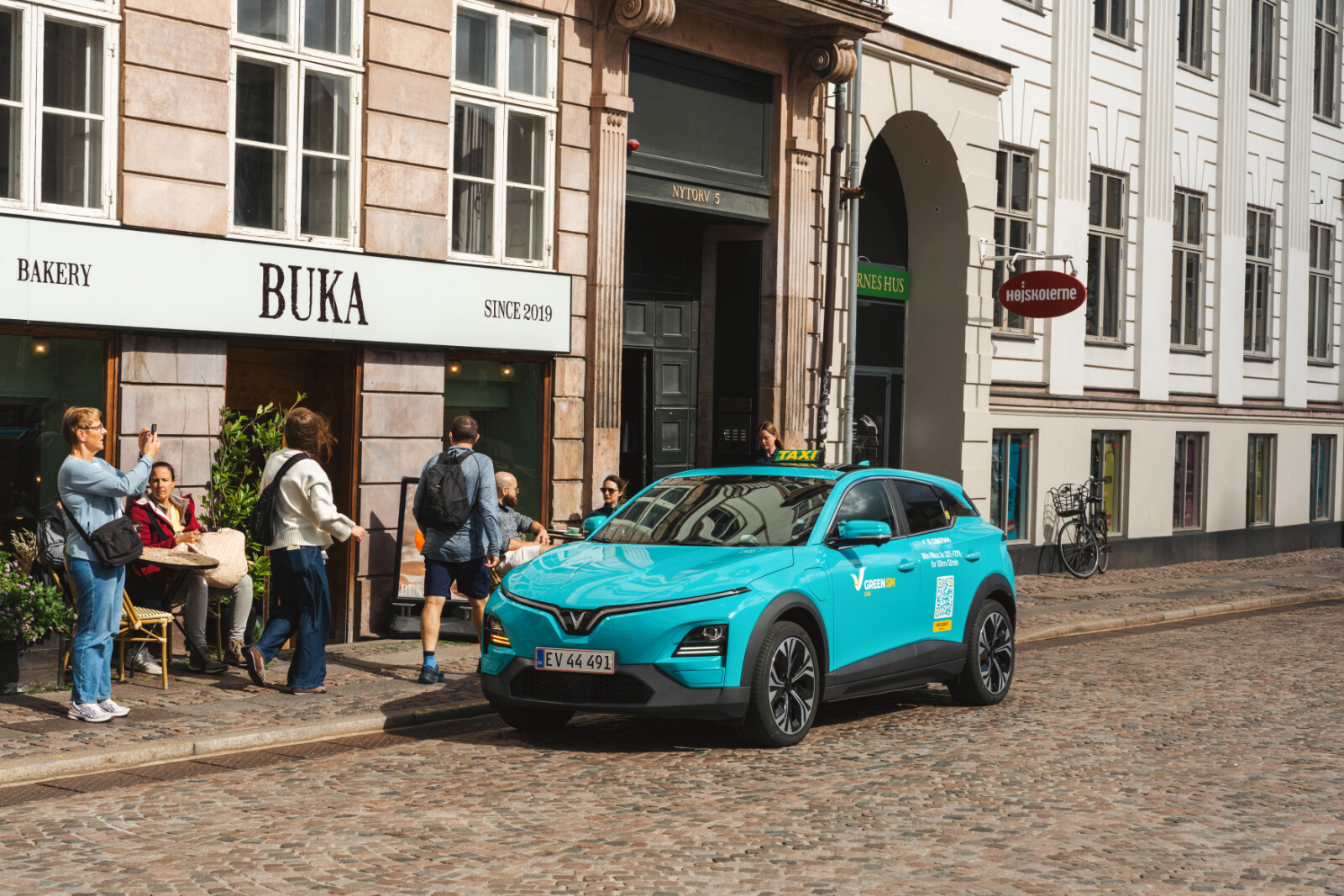
That success has never been built around a single mode of transport. Copenhagen is not simply a cycling city, nor is it defined by its metro or buses. It is an integrated mobility ecosystem where every mode serves a distinct purpose. Bicycles are ideal for short trips. Public transport moves large numbers of people efficiently across the city. Walking remains part of daily life. Taxis fill the journeys that other options do not always serve well, whether it is an early morning airport transfer, an elderly passenger travelling home, a family carrying luggage or visitors arriving in the city for the first time. Rather than competing with one another, each mode strengthens the overall system.
Yet even one of the world's most successful mobility systems now faces a new challenge.
According to a joint mobility analysis by the Capital Region of Denmark and the City of Copenhagen, the Greater Copenhagen area is expected to generate around 800,000 additional journeys every day by 2035. That growth will be shared across every mode of transport, including approximately 290,000 additional walking trips, 110,000 cycling trips, 80,000 public transport journeys and 310,000 car trips each day.
These figures reveal an important reality. Copenhagen is not expecting people to abandon bicycles for cars, nor is it attempting to replace one mode of transport with another. As the population grows, tourism expands and economic activity increases, demand will rise across the entire mobility system.
The real challenge is therefore not deciding which mode of transport should dominate. It is finding ways to accommodate hundreds of thousands of additional journeys while preserving the quiet streets, public spaces and quality of life that have made Copenhagen one of the world's most liveable cities.
This philosophy is increasingly reflected in the city's approach to mobility. Walking, cycling, public transport, cars and taxis are no longer viewed as competing alternatives, but as complementary parts of the same transport ecosystem, each serving different travel needs.
The challenge is not unique to Copenhagen.
According to the European Environment Agency (EEA), road traffic remains Europe's largest source of environmental noise, affecting around 92 million people. The report concludes that electrification alone will not solve the problem. Cleaner vehicles are essential, but so are better urban planning and a more balanced transport system.
In other words, the future of urban mobility will not be determined by how many electric vehicles a city puts on its streets. It will depend on whether every journey is served by the right mode, at the right time and in the right place.
Even the best transport systems leave certain journeys uncovered.
Not everyone can cycle to the airport before sunrise. Elderly passengers may struggle with luggage on public transport. Visitors arriving in Copenhagen for the first time may not feel confident combining several transport options simply to reach their hotel. These journeys represent only a small proportion of daily travel, but they will always exist. This is where ride-hailing finds its place within the mobility ecosystem. It complements public transport and cycling rather than competing with them.
The quality of that service, however, depends on far more than the vehicle itself.
Ultimately, every journey is shaped by the person behind the wheel. A safe drive, professional conduct, punctuality, a warm greeting or a helping hand with a suitcase all contribute to the passenger's experience. In a city like Copenhagen, these small moments help shape the city's reputation just as much as its infrastructure.
This is the context in which Green SM enters Copenhagen.
Over the past three years, Green SM has accumulated experience from millions of journeys every day and billions of kilometres travelled in fully electric vehicles across Asia. Yet in Copenhagen, scale alone means very little. The more important question is whether a mobility service can integrate seamlessly into an already successful transport system and make it work even better.
For that reason, Green SM invests not only in an all-electric fleet, but also in rigorous driver recruitment and training covering safety, customer service, operational excellence and local cultural understanding. The objective is not simply to move passengers from one destination to another, but to deliver journeys that reflect the standards Copenhagen has spent decades building.
Perhaps that is why Copenhagen became Green SM's first destination in Europe.
The ambition is not to introduce a new model of urban mobility. It is to become a trusted addition to one that already works exceptionally well.
Ultimately, success in Copenhagen will never be measured by the number of vehicles on the road. The city does not need more cars simply to fill its streets. It needs mobility services that are available when people need them, complement the existing transport network and quietly step back once their role is complete, leaving the city every bit as liveable as before.
If Green SM can help make thousands of daily journeys more convenient, safer and more reliable, while preserving the rhythm of life that makes Copenhagen unique, that may be success enough.
Hashtag: #GreenSM
The issuer is solely responsible for the content of this announcement.


 Daily Bulletin


