

New Zealand hits zero active coronavirus cases. Here are 5 measures to keep it that way
- Written by: Michael Baker, Professor of Public Health, University of Otago
Today, for the first time since February 28, New Zealand has no active cases of COVID-19.
Today is also the 17th day since the last new case was reported. New Zealand has a total of 1,154 confirmed cases (combined total of confirmed and probable cases is 1,504) and 22 people have died.
According to our modelling, it is now very likely (well above a 95% chance) New Zealand has completely eliminated the virus. This is in line with our Te Pūnaha Matatini colleagues’ modelling.
This is an important milestone and a time to celebrate. But as we continue to rebuild the economy, there are several challenges ahead if New Zealand wants to retain its COVID-19-free status while the pandemic continues elsewhere.
It remains important that good science supports the government’s risk assessment and management. Below, we recommend several ways people can protect themselves. But we also argue New Zealand needs an urgent overhaul of the health system, including the establishment of a new national public health agency for disease prevention and control.
Read more: New Zealand hits a 95% chance of eliminating coronavirus – but we predict new cases will emerge
What elimination means
Elimination is defined as the absence of a disease at a national or regional level. Eradication refers to its global extinction (as with smallpox).
Elimination requires a high-performing surveillance system to provide assurance that, should border control fail, any new cases would be quickly found. Agreed definitions are important for public reassurance and as a basis for expanding travel links with other countries that have also achieved elimination.
It is important to remind ourselves that active cases are not the ones we need to worry about. By definition, they have all been identified and placed in isolation and are very unlikely to infect others. The real target of elimination is to stop the unseen cases silently spreading in the community. This is why we need mathematical modelling to tell us that elimination is likely.
Avoiding complacency – and new outbreaks
New Zealand’s decisive elimination strategy appears to have succeeded, but it is easy to become complacent. Many other countries pursuing a containment approach have had new outbreaks, notably Singapore, Korea and Australia.
New Zealand has spent months expanding its capacities to eliminate COVID-19. But maintaining elimination will be challenging. Airports, seaports and quarantine facilities remain potential sites of transmission from overseas, particularly given the pressure to increase numbers of arrivals.
New Zealand’s move to alert level 1 will end all physical distancing restrictions. If the virus is reintroduced, this creates the potential for outbreaks arising from indoor social gatherings. New Zealand is also moving into winter when respiratory viruses can spread more easily, as is seen with the highly seasonal coronaviruses which cause the common cold.
5 key ways to protect New Zealand’s long-term health
Just as New Zealand prepared for the pandemic, the post-elimination period requires “maximum proactivity”. Here are five key risk management approaches to achieve lasting protection for New Zealand against COVID-19 and other serious public health threats.
1. Establish public use of fabric face masks in specific settings
Health protection relies on multiple barriers to infection or contamination. This is the cornerstone of protecting drinking water, food safety and borders from incursions by biological agents.
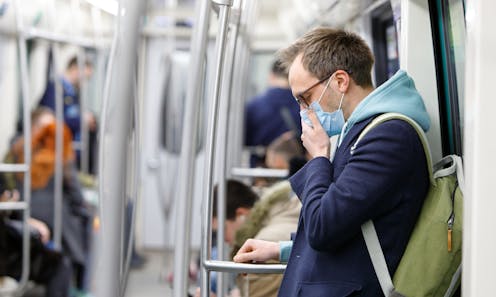
With the end of physical distancing, we recommend the government seriously considers making mask wearing mandatory on public transport, on aircraft and at border control and quarantine facilities. Other personal hygiene measures (staying home if sick, washing hands, coughing into elbows) are insufficient when transmission is often from people who appear well and can spread the virus simply by breathing and talking.
The evidence base for the effectiveness of even simple fabric face masks is now strong, according to a recent systematic review published in the Lancet. The World Health Organization has also updated its guidelines to recommend that everyone wear fabric face masks in public areas where there is a risk of transmission. Establishing a culture of using face masks in specific settings in New Zealand will make it easier to expand their use if required in future outbreaks.
2. Improve contact tracing effectiveness with suitable digital tools
New Zealand’s national system for contact tracing remains a critical back-stop measure to control outbreaks, should border controls fail. But there is significant potential for new digital tools to enhance current processes, albeit with appropriate privacy safeguards built in. To be effective, such digital solutions must have high uptake and support very rapid contact tracing. Downloadable apps appear insufficient and both New Zealand and Singapore are investigating bluetooth-enabled devices which appear to perform better and could be distributed to all residents.
3. Apply a science-based approach to border management
A cautious return to higher levels of inbound and outbound travel is important for economic and humanitarian reasons, but we need to assess the risk carefully. This opening up includes two very different processes. One is a broadening of the current categories of people permitted to enter New Zealand beyond residents, their families and a small number of others. This will typically require the continuation of routine 14-day quarantine, until improved methods are developed.
The other potential expansion is quarantine-free entry, which will be safest from countries that meet similar elimination targets. This process could begin with Pacific Island nations free of COVID-19, notably Samoa and Tonga. It should be possible to extend this arrangement to various Australian states and other jurisdictions such as Fiji and Taiwan when they confirm their elimination status.
4. Establish a dedicated national public health agency
Even before COVID-19 hit New Zealand, it was clear our national public health infrastructure was failing after decades of neglect, fragmentation and erosion. Prominent examples of system failure include the Havelock North campylobacter outbreak in 2016 and the prolonged measles epidemic in 2019. The comprehensive health and disability system review report was delivered to the Minister of Health in March and was widely expected to recommend significant upgrading of public health capacity. This report and its recommendations should now be released.
We also recommend an interim evaluation of the public health response to COVID-19 now, rather than after the pandemic. These reviews would inform the needed upgrade of New Zealand’s public health capacity to manage the ongoing pandemic response and to prepare the country for other serious health threats. A key improvement would be a dedicated national public health agency to lead disease control and prevention. Such an agency could help avoid the need for lockdowns by early detection and action in response to emerging infectious disease threats, as achieved by Taiwan during the current pandemic.
5. Commit to transformational change to avoid major global threats
COVID-19 is having devastating health and social impacts globally. Even if it is brought under control with a vaccine or antivirals, other major health threats remain, including climate change, loss of biological diversity and existential threats (for example, pandemics arising from developments in synthetic biology). These threats need urgent attention. The recovery from lockdown provides an opportunity for a sustained transformation of our economy that addresses wider health, environmental and social goals.
Authors: Michael Baker, Professor of Public Health, University of Otago


 Daily Bulletin


