

Smart cities can help us manage post-COVID life, but they'll need trust as well as tech
- Written by: Sameer Hasija, Associate Professor of Technology and Operations Management, INSEAD
“This virus may become just another endemic virus in our communities and this virus may never go away.” – WHO executive director Mike Ryan, May 13
Vaccine or not, we have to come to terms with the reality that COVID-19 requires us to rethink how we live. And that includes the idea of smart cities that use advanced technologies to serve citizens. This has become critical in a time of pandemic.
Read more: Coronavirus recovery: public transport is key to avoid repeating old and unsustainable mistakes
Smart city solutions have already proved handy for curbing the contagion. Examples include:
The robot dog called SPOT is being trialled in Singapore to remind people to practise physical distancing.But as we prepare to move beyond this crisis, cities need to design systems that are prepared to handle the next pandemic. Better still, they will reduce the chances of another one.
Issues of trust are central
In a world of egalitarian governments and ethical corporations, the solution to a coronavirus-like pandemic would be simple: a complete individual-level track and trace system. It would use geolocation data and CCTV image recognition, complemented by remote biometric sensors. While some such governments and corporations do exist, putting so much information in the hands of a few, without airtight privacy controls, could lay the foundations of an Orwellian world.
Read more: Darwin's 'smart city' project is about surveillance and control
Our research on smart city challenges suggests a robust solution should be a mix of protocols and norms covering technology, processes and people. To avoid the perils of individual-level monitoring systems, we need to focus on how to leverage technology to modify voluntary citizen behaviour.
This is not a trivial challenge. Desired behaviours that maximise societal benefit may not align with individual preferences in the short run. In part, this could be due to misplaced beliefs or misunderstanding of the long-term consequences.
As an example, despite the rapid spread of COVID-19 in the US, many states have had public protests against lockdowns. A serious proportion of polled Americans believe this pandemic is a hoax, or that its threat is being exaggerated for political reasons.
 Protests against lockdowns in the United States and other countries reveal a lack of trust in government.
Albin Lohr-Jones/Sipa USA/AAP
Protests against lockdowns in the United States and other countries reveal a lack of trust in government.
Albin Lohr-Jones/Sipa USA/AAP
Design systems that build trust
The first step in modifying people’s behaviour to align with the greater good is to design a system that builds trust between the citizens and the city. Providing citizens with timely and credible information about important issues and busting falsehoods goes a long way in creating trust. It helps people to understand which behaviours are safe and acceptable, and why this is for the benefit of the society and their own long-term interest.
In Singapore, the government has very effectively used social media platforms like WhatsApp, Facebook, Twitter, Instagram and Telegram to regularly share COVID-19 information with citizens.
Densely populated cities in countries like India face extra challenges due to vast disparities in education and the many languages used. Smart city initiatives have emerged there to seamlessly provide citizens with information in their local language via a smartphone app. These include an AI-based myth-busting chatbot.
Read more: How smart city technology can be used to measure social distancing
Guard against misuse of data
Effective smart city solutions require citizens to volunteer data. For example, keeping citizens updated with real-time information about crowding in a public space depends on collecting individual location data in that space.
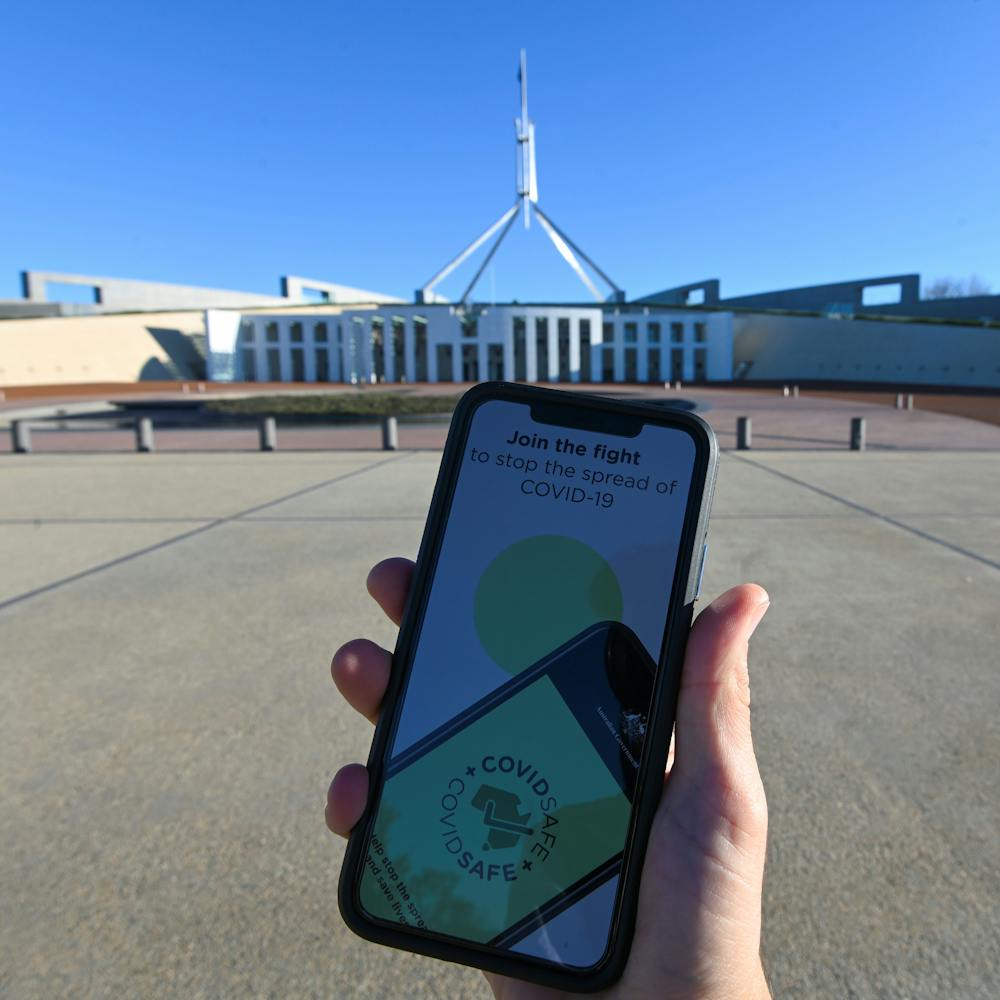 Australians’ concerns about the COViDSafe contact-tracing app illustrate the need for transparent safeguards when citizens are asked to share their data.
Lukas Coch/AAP
Australians’ concerns about the COViDSafe contact-tracing app illustrate the need for transparent safeguards when citizens are asked to share their data.
Lukas Coch/AAP
Individual-level data is also useful to co-ordinate responses during emergencies. Contact tracing, for instance, has emerged as an essential tool in slowing the contagion.
Technology-based smart city initiatives can enable the collection, analysis and reporting of such data. But misuse of data erodes trust, which dissuades citizens from voluntarily sharing their data.
City planners need to think about how they can balance the effectiveness of tech-based solutions with citizens’ privacy concerns. Independent third-party auditing of solutions can help ease these concerns. The MIT Technology Review’s audit report on contact-tracing apps is one example during this pandemic.
Read more: The trade-offs 'smart city' apps like COVIDSafe ask us to make go well beyond privacy
It is also important to create robust data governance policies. These can help foster trust and encourage voluntary sharing of data by citizens.
Using several case studies, the consulting firm PwC has proposed a seven-layer framework for data governance. It describes balancing privacy concerns of citizens and efficacy of smart city initiatives as the “key to realising smart city potential”.
As we emerge from this pandemic, we will need to think carefully about the data governance policies we should implement. It’s important for city officials to learn from early adopters.
While these important issues coming out of smart city design involve our behaviour as citizens, modifying behaviour isn’t enough in itself. Civic leaders also need to rethink the design of our city systems to support citizens in areas like public transport, emergency response, recreational facilities and so on. Active collaboration between city planners, tech firms and citizens will be crucial in orchestrating our future cities and hence our lives.
The author acknowledges suggestions from Aarti Gumaledar, Director of Emergentech Advisors Ltd.
Authors: Sameer Hasija, Associate Professor of Technology and Operations Management, INSEAD


 Daily Bulletin


