

We need a legally binding treaty to make plastic pollution history
- Written by: Trisia Farrelly, Senior Lecturer, Massey University
A powerful marriage between the fossil fuel and plastic industries threatens to exacerbate the global plastic pollution crisis. The Center for International Environmental Law (CIEL) estimates the next five years will see a 33-36% surge in global plastics production.
This will undermine all current efforts to manage plastic waste. It is time to stop trying (and failing) to bail out the bathtub. Instead, we need to turn off the tap.
Read more: The major source of ocean plastic pollution you've probably never heard of
The United Nations Environment Assembly (UNEA) has recognised plastic pollution as a “rapidly increasing serious issue of global concern that needs an urgent global response”. An expert group formed last year proposed an international treaty on plastic pollution as the most effective response.
Together with Giulia Carlini, at CIEL, I was part of a 30-strong group of non-governmental organisations within this expert group attending the UNEA summit this week to discuss how we can start making plastic pollution history.
Unfortunately, despite strong statements from developing countries, including the Pacific Island states, a small group of countries stalled negotiations. This effectively turns back the clock on ambitious global action, and leaves us more desperate than ever for a real solution to our plastic problem.
Why we need a treaty
The first step is to reject the many false solutions that pop up in our news feeds.
Recycling is one of those false solutions. The scale of plastic production is too big for recycling alone. Of all the plastics produced between 1950 and 2015, only 9% have been recycled. This figure is set to plummet as China and a growing number of developing countries are rejecting plastic waste from Australia, New Zealand and the rest of the world.
China had been a major destination for Australia and New Zealand’s recyclable waste. China’s shutdown meant Australia lost the market for a third of its plastic waste. It also left New Zealand with 400 tonnes of stockpiled plastic waste last year.
With limited domestic recycling facilities, Australia and New Zealand are seeking new markets. Last year, New Zealand sent about 250,000 tonnes of plastic to landfill, and a further 6,300 tonnes to Malaysia for recycling. But now Malaysia is also rejecting other countries’ hazardous plastic waste.
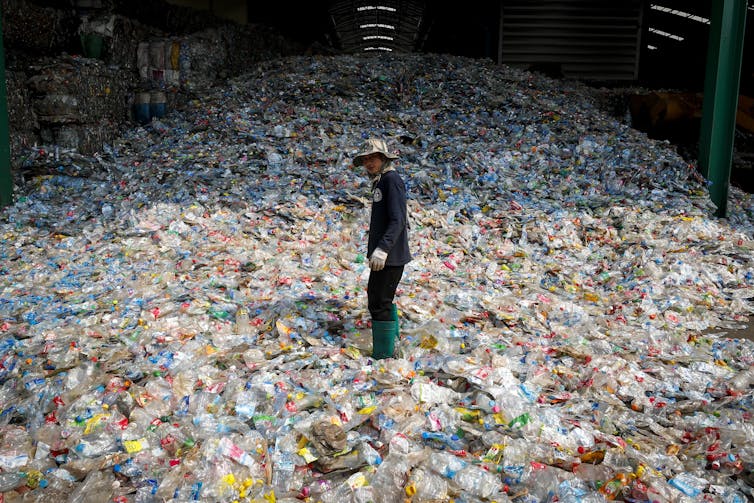 Sending our platic to Asia is not a solution.
EPA/Diego Azubel, CC BY-SA
Sending our platic to Asia is not a solution.
EPA/Diego Azubel, CC BY-SA
Even if we manage to find new plastic recycling markets, there is another problem. Recycling is not as safe as you might think. Flame retardants and other toxins are added to many plastics, and these compounds find a second life when plastics are recycled into new products, including children’s toys.
Plastic-to-energy is a false solution
What about burning plastic waste to generate energy? Think again. Incineration is expensive, can take decades for investors to break even. It is the opposite of a “zero waste” approach and locks countries into a perpetual cycle of producing and importing waste to “feed the beast”. And incineration leaves a legacy of contaminated air, soil, and water.
Producing lower-grade materials from plastic waste (such as roads, fenceposts and park benches) is not the solution either. No matter where we put it, plastic doesn’t go away. It just breaks into ever smaller pieces with a greater potential for harm in air, water, soil and marine and freshwater ecosystems.
This is why researchers are paying more attention to the less visible hazards posed when micro (less than 5mm long) and nano (less than 100 nanometres long) sized plastics carry pathogens, invasive species and persistent organic pollutants. They have found that plastics can emit methane contributing to greenhouse gas emissions.
Tyres wear down into microplastics which find their way into the ocean. When plastics break down to nanoparticles, they are small enough to pass through cell walls. Our clothes release plastic microfibres into water from washing machines.
Plastic is truly global
Plastic pollution moves readily around the globe. It travels through trade, on winds, river and tidal flows, and in the guts of migrating birds and mammals. We don’t always know which toxic chemicals are in them, nor their recycled content. Plastic pollution can end up thousands of kilometres from the source.
This makes plastic pollution a matter of international concern. It cannot be solved solely within national borders or regions. A global, legally binding treaty with clear targets and standards is the real game-changer we urgently need.
The NGO component of UNEA’s expert group recognised an international treaty as the most effective response. The proposed treaty has the potential to capture the full life cycle of plastics by focusing on prevention, right at the top of the waste hierarchy.
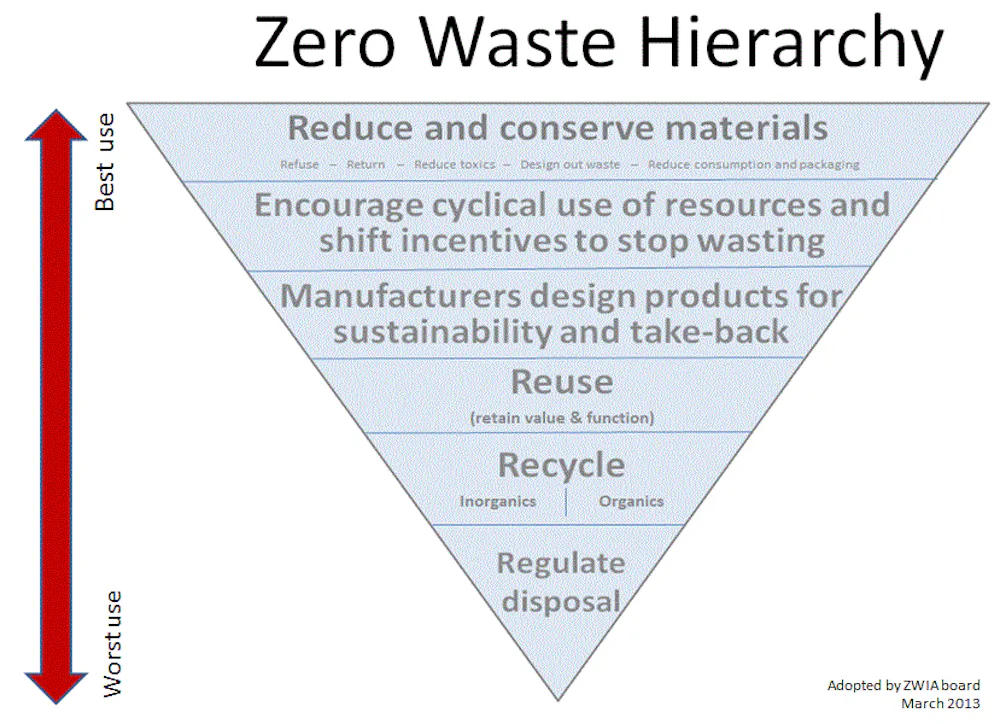 The Zero Waste hierarchy.
Zero Waste Europe
The Zero Waste hierarchy.
Zero Waste Europe
These solutions could include restricting the volume of new or “virgin” plastics in products, banning avoidable plastics (such as single-use plastic bags and straws), and curbing the use of toxic additives.
Read more: We can't recycle our way to 'zero waste'
More than 90 civil society organisations around the world and a growing number of countries have indicated early support for a treaty. Australia and New Zealand have not.
Authors: Trisia Farrelly, Senior Lecturer, Massey University
Read more http://theconversation.com/we-need-a-legally-binding-treaty-to-make-plastic-pollution-history-113351


 Daily Bulletin


