

The Indigenous community deserves a voice in the constitution. Will the nation finally listen?
- Written by: Eddie Synot, Academic, Learning Assistance Officer, GUMURRII Student Support Unit, Griffith Law School, Griffith University
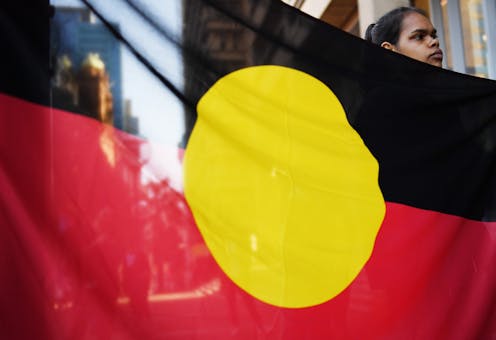
The Joint Select Committee on Constitutional Recognition relating to Aboriginal and Torres Strait Islander Peoples handed down its final report today. It follows the committee’s interim report, which noted significant community support for a constitutionally enshrined First Nations voice and asked for further submissions relating to the nature and design of a voice. The report is also the eighth of its kind in the past eight years.
The committee’s report will be cautiously received by many in the Indigenous community. Rather than recommend a referendum to enshrine a First Nations voice, the committee has instead insisted on a further design process, ignoring the submissions and wishes of many community members.
It also emphasised a lack of clarity that’s prevented movement toward a referendum due to the multiple design models it’s received. This is a disappointing conclusion that misrepresents the sentiments of the Indigenous community and what a First Nations voice would be.
Rather than represent disagreement, the multiple design submissions are better understood as a normal result of a law reform process. Far from representing disunity, the many submissions are remarkably consistent in their support for a First Nations voice to be enshrined in the constitution.
It is also disappointing that the committee has not considered in greater detail the Uluru Statement from the Heart or Submission 479, which was authored by Indigenous members of the Referendum Council and the key technical advisers who assisted delegates at the regional dialogues and national convention prior to the Uluru Statement.
Both documents are the only ones that are representative of the authoritative will of the Indigenous community.
It is correct to say that some members of the Indigenous community disagree about the way forward. But that does not mean we should not proceed. In what other section of the Australian community do we demand absolute unity and bipartisanship? This demand misrepresents the challenge of law reform as being insurmountable and further misrepresents what a First Nations voice would be.
Read more: Indigenous recognition in our Constitution matters – and will need greater political will to achieve
The First Nations voice would not be singular; it would belong to no individual member or organisation. Rather, the voice is comprised of many, as Indigenous voices always have been. The enshrinement of that voice in the Constitution does not limit or divide, but rather provides the necessary foundation from which to renew, correct and negotiate a fundamental relationship at the nation’s core.
What the committee has achieved is another opportunity for the voice of Aboriginal and Torres Strait Islanders to be heard. It is this voice that resounds more than any limitation.
Our ability to speak, and of non-Indigenous people to hear us – to actually hear us – has long been at the centre of problems in the relationship between Indigenous and non-Indigenous Australians. This process will provide the necessary structural change to that relationship to enable our voice be heard on matters that affect us.
Others have pointed to what they believe are limitations of a First Nations voice. This position too narrowly understands the importance of constitutional recognition in being able to affect the culture of the country. From abstract theories of how we should be governed, to everyday realities of our lives, a First Nations voice will finally enable the changes that Indigenous Australians have been demanding and those the nation so desperately needs.
Read more: A new way to recognise an Indigenous nation in Australia
More promising for the Indigenous community than the committee’s final report has been Opposition leader Bill Shorten’s media release this past Tuesday.
Labor has reiterated its commitment to “establish a voice for First Nations people” and enshrine it in the constitution. This announcement was significant.
The Indigenous community had been concerned that Labor would give priority to a referendum on a republic, if elected into power, instead of addressing the question of a First Nations voice. Labor’s renewed commitment to this issue is promising. It’s also demonstrative of the national political leadership needed to achieve this momentous reform. It is a commitment that the Indigenous community is ready to organise around, ensuring Labor keeps its word.
Political bi-partisanship aside, what is clear is that there is an authoritative will within the Indigenous community to achieve a First Nations voice in the constitution. The proposal also has broad public support, with polling in the Constitutional Values Survey in 2017 showing that a majority of Australians back the enshrinement of a First Nations voice.
The question remains, will we be finally heard? Many of us are hopeful that time has finally come.
Authors: Eddie Synot, Academic, Learning Assistance Officer, GUMURRII Student Support Unit, Griffith Law School, Griffith University


 Daily Bulletin


