

A fresh opportunity to get regulation and engagement right – the case of synthetic biology
- Written by: Rachel A. Ankeny, Professor of History and Associate Dean Research (Faculty of Arts), University of Adelaide
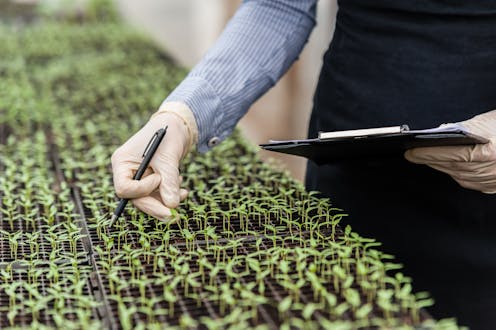
From cells that manufacture chemicals, to better crops, environmental monitoring and tailored medicine, synthetic biology presents many opportunities for Australia.
Released this week, the Synthetic Biology – An Outlook to 2030 report by the Australian Council of Learned Academies (ACOLA) describes this promise, and appeals to scientists to conduct public consultation and engagement about synthetic biology.
But we are concerned that without the right regulation and engagement, we risk letting the promise of synthetic biology slip through our fingers.
Read more: The synthetic biology revolution is now – here's what that means
Synthetic biology involves the application of engineering principles to biology. It allows living systems to be designed and built at the level of DNA.
As the report details, there have been limited studies on public awareness of and attitudes to synthetic biology, and what social values people may associate with it (such as feeling positive about the economic and medical promise, or seeing it as “tinkering” with nature, and something to be feared).
Without addressing this issue, Australia might be at risk of putting substantial resources behind technologies that create products nobody wants – or that some people actively reject (such as has occurred for some types of genetic modification research). Conversely, without knowing more about the social values in this context, we may not prioritise areas where synthetic technologies are most needed, and most likely to be accepted.
We strongly agree with the synthetic biology report that mistakes associated with past efforts at public engagement about genetic modification should be actively avoided.
The public should be involved in true deliberation over our shared futures for 2030 and beyond, and what synthetic biology might contribute.
What people think of synthetic biology
Data from 2017 demonstrate the general public has low awareness of the term “synthetic biology”. But once it is defined, 62% of people have positive attitudes about its potential to improve our lives.
More recent research indicates that a majority of Australians (88%) view science as having made life easier. But many of us have clear concerns about the use of animals for research and genetic modification.
Based on these studies, we anticipate that people will hold diverse perspectives and values in relation to synthetic biology, particularly about different types of applications. This has implications across scientific disciplines.
If synthetic biological approaches in health are seen to be good, but those in agriculture worrisome, for example, how will Australia generate a consistent response to these types of technologies?
Read more: Perceptions of genetically modified food are informed by more than just science
Small sector can present benefits
Australia hosts considerable biological and technological expertise relevant to synthetic biology – but it’s a small sector. Some see this as a disadvantage for innovation, especially with uncertain funding.
However, from the perspective of regulation, small size can be an advantage. Australian research currently occurs mostly in the public sector (that is, within universities and the CSIRO) rather than in more commercialised settings – as happens in countries such as the United States.
This means that scientists, social scientists and the public can come together to collaboratively shape future research agendas in Australia. They can communicate in a relatively open fashion, without concerns about “commercial in confidence” strictures.
The public nature of research here in Australia allows (or even forces) us to focus on and transparently debate as a society what we want to explore and build using synthetic biology. Such debates can occur at the level of institutional ethical review committees, via grant processes and even through public involvement in policy reviews.
For example, consultation and participation of the general public plus the medical and scientific communities was influential in recommending reforms to Australian laws around the use of human embryos in research.
Is existing regulation fit for purpose?
Synthetic biology is a diverse field, covering the design of viruses, bacteria, human and plant cells, as well as the engineering of cells integrated with technology.
This diversity makes the field different to the more familiar, if heavily contested, terrain of genetic modification.
Nevertheless, existing Australian regulation within the Gene Technology Act does address many of the concerns likely to arise in synthetic biology.
Where there are gaps, regulations can be refined and detailed to address them, as shown by a consultation process over 2017-18 that recommended amendments to the original act of 2001.
Other agencies such as the Therapuetic Goods Administration (TGA) may need to review the regulatory framework governing medical devices, and how therapeutic products are defined, as the technologies associated with synthetic biology evolve.
Read more: Proposed new regulations for 3D printed medical devices must go further
It’s also important to acknowledge that capability to work at the level of DNA could create the potential for development of bioweapons such as more virulent viruses or modified bacteria. These present challenges not only for biosafety but also biosecurity.
Such risks must be proactively addressed as the field evolves by the Office of the Gene Technology Regulator (OGTR) and the TGA, together with international players under the auspices of the Biological and Toxin Weapons Convention.
The activities of bio-hackers and others who operate outside of usual research settings present additional challenges for regulation.
We’re in a good position
Australia is recognised as having efficient pathways and internationally standardised approaches to biotechnology regulation. This puts us in a strong position to devise innovative and effective policy solutions for synthetic biology.
Early regulatory consideration of the likely impacts of emerging approaches in synthetic biology will be critical, including where existing regulation can be redeployed.
As is typically the case with emerging technologies, there are likely to be high hopes and even hype, along with questions and fears about how these approaches can be used to promote shared social goods.
If we don’t do this well, we risk alienating members of the public. We risk closing doors for scientists pursuing promising research.
Our futures are shared, and so too should be our approaches to synthetic biology.
Authors: Rachel A. Ankeny, Professor of History and Associate Dean Research (Faculty of Arts), University of Adelaide


 Daily Bulletin


