

Government needs to slow down on changes to spying and foreign interference laws
- Written by: Tony Walker, Adjunct Professor, School of Communications, La Trobe University
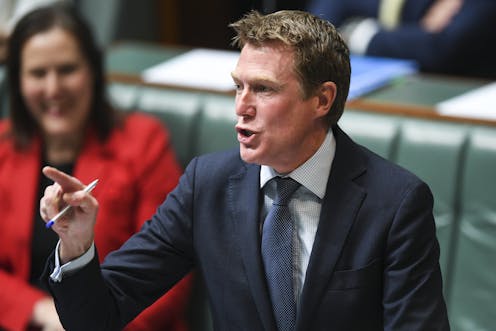
What’s the rush? If you believe Federal Attorney-General Christian Porter, unless two pieces of security legislation are in place in the remaining two weeks of parliament before the winter recess, the country will be in peril.
This was the line Porter was taking yesterday on the release of the Advisory Report on the National Security Legislation Amendment (Espionage and Foreign Interference) Bill.
His argument is nonsense. Labor should also be taken to task for being party to a hasty process that appears on the face of it to be expedient. Labor’s persistent concern is to avoid being wedged on security issues.
Under the proposed legislation, bodies such as Amnesty International that have been critical of Australian government policies may be vulnerable.
Porter wants two separate tranches of legislation – the Espionage and Foreign Interference Bill and a Foreign Influence Transparency Scheme Bill – to be passed before the Super Saturday byelections on July 28.
Read more: Grattan on Friday: Government and Labor unite to erect the barriers against foreign interference
Porter’s argument appears to be that unless the legislation passes in the concluding two weeks of the midyear session of parliament, those byelections will be conducted in a perilous atmosphere. He said:
There’s an unprecedented level of foreign intelligence activity in Australia and that means more foreign agents and more foreign power using more tradecraft and more technologies to engage in espionage and foreign interference and the attempted foreign influence of our democratic processes.
And that increase in volume is detectable even in the period of time that this piece of legislation has been under consideration by the committee.
No reasonable person would argue against the need for beefed-up legislation to deal with challenges to democratic processes such as those witnessed during the recent US election.
Russian cyber interference in the US political process is hardly in question, nor attempts by Russian agents of influence to suborn the system. The question is to what degree?
What is proposed in Australian legislation foreshadowed by Prime Minister Malcolm Turnbull late last year is a new and far-reaching suite of laws aimed at limiting foreign interference.
An initial version of the bill was poorly drafted. It represented an unreasonable threat to individual liberties and freedom of expression.
It was particularly antagonistic to journalists operating in the security space. Long jail terms for publication of unauthorised security material were incorporated.
The insertion of a public interest amendment has somewhat alleviated that risk.
Fairfax Media’s publication overnight of leaked documents dealing with alleged war crimes by members of the Special Air Service might have fallen foul of such provisions, and may still do so.
Media coverage of the draft amendments to the Espionage and Foreign Interference Bill has been relatively favourable. However, this might have less to do with the merits of the legislation than with relief the bill is less threatening to legitimate inquiry than an earlier draft.
In all, parliament’s Joint Committee on Intelligence and Security made 60 recommended amendments to the Espionage and Foreign Interference Bill.
Most of these recommendations are cosmetic, except those relating to journalistic inquiry. They include the need for security certifications to be validated before proceedings could be initiated for an espionage or secrecy offence, and a review of the legislation by the National Security Legislation Monitor after three years.
Urging quick action on the Espionage and Foreign Interference Bill, Porter argued that a second bill, the Foreign Influence Transparency Scheme Bill, was required to complement the main piece of legislation.
This refers to legislation that sought to proscribe involvement in Australian political processes not just by foreign governments and their agents, but by entities like GetUp, which has drawn part of its funding from foreign sources.
The scope of this proposed legislation – which is yet to be agreed by the JCOIS – has now been limited to foreign governments, foreign-related entities, foreign political organisation and foreign government-directed individuals.
Foreign companies would be excluded from this provision unless it could be demonstrated they were closely connected to a foreign government or political organisation.
In such cases, government-dominated companies, even those associated with friendly nations, would be required to register under the proposed law.
In efforts to guard against interference by individuals or companies who might be connected with a foreign government, the Attorney-General’s Department would be empowered to issue “transparency notices” to identify such individuals or companies.
Read more: New foreign interference laws will compound risks to whistleblowers and journalists
An appeals process against these findings would be available through the Administrative Appeals Tribunal. Porter said:
It’s vital that our national security legislation and framework reflects the modern challenges that we face … that framework remains dangerously incomplete while these two remaining and critical bills remain unlegislated.
As interested parties digest the provisions of the proposed amendments, it’s likely more objections will be raised, such as those by Claire O’Rourke, one of Amnesty’s Australian representatives.
O’Rourke told The Guardian that under the Foreign Influence Transparency Scheme Bill charities like Amnesty that hold the Australian government to account on its human rights record could face criminal charges. She said:
This is clear government overreach and a cynical exercise by both sides of politics to shield themselves from the scrutiny of Australian society, including charities.
The upshot of all this? Quite simply, more time is needed to review proposed amendments.
Authors: Tony Walker, Adjunct Professor, School of Communications, La Trobe University


 Daily Bulletin


