

Why breakups are so hard and how to cope with them
- Written by: Gery Karantzas, Associate professor in Social Psychology / Relationship Science, Deakin University
Despite populist writings that love lasts forever, the divorce statistics across various countries tell us that anywhere between one in 25 to two in three marriages end. If these statistics were to take into account the number of nonmarital long-term relationships that end, then the statistics would be much higher.
Most of us experience a relationship breakup at some point in our lives. For some of us, the experience may be most profound when we lose our first love. This is largely because our first loves are our first experience at learning what romantic love is, how to navigate the joys and challenges of love and what it’s like to experience relationship loss.
For some, the loss of a first love is also the first time the physical and psychological symptoms of grief and loss are experienced.
A romantic relationship that has spanned a considerable time (decades in some cases) also provokes intense feelings of loss, even when people knew their relationship was problematic. They may have found their relationship dissatisfying and view their former partner as insensitive, selfish, argumentative – even unloving - and still mourn the loss of it.
Read more: The science of romance – can we predict a breakup?
Why do we experience feelings of loss after breakup?
During the adult years, our romantic partners hold a special significance – a significance that was once held by our parents or parent-like figures. Our romantic partners become the primary people we turn to for love, comfort, and security.
Above anyone else, we turn to our partners for care and support in times of threat and distress. We also turn to them for validation and to share in our success during times of joy and achievement.
 Our partner replaces our parents as our main source of support and comfort. Going through a breakup without that support is difficult.
aj garcia unsplash, CC BY
Our partner replaces our parents as our main source of support and comfort. Going through a breakup without that support is difficult.
aj garcia unsplash, CC BY
The loss of the most significant person in our life causes us to experience distress, and in the early stages of relationship loss, this distress compounds. This is because our natural reaction when our partner isn’t physically or psychologically present to meet our needs is to “up” the distress. This increase in distress occurs for two reasons:
we feel more vulnerable when our partner is not there to meet our needs
increasing our distress can alert our partner that we need their support
This is why breaking up is so hard: the key person in life that helps you deal with the good, the bad, and the ugly, is not there to help you deal with this highly distressing loss.
Read more: The deadly truth about loneliness
What are the typical emotions experienced?
The so called “normative” emotional response to relationship loss depends on whether you are doing the breaking up, or, your partner is breaking up with you.
Breaking up with a long-term romantic partner is not something a person undertakes lightly. We generally only consider relationship breakup as a viable option if:
our partner is consistently not meeting our needs
we experience a relationship betrayal to the point trust cannot be restored
stressors, challenges, and social disapproval outside the relationship are so chronic and intense the relationship breaks down to the point it cannot be revived.
The person doing the breaking up will often experience relief, mixed with feelings of guilt (because of the hurt they’re inflicting on their partner), anxiety (over how the breakup will be received) and sadness (especially if they still have love and fondness for their partner).
For the person whose partner is breaking up with them, the emotions experienced often relate to the three phases of loss people undergo.
In the first phase, a person protests the breakup and tries to re-establish closeness with their partner. In this phase, the dominant emotion experienced is one of anger, but the threat of loss brings about distress emotions such as panic and anxiety. These feelings of “separation protest” can sometimes be so strong that a person works very hard to get back with their partner.
But if the relationship is truly at an end, then engaging in this kind of behaviour only makes it harder (and longer) to recover from the relationship loss. These powerful feelings that sit behind separation protest are why, even in toxic relationships, a person may wish to reunite with their partner.
In the second phase, a person comes to the realisation that getting back together is not possible, and so, feelings of sadness dominate alongside feelings of lethargy and hopelessness.
In the third phase, a person comes to terms with, and accepts, the loss. Time and energy is then devoted to other life tasks and goals (which can include seeking out a new partner).
A question often asked when it comes to relationship breakups is “how long should I feel like this?”
The experience of relationship loss is a very individual experience, and there’s great variability in how long it can take for people to recover from the loss.
People’s circumstances can also complicate recovery. A relationship that ended (on good or bad terms), but still involves seeing one’s former partner (say, because they work at the same organisation or share custody of their children) can increase the process of recovery, and make it more challenging. This is because seeing one’s partner may reactivate feelings of hurt, anger or sadness, especially if a person didn’t want the relationship to end.
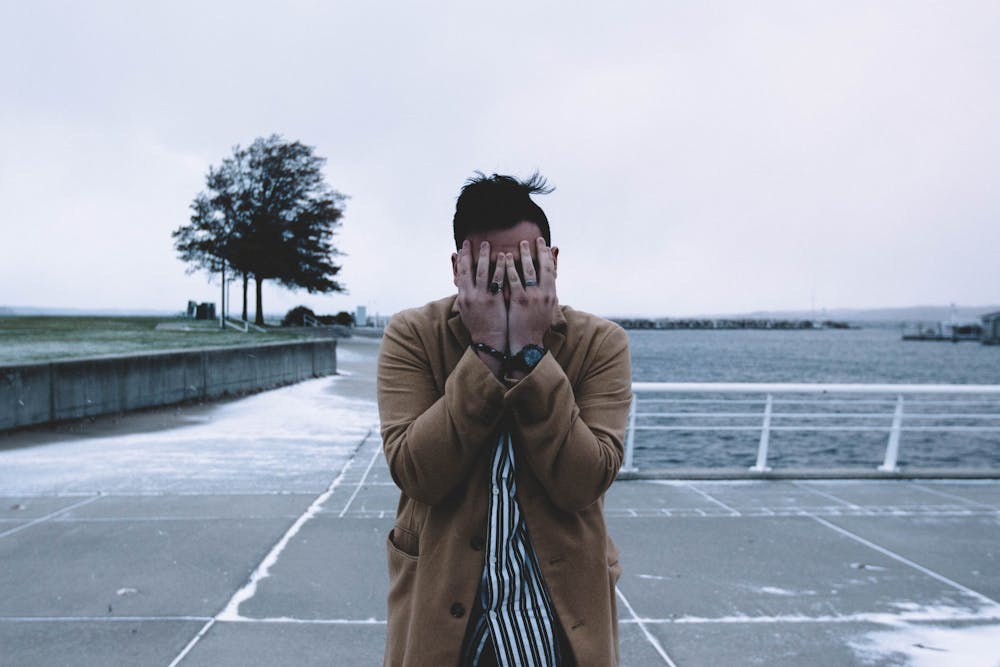
 If you’re not functioning on a daily basis you should seek help.
davidcohen unsplash, CC BY
If you’re not functioning on a daily basis you should seek help.
davidcohen unsplash, CC BY
We also know aspects of people’s personality can impact on their ability to recover from loss. People who experience insecurity about themselves and their relationships find it harder to deal with and recover from feelings of anger and sadness than people who feel secure within themselves and their relationships.
In general, people tend to work through the various stages of loss to reach the recovery phase from anywhere between one month to six months after the relationship has ended.
Read more: Stalking your ex on Facebook is creepy ... and bad for you
Recovering from relationship loss
People who recover from relationship loss tend not to defend against the emotions they are experiencing. That is, they try not to suppress or ignore their feelings, and in doing so, they give themselves the opportunity to process their emotions and to make sense of them. Some studies have suggested writing about the loss, much like journalling, can also help with recovery from relationship loss.
On the other hand, brooding over these emotions, not accepting the relationship loss, and talking about the breakup with people who only increase your feelings of sadness and anger by reinforcing these negative feelings or further highlighting all you have lost, are not particularly constructive ways of dealing with the breakup.
Seeking support from friends and family is important, but not only do people require emotional comfort, they also require encouragement that they can get through it, and reassurance that what they are experiencing is normal – and will pass.
If a person is truly having a hard time dealing with the loss – they are in a constant state of sadness, feel chronically depressed, are unable to function on a daily basis – then seeking professional help from a counsellor or psychologist is highly advisable. Some people might just need a bit of extra help in learning how to process their emotions to reach recovery.
Relationship breakups are never easy, and most of us will experience the pain of loss at some point in life. While the experience is painful and challenging, it can be a time where we learn a lot about ourselves, experience profound personal growth, and gain a greater appreciation of the kind of relationship we truly want.
Read more: Dealing with love, romance and rejection on Valentine's Day
Authors: Gery Karantzas, Associate professor in Social Psychology / Relationship Science, Deakin University
Read more http://theconversation.com/why-breakups-are-so-hard-and-how-to-cope-with-them-96339


 Daily Bulletin


