

is it true pasta doesn't make you gain weight, and could even help you lose it?
- Written by: Clare Collins, Professor in Nutrition and Dietetics, University of Newcastle
Most people think eating pasta will lead to weight-gain, but a recent study found otherwise. It’s no suprise such a conclusion made headlines.
Business Insider claimed:
Eating pasta 3 times a week won’t make you gain weight, according to a new study – and it could even help you lose it
And The Daily Meal said:
Eat Pasta to Lose Weight, Study Says
But before you get the pasta pot boiling, there’s an important provision to keep in mind. The groups of people who ate pasta and lost weight were following an overall low glycaemic index (GI) diet. This means that the weight loss wasn’t the result of eating pasta alone, but the effect of the low GI diet.
What’s glycaemic index?
Glycaemic index, or GI, ranks foods that contain carbohydrates based from 0-100 on how quickly and to what level they raise your blood sugar after you’ve eaten them. The higher the GI, the faster and higher the rise in blood glucose concentration.
Foods ranked as having a low glycaemic index have a GI of less than 55. Medium GI foods are ranked between 55-70, while those with a GI greater than 70 have a high GI index.
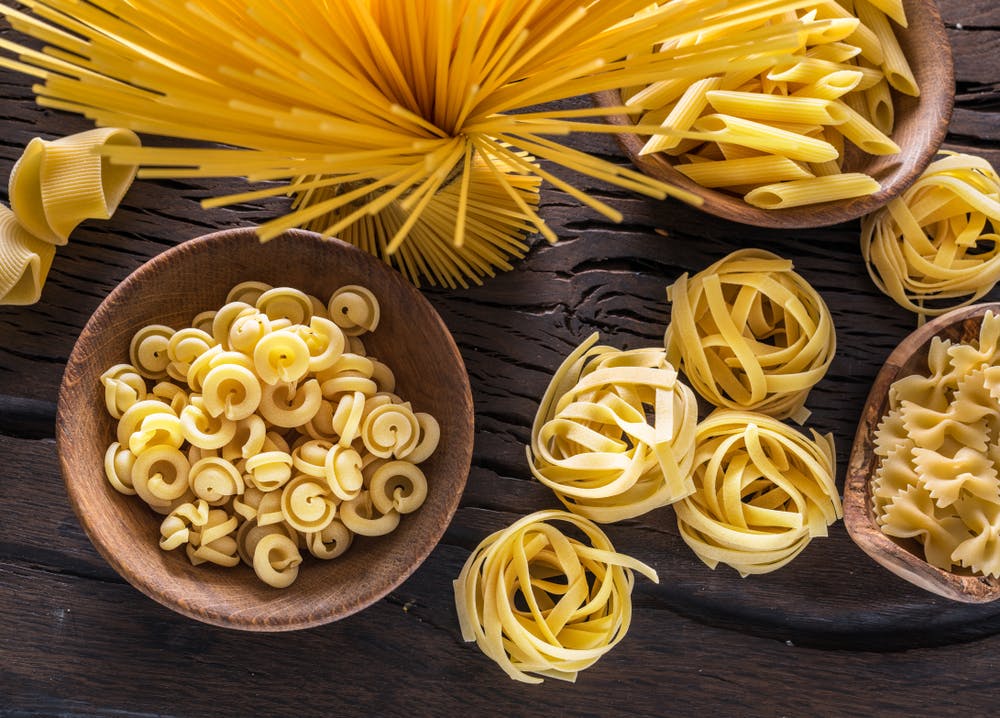 Participants who ate pasta were also on a low GI diet.
from shutterstock.com
Participants who ate pasta were also on a low GI diet.
from shutterstock.com
Pasta has a lower GI as does some multigrain bread, rolled oats, apples, oranges, sweet potato, sweetcorn, lentils and chickpeas, milk and cashew nuts. High GI foods include some white breads, corn flakes, jasmine rice, potato, watermelon and rice crackers.
Eating foods from the low-GI list more frequently than those on the medium or high GI list leads to an overall dietary pattern with a lower mean GI value. This is thought to be important in terms of regulating blood sugars and appetite, particularly for people with type 2 diabetes and those who are overweight or obese.
How was the study conducted?
The study design is called a systematic review, which combines a number of already published studies answering a similar question to generate an overall conclusion. In this case, the researchers analysed the results from 29 randomised controlled trials in adults – where diets including pasta (the main intervention) were compared with another type of diet (the control).
The trials reviewed had investigated the impact of eating pasta on body weight and other indicators of body composition including changes in body fat, waist circumference, waist-to-hip ratio, abdominal diameter and body mass index (BMI). The studies lasted for a median of 12 weeks and included 2,448 participants.
Read more: Health Check: what's the best diet for weight loss?
This review originally set out to see whether eating more pasta, independent of what else you were eating, affected body weight. However, the researchers didn’t find any studies that had tested whether eating more pasta impacted body weight. All of the studies included in the review looked at the effect of eating pasta as part of an overall dietary prescription to follow a low GI diet.
That the pasta diets tested were, in fact, low GI diets is a major provision to interpreting the results. This means that the pasta groups (active arms) included people following an eating pattern with an overall low GI, compared to the control arms where the dietary patterns had a higher GI.
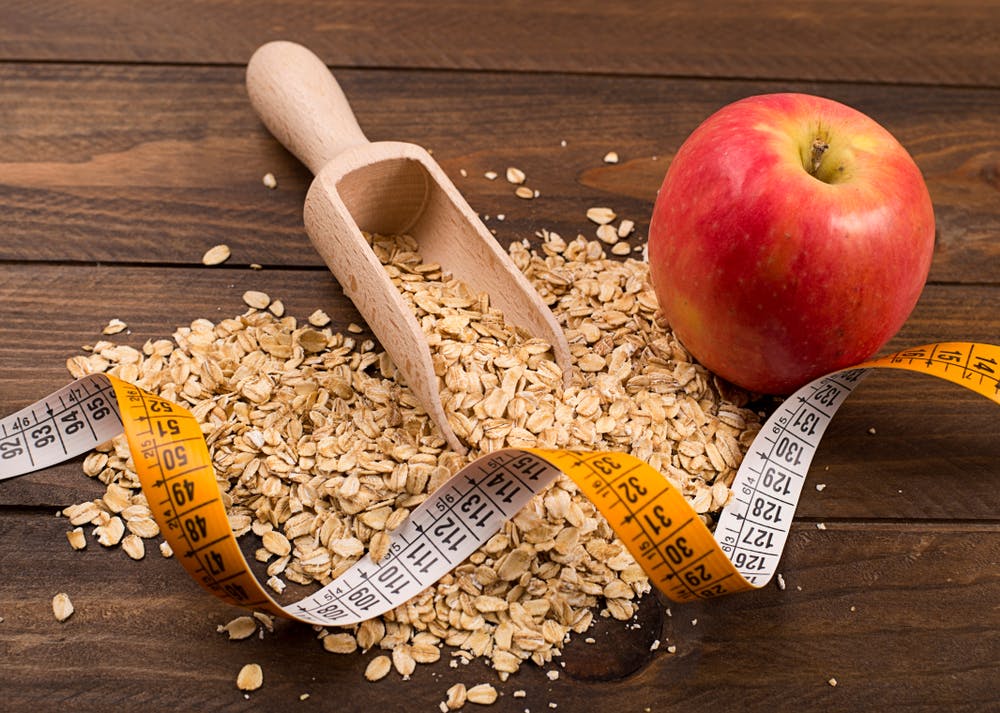 Rolled oats and apples are both low GI foods.
from shutterstock.com
Rolled oats and apples are both low GI foods.
from shutterstock.com
What were the results?
The systematic review’s main findings were that eating pasta was associated with a greater mean reduction in body weight of about 630 grams, and a reduction in BMI of 0.26 kg per square metre more in the pasta eating groups compared to the controls. There were no significant differences between groups when it came to other indicators of body weight or body composition.
The authors concluded that eating pasta in the context of low GI dietary patterns does not negatively affect body fatness, and reduces body weight and BMI, compared with higher GI dietary patterns.
The amount of weight loss was similar (mean of 630 grams more in the pasta/low-GI group) in the studies that ran for less than 24 weeks, compared to those that ran for longer (mean of 570 grams more for the pasta/low GI group). When the sub-group of studies were examined in those with type 2 diabetes or adults with overweight or obesity, the results were similar.
This is important because it means people in these categories can eat and enjoy pasta without compromising their weight status. The catch is how much pasta was eaten on each occasion.
Read more: Got pre-diabetes? Here's five things to eat or avoid to prevent type 2 diabetes
Issues with portion sizes
There were only 11 trials in which the amount of pasta eaten could be quantified, and the authors did not report how the dietary intake data was extracted from these trials and converted to serve sizes. This pasta intake data is a potential source of error.
The Australian Guide to Healthy Eating defines one serve of pasta as being equivalent to half a cup of cooked pasta. But internationally what is called a serving size varies.
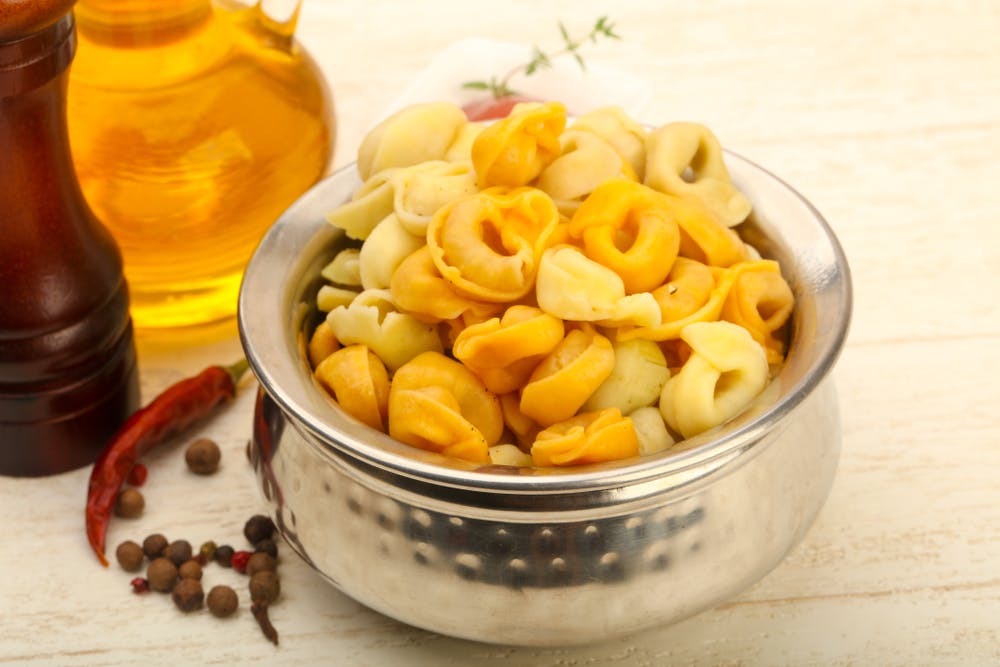 There’s no international consensus on what constitutes one serving of pasta.
from shutterstock.com
There’s no international consensus on what constitutes one serving of pasta.
from shutterstock.com
The median number of pasta servings across the studies was reported as 3.3 per week, ranging from from nearly two to seven per week. In this group of studies, the mean weight loss was 700 grams more in the pasta eating low GI groups compared to higher GI groups.
Of note is that the median pasta intake in the pasta groups was not very high. The median of 3.3 equates to only 1.7 cups of cooked pasta per week, varying from 0.9-3.5 cups. In the trials where there was also a kilojoule restriction, the median pasta intake was 2.3 servings (1.2 cups) per week.
The authors also looked at whether there was a dose-response effect for eating pasta. This means they checked whether those who ate more pasta, lost more weight. The answer was no – there was no dose-response effect.
So, what’s the verdict?
So the conclusion of this study could equally, and perhaps more accurately, be that following a low GI diet reduces body weight and BMI compared with a high GI diet. And following a low-GI diet does not have a negative effect on body composition.
The authors suggest that future trials are needed to assess the effect of eating pasta over longer periods of time or in the context of other “healthy” dietary patterns. Overall though, rigorous reviews like the current one are excellent in helping to dispel diet myths, particularly those related to carbohydrates. - Clare Collins
Read more: What is a balanced diet anyway?
Peer Review
I believe this is a fair, and mostly accurate and balanced assessment of the study and its findings.
However, I would say it’s more accurate the conclusion of this study is that: Following a low GI diet that includes pasta reduces body weight and BMI more compared with a high(er) GI diet that doesn’t include pasta. - Rebecca Reynolds
Authors: Clare Collins, Professor in Nutrition and Dietetics, University of Newcastle


 Daily Bulletin


