

Why telling people they could get sick in the future won't persuade them to be healthy now
- Written by: Adam Bulley, PhD Student in Psychology, The University of Queensland
Everyone knows smoking, consuming too much sugar and drinking too much alcohol will harm our long-term health – but many of us do these things anyway. Why?
Of course, we may simply decide not to worry about the negative consequences and engage in these activities because they give us pleasure. But sometimes we do care about the potential outcomes enough to want to stop indulging, and still find it hard to do so. Why do so many of us struggle to forgo the extra cookie even after we’ve decided to go on a diet?
People tend to value potential future rewards less than similar immediate rewards when they must choose between them. Psychologists and economists call this “delay discounting”.
A body of research has revealed those more prone to delay discounting are also more prone to poor health as a result of obesity and addiction, and have a shorter life expectancy.
Read more: We all have to die of something, so why bother being healthy?
Delay discounting tasks assess something similar to the iconic “marshmallow test” for young children. Participants are given a single marshmallow and told if they can wait for the experimenter to come back later without having eaten the marshmallow, then they will get a second one.
The degree to which a child is prepared to wait for the second marshmallow has been found to predict subsequent health outcomes, including their adult body mass index. Waiting also predicts later achievements at school, university and on diverse other measures of “success” even decades later in life.
Young children struggle to delay their gratification. The tendency to wait for the second marshmallow in childhood predicts later health outcomes.The future is uncertain
Discounting future rewards is not unique to humans, which suggests deep evolutionary origins of our general tendency towards immediacy. One ultimate reason for this is the future is inherently uncertain: the only guaranteed food reward in nature is the one already in your mouth. Someone else might pluck the fruit for which you had been waiting patiently to ripen, or some predator might get you in the meantime.
Recent findings suggest people who have been exposed to natural disasters, violence and death discount future rewards more. Presumably that’s because these events reinforce the notion that the future is volatile.
In one study, children were less likely to wait for the larger reward in the marshmallow test when the experimenter administering it had broken an earlier promise. On a fundamental level, then, we may be prone to present gratification because we cannot trust the future will play out how we might want it to.
Read more: Should you be 'nudged' into better health without you even knowing?
Imagining the future
Nonetheless, people can be remarkably patient in some circumstances. Think of the time and effort so many of us invest to get advanced training or to save for retirement – many even restrain themselves in the hope of reward in an afterlife.
One of our most powerful psychological traits is our capacity to imagine future events – to create mental scenarios of what could happen if, for instance, we were to make different decisions. This ability, quite possibly unique to human beings, may be one of the keys to why we can pursue specific future outcomes for which there is no current reward, such as when we choose to take an aspirin each day to prevent a future heart attack.
The capacity to consider future possibilities and care about our remote well-being is highly complex. It requires the maturation of sophisticated mental abilities that develop gradually over childhood.
Imagining the benefits of delaying our gratification in the present gives us a sense of the eventual – often more important – later consequences. In this way, the imagined events can act as their own mini-reinforcements en route to the real thing.
For instance, we might foresee what it could feel like to go on a hike tomorrow with a hangover and find imagining a sober version of the experience more rewarding: motivating us to forgo the extra beer tonight.
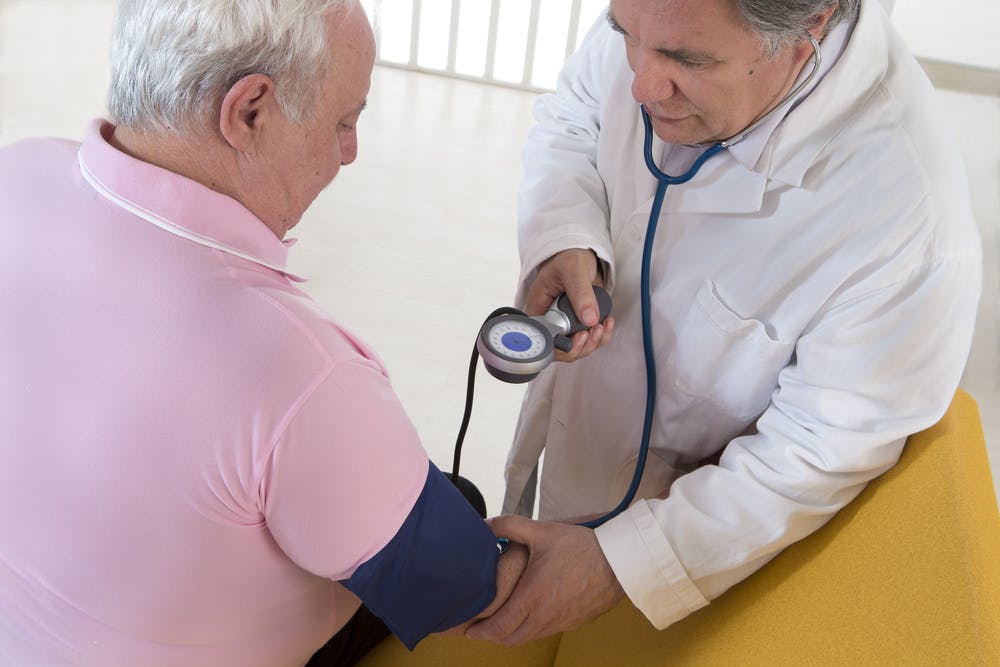 If we thought more about being unwell in our old age, we might stop hitting snooze and go for that morning run.
from www.shutterstock.com
If we thought more about being unwell in our old age, we might stop hitting snooze and go for that morning run.
from www.shutterstock.com
How to make better choices now
While adults have the basic cognitive ability to consider the future, we do not always imagine ourselves in the relevant future situations when we make decisions. When we do travel virtually in time and mentally pre-experience how good or bad our current behaviour might make us feel at a future point, we tend to make more prudent choices.
A wealth of recent research suggests having people take a few moments to imagine their personal future while they make choices between immediate and delayed rewards can curb their short-term preferences. Similar studies suggest thinking about the future can ameliorate impulsive eating, cigarette smoking and alcohol consumption.
Even if these manipulations are simply priming people to focus more on the future, the studies demonstrate thinking about future consequences can shift our priorities and change behaviour.
Due to the considerable effort invested in public health campaigns, most people are now aware of the future ills that come hand in hand with many of our immediate pleasures. Our tendency to discount the future makes it difficult to translate this knowledge into more prudent behaviour. But our preferences are malleable, and imagining the future outcomes of our current behaviour might just help us turn our knowledge and intentions into real-world action.
Authors: Adam Bulley, PhD Student in Psychology, The University of Queensland


 Daily Bulletin


