

Health Check: how can extreme heat lead to death?
- Written by: David Shearman, Emeritus Professor of Medicine, University of Adelaide
Our climate is becoming hotter. This is our reality. Extreme heat is already responsible for hundreds of deaths every year. It’s a big environmental killer, and deaths from heatwaves in Australian cities are expected to double in the next 40 years.
Those most at risk are the elderly, people with chronic illness, those living in socioeconomic disadvantage, outdoor workers, and athletes who play their sport in brutally high temperatures. But extreme heat can affect anyone at any age.
So, what happens in our body during times of extreme heat? And how can it lead to fatal consequences?
Read more: Australia's 'deadliest natural hazard': what's your heatwave plan?
How we lose and gain heat
Our core body temperature sits at around 37℃. If it rises or falls, a range of very efficient physiological mechanisms come into play. In good health, our body can usually cope well with deviations of about 3.5℃, but beyond that the body begins to show signs of distress.
In hot weather, the body maintains core temperature by losing heat in several ways. One is to transfer it to a cooler environment, such as surrounding air or water, through our skin. But if the surrounding temperature is the same or higher than the skin (greater than 35-37℃) the effectiveness of this mechanism is markedly reduced.
Blood vessels supplying blood to the skin dilate. This allows more warm blood to flow near the surface of the skin, where the heat can be lost to the air. That’s why some people’s skin looks redder in hot environments.
 One way the body loses heat is by directly transferring it to a cooler environment.
from shutterstock.com
One way the body loses heat is by directly transferring it to a cooler environment.
from shutterstock.com
Evaporation (or sweat) is another way to lose heat from the body. If there is enough airflow and humidity is low enough, we can lose large amounts of heat through sweat. But on humid days, the rate of evaporation is reduced, as the air cannot absorb so much if it is already saturated with water vapour.
We can also reduce our heat production by resting. About 80% of the energy produced by working muscles is heat, so any activity will increase the amount of heat the body has to lose. This is why athletes and outdoor manual workers are at particular risk when performing at high levels of physical activity.
Read more: Health Check: do cold showers cool you down?
What happens if the body can’t lose heat
Heat stress describes a spectrum of heat-related disorders that occur when the body fails to lose heat to maintain core temperature. Heat stress ranges from heat cramps to heat exhaustion (pale, sweating, dizzy and fainting). If the core temperature rises above 40.5℃, it can lead to heatstroke, which is a medical emergency, can occur suddenly and often kills.
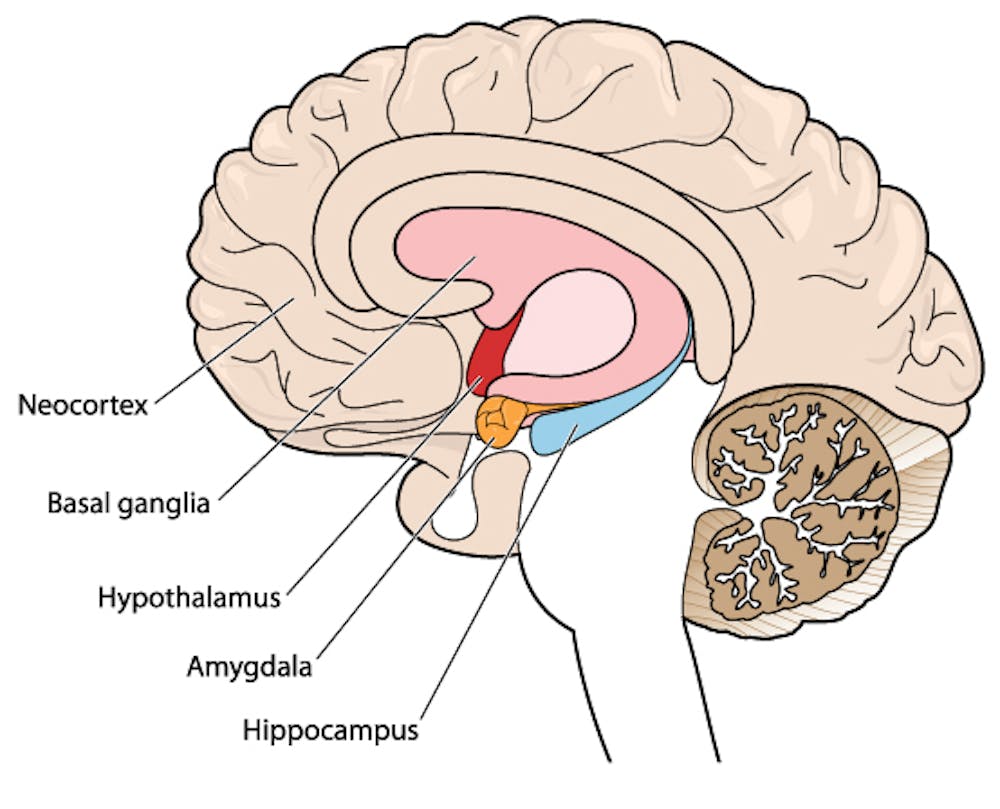 The hypothalamus works as the body’s thermostat.
from shutterstock.com
The hypothalamus works as the body’s thermostat.
from shutterstock.com
Heatstroke is caused by a failure of the hypothalamus, the region of the brain that works as our thermostat and co-ordinates our physiological response to excessive heat. It’s what leads to mechanisms like sweating and rapid breathing, dilated veins and increased blood flow to the skin. So, when the hypothalamus fails, so does our ability to sweat and lose heat in other ways.
At temperatures higher than 41.5℃, convulsions are common. Irreversible brain damage can occur at temperatures above 42.5℃. Patients with heatstroke can show neurological signs such as lack of co-ordination, confusion, seizures and loss of consciousness.
Read more: Health Check: how to exercise safely in the heat
When sweating stops, the skin may become hot and dry, heart rate and breathing increase and blood pressure is low. Cells and nerves in the body become damaged. Liver damage is also common, but may not manifest for several days. The kidneys stop working, normal blood clotting is impaired, the heart muscle can be damaged and skeletal muscles start breaking down.
Essentially, this is what we describe as multi-organ failure. People with heatstroke can die within a few hours, or several days or even weeks later from organ failure.
Protecting yourself
Heatstroke could be “exertional”, as with athletes, or “classic”, which occurs in patients with impaired thermostatic responses, as a result of age, illness or medications.
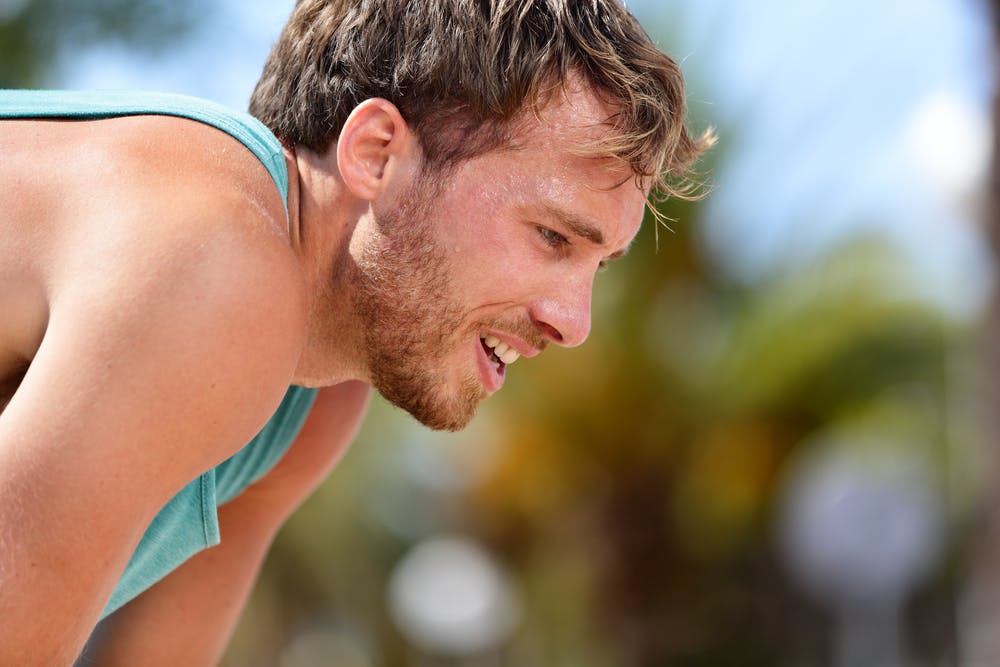 Heatstroke can be caused by exertion, such as with athletes putting their body through stress in extreme temperatures.
from shutterstock.com
Heatstroke can be caused by exertion, such as with athletes putting their body through stress in extreme temperatures.
from shutterstock.com
Much of the increase in deaths during hotter temperatures occurs in older patients with a chronic illness. This is because they may have a poorly functioning central nervous system that cannot orchestrate the physiological changes needed to lose heat.
Older hearts may not be able to cope with the changes in circulation needed for more blood flow to go to the skin. Some medications can also interfere with the mechanisms for heat loss.
People experiencing any of the warning signs of heat stress (headache, nausea, light-headedness and fatigue) need to alter their behaviour to reduce it.
The best way to do this is to find a cool spot indoors or in the shade, put on light clothing, avoid physical exertion, put a damp cloth on your skin, immerse yourself in cold water and stay well hydrated.
But for some people, like children who are too young to make changes to their environment (such as those left in cars), this is not possible. Also, for the elderly, perhaps those with chronic mental illness or on certain medications that impair their ability to respond to increasing core temperature, these signs may not be apparent or noticed.
Read more: Strategies for coping with extremely hot weather
This means we need safeguards to ensure the vulnerable stay cool. This is especially a problem for elderly people who live alone.
So, as our climate warms up, we need to do all we can to minimise the consequences of an increasingly hot environment. That means we must adapt our behaviour, our understanding of the issues, our urban environments, our sporting events and our systems that look out for the vulnerable in our community.
This article was co-authored by Dr Mark Monaghan, an emergency physician, and Dr Liz Bashford, an anaesthetist, who are both members of Doctors for the Environment Australia.
Authors: David Shearman, Emeritus Professor of Medicine, University of Adelaide
Read more http://theconversation.com/health-check-how-can-extreme-heat-lead-to-death-91480


 Daily Bulletin


