

Sustainable shopping: your guilt-free guide to flowers this Valentine's Day
- Written by: Jennifer Lavers, Research Scientist, Institute for Marine and Antarctic Studies, University of Tasmania
Valentine’s Day means saying it with flowers. Last year Australians imported more than 5.22 million rose stems between February 1 and 14, mostly from Kenya. Assuming typical bouquets of 24 roses, that’s 217,500 bouquets sold in two weeks.
The problem is that our pursuit of goodwill and affection towards humanity through the giving of cut flowers is hurting the number-one lady in all of our lives: Mother Nature. If those 217,500 bouquets were each wrapped in 75cm of plastic cellophane, that adds up to more than 163km of plastic wrapping used in a two-week period – just for roses, just in Australia.
Read more: Some top tips for Valentine’s day ... from Medieval lovers
But facts about cellophane probably won’t win over your sweetheart. So with Valentine’s Day just around the corner, let’s consider making smarter, more sustainable flower purchases.
Petal power
In Australia alone, there are more than 900 flower farms intensively cultivating 4,470 hectares in order to supply almost 2,000 florists. However, the majority of cut flowers sold in Australia actually originate overseas, with imports from Ecuador alone valued at A$1.9 million in 2015. If you’re asking yourself “why are delicate flowers shipped halfway around the world?” this is a great question.
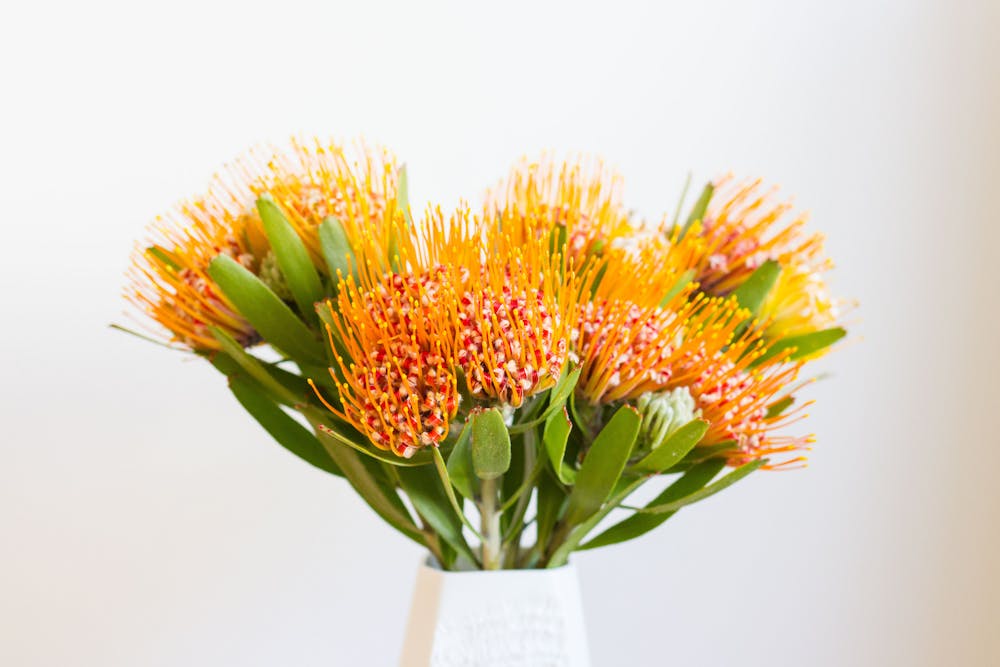 For a sustainable take on the floral Valentine, try a banksia bouquet. Emily Orpin/Flickr, CC BY-NC
Countries near the Equator, like Ecuador, benefit from good growing conditions, including 12 hours of daylight all year round. In these regions, the contribution of the flower industry to the economy of small or less developed countries is often significant.
Read more: The secret of the world's smelliest flower
In eastern Africa, for example, flowers account for more than 10% of total exports, second only to tea.
Lower wages in countries like Ecuador and Kenya also contribute to the economics of flying cut flowers around the world. Unfortunately, this often comes at a cost for local growers and pickers, who experience poor working conditions.
The thorny carbon issue
In the United States, the roughly 100 million roses grown, shipped and purchased on a typical Valentine’s Day produce some 9,000 tonnes of carbon dioxide emissions, from field to florist.
But, as with most things in our complex and busy world, the question of a flower’s carbon footprint isn’t as straightforward as it might seem. The Netherlands is one of the world’s biggest exporters of cut flowers, where the majority are grown in heated or refrigerated green houses.
Read more: Should you be my Valentine? Research helps identify good and bad romantic relationships
Maintaining the controlled environmental conditions inside these buildings requires artificial light, heat and cooling, so each rose grown in The Netherlands contributes an average of around 2.91kg of CO₂ to the atmosphere. In contrast, a single rose grown on a farm in Kenya contributes only 0.5kg.
This is largely because Kenyan hot houses do not use artificial heating or lighting, and most farm workers walk or cycle to work. As a result, flowers grown in tropical regions are sometimes considered low-carbon (of course, this doesn’t always factor in international transport).
Pesky pesticides
As flowers are not an edible crop, they are typically exempt from regulations on pesticide use. As a result, the cut flower industry is one of the biggest consumers of pesticides worldwide.
In Kenya and other countries, chemicals such as methyl bromide (and others that are banned in countries like the US) are regularly imported in significant quantities by flower growers for pest control.
Read more: Love’s ruin? Victorian Valentines rival our modern age for cynical cruelty
Worryingly, methyl bromide is an ozone-depleting substance. In some cases, run-off of these chemicals from growing fields adjacent to water bodies, such as Kenya’s Lake Naivasha, has resulted in the collapse of fish stocks that are crucial to local communities.
So what can you do?
We don’t want to be responsible for a downturn in expressions of love (or a corresponding uptick in conflict), and the good news is that there are plenty of eco-friendly ways to show your devotion.
The best option is to grow your own flowers to give as gifts says Cheryl from www.lamouretfleurs.com. You can also give a living plant that can grow in your garden for years to come, reminding you of that special person and day. This is a rule in both of our households, and one of our husbands are happy to accommodate – our gardens have never looked so good!
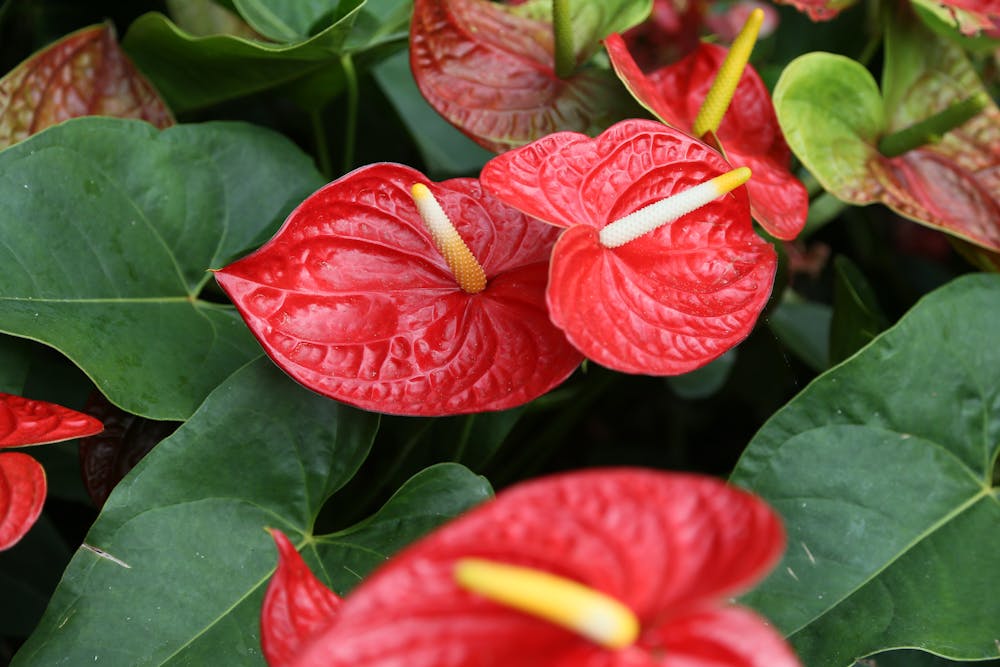 Anthurium aren’t Australian natives but their pretty heart-shaped flowers make them a perfect living Valentine. Jim, the Photographer/Flickr, CC BY
If growing or giving living plants isn’t an option, go for locally grown organic flowers, as this means fewer “flower miles”. Native species or hardy breeds like lilies and birds of paradise require fewer resources and survive for longer in transport, meaning there’s less wastage.
Read more: Stop the miners: you can help Australia's birds by planting native gardens
If you decide to buy imported flowers, look for Green Labels like FairTrade and MPS Florimark indicating that suppliers are members of regulatory schemes.
It’s also worth asking (or insisting) that your local florist switch from plastic cellophane wrapping to butcher’s paper (or similar).
To get you on your way, here are some sustainable flower growers in different corners of the globe:
Australia:
Europe & the Americas:
-
Florverde Sustainable Flowers (based in Colombia) provide social programs for their workers and implement a range of environmental standards, including rainwater collection and air pollution filters. Florverde are a major exporter to Europe, so look for their label in this region
-
For 15 years, Organic Bouquet (based in Florida) has helped to convert more than 8,000ha of land to organic and sustainable horticulture
-
Eco-stems Flower Shop (based in Toronto) doesn’t just pride themselves in sustainable flower supply, but takes things a whole lot further. All furniture and fixtures are reclaimed/recycled in store, they only use 100% energy efficient lighting, waste water is collected and re-used, delivery vehicles are hybrid, etc. These guys are definitely going the extra mile!
Read more: Valentine's day roundup: what research teaches us about romance
Authors: Jennifer Lavers, Research Scientist, Institute for Marine and Antarctic Studies, University of Tasmania


 Daily Bulletin


