

Amazon drives a fifth city-shaping retail revolution
- Written by: Paul Drechsler, Doctoral Researcher, University of Western Australia
As possibly the world’s oldest economic activity, retailing didn’t venture away from the traditional street, with its congestion, grime and weather exposure, until about 1800. This resulted in new types of retail space, including enclosed shopping arcades and freestanding or anchor department stores. These are still evident in cities today.
It helps to visualise the evolution of modern retail activity and structures in terms of five broad revolutionary cycles. Each has lasted about 50 years, as shown in the diagram below.
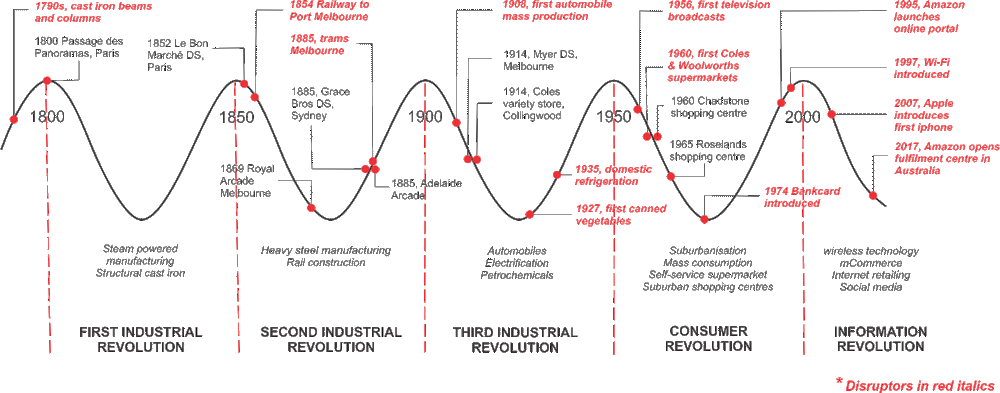 Revolutionary cycles and disruptive innovations.
Author
Revolutionary cycles and disruptive innovations.
Author
After the first industrial revolution of the late 18th and early 19th century, two industrial revolutions followed, from about 1850 to 1900, and then from 1900 to 1950. A consumer revolution began about 1950. Then, at the dawn of the new millennium, came an information revolution.
Each revolution spawned a unique set of technological innovations that shocked the status quo by replacing outdated structures with new ones. The retail sector and retail spaces were not immune to this process.
Creative destruction
In 1942, the economist Joseph Schumpeter called this process creative destruction. Nowadays a comparable term, disruption, is bandied about, particularly in the retail world. Internet retailing is an obvious example.
So what transformations in physical retail spaces occurred during these key revolutionary periods? We need look no further than 19th-century Paris for illustrations of these changes.
New shopping platforms
Structural cast iron, the world’s first artificial building material, perfected in the 1790s, enabled the construction of glass skylights and large column-free spaces. In Paris, this prompted the development of shopping arcades with skylights such as the Passage des Panoramas in 1800.
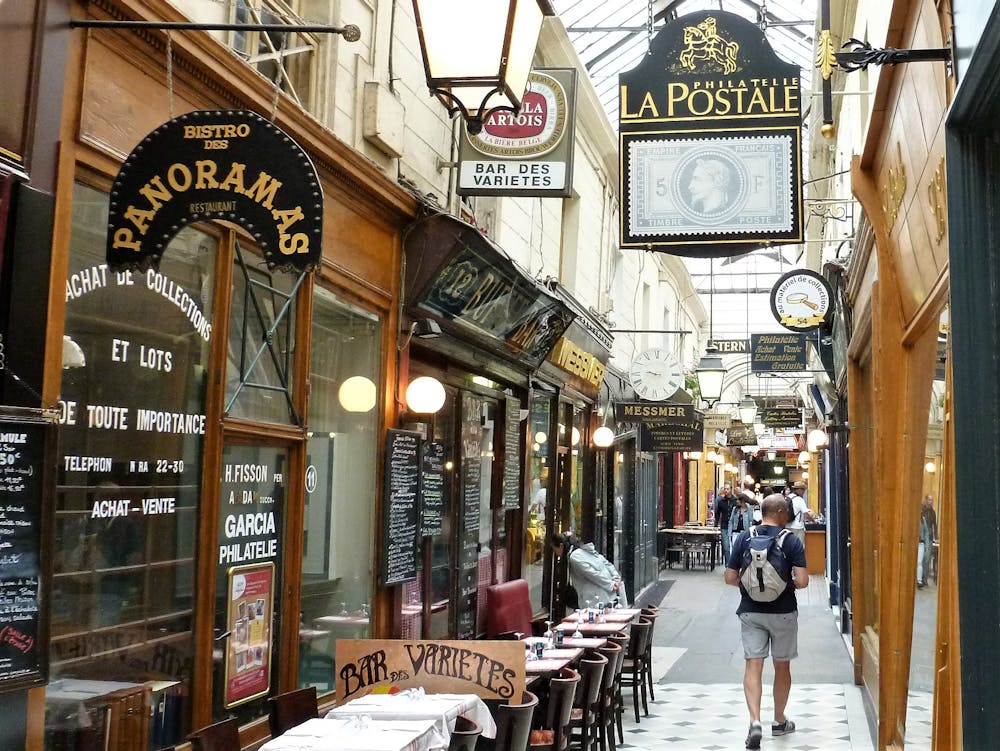 Passage des Panoramas, Paris.
Author
Passage des Panoramas, Paris.
Author
The innovation was successfully applied in 1852 to the world’s first department store, Le Bon Marche, also in Paris. It still serves as a template for today’s department stores.
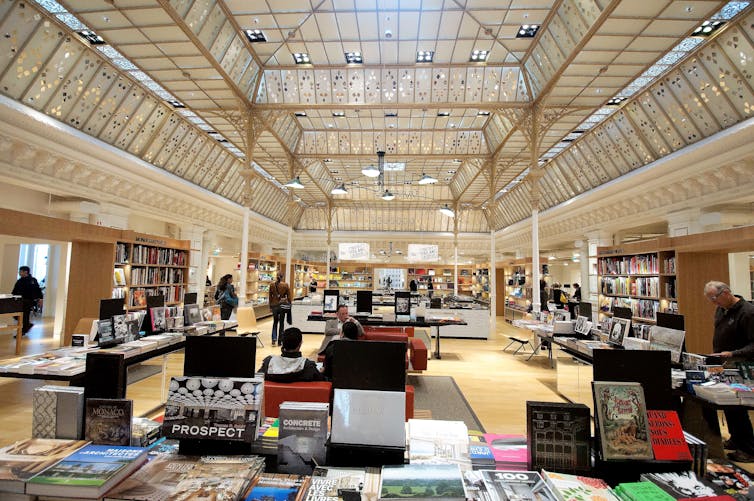 Le Bon Marche, showing cast iron colums and skylight roof.
Author
Le Bon Marche, showing cast iron colums and skylight roof.
Author
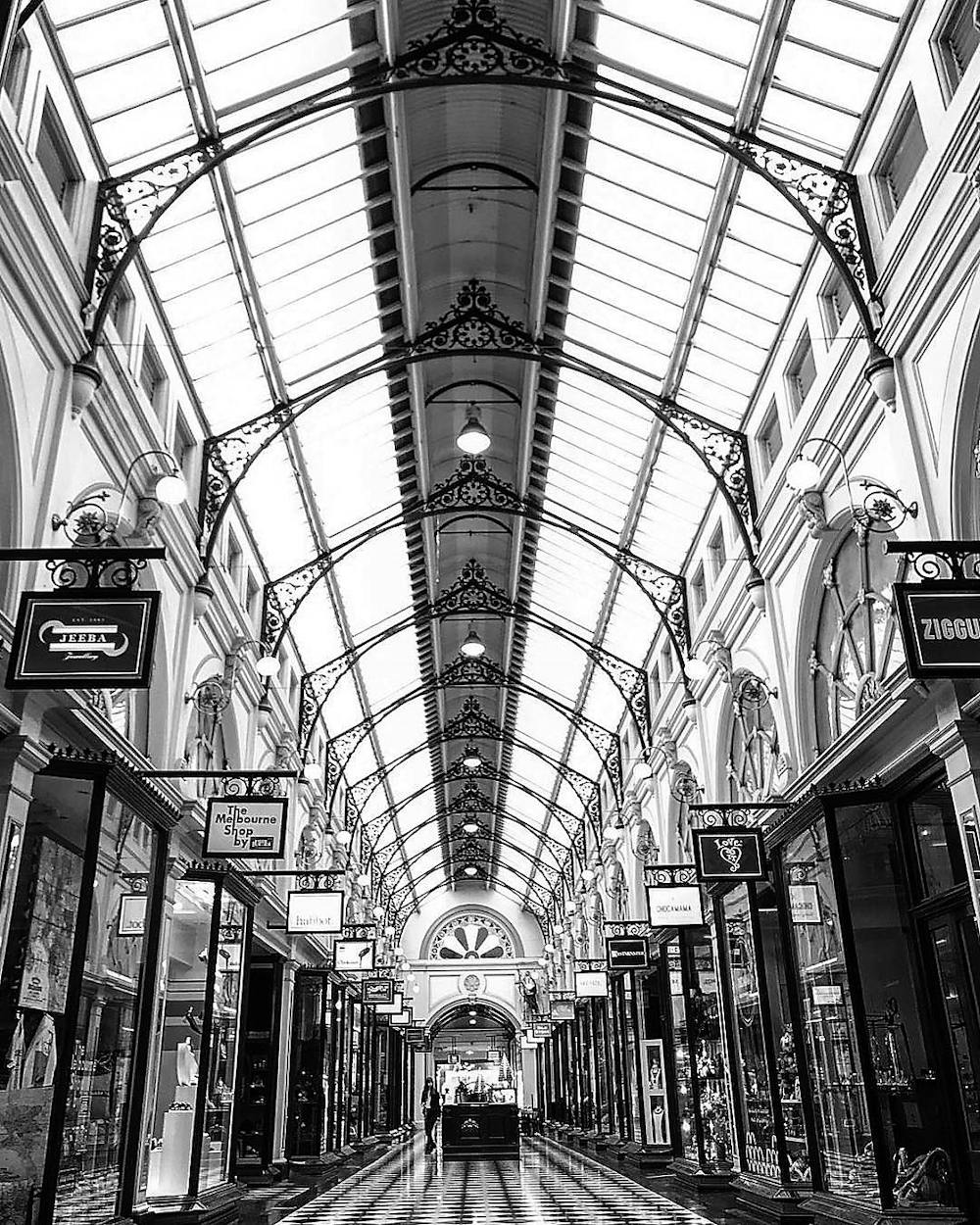 Royal Arcade, Melbourne.
Instagram/royalarcade
Royal Arcade, Melbourne.
Instagram/royalarcade
The diffusion of innovation was rapid. The arcade and department store formats were soon adopted in Australia, most notably in Melbourne’s Royal Arcade (1870), Sydney’s Grace Bros Department Store (1885) and Adelaide Arcade (1885). At the time, Australia was one of the wealthiest countries in the world, with the resources and financial clout to become an early adopter of European innovations.
The age of steel
Spurred on by steel-making in the next revolutionary period, including the Bessemer process, railways and tramways connected cities, towns and inner and middle ring suburbs. Retailing flourished on the high streets around train stations and tram stops. In Australia, this was particularly evident in Melbourne, Sydney and Adelaide, where remnants of this historical legacy can still be seen.
Mass production and preservation
The third revolution included innovations in automobile mass production, steel container packaging and food preservation – thanks to refrigeration. These innovations would eventually have a profound impact on the small independent retail sector as the next revolution unfolded.
Mass consumption and consumerism
After the second world war, population growth, social mobility and affordable cars drove suburbanisation in Australia’s capital cities. An emerging consumerism, stimulated by advertising on television, which was introduced in 1956, was under way.
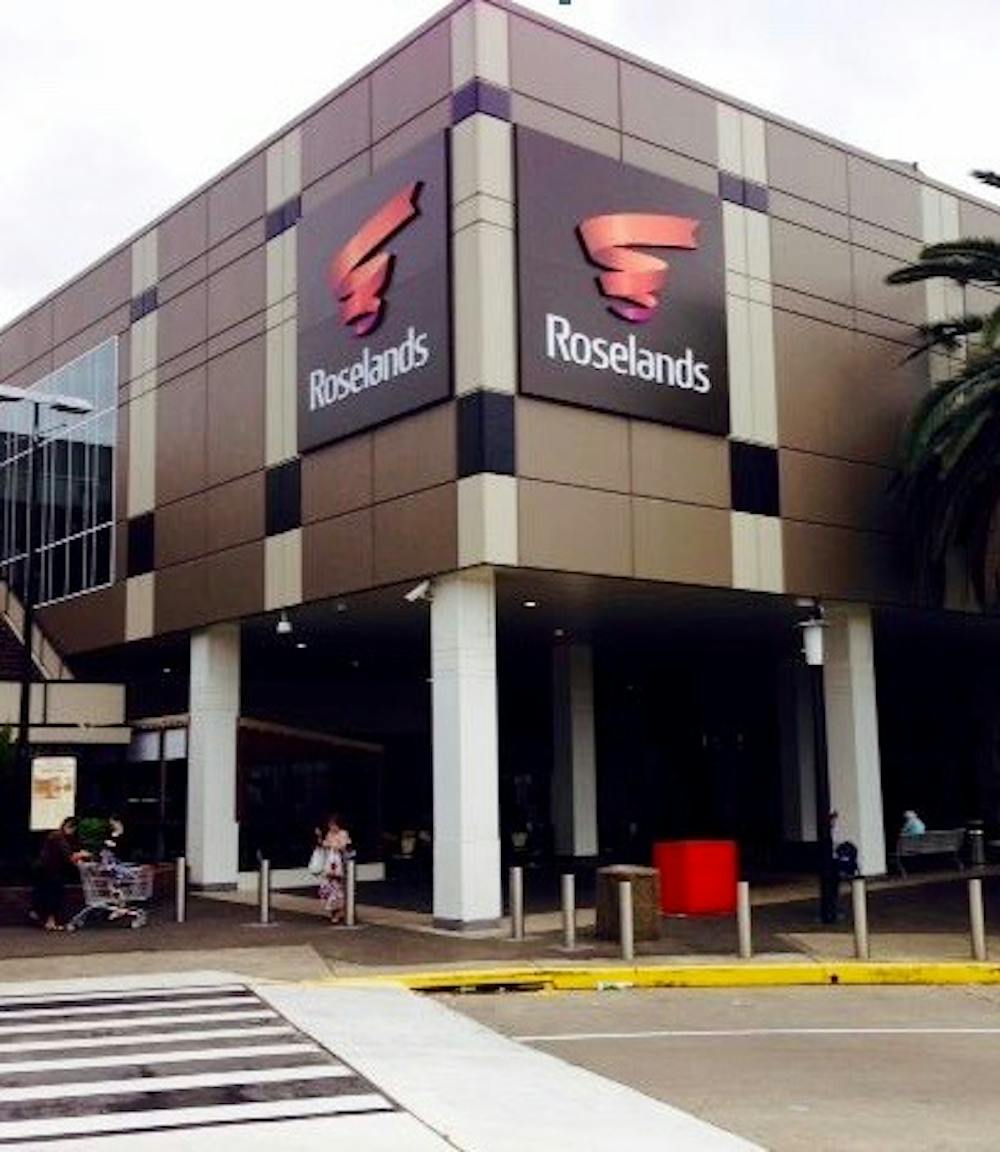 Roselands shopping centre was described as ‘a product of the motorised age’ when it opened in 1965.
Wikimedia Commons, CC BY-SA
Roselands shopping centre was described as ‘a product of the motorised age’ when it opened in 1965.
Wikimedia Commons, CC BY-SA
Independent retailers that retained provisioning and selling methods from earlier times found their popularity waning. The death knell of the small independent retailer that failed to keep pace with the machinery of mass consumption began with the emergence of the supermarket format in 1960. Planned suburban shopping centres with ample car parking, such as Chadstone in Melbourne (1960) and Roselands in Sydney (1965), mushroomed in the nation’s capitals.
With the launch of the first Bankcard in 1974, the ready availability of credit drove consumerism and consumption.
These were to be the hallmarks of the retail landscape for the next 50 years, until the new millennium ushered in the information revolution and another retail paradigm shift.
The information revolution
We are almost two decades into the 21st century, and tales about damage to the traditional retail sector wrought by the digital insurgency are rife. Online retailers are engaged in cyber warfare with physical retailers and each other in a battle for the consumer dollar. Collateral damage is evident, at least partially, in shop vacancies on high streets and declining department store sales.
Shopping centres have responded by placing more emphasis on the shopper experience. This approach includes improved food and beverage offerings, provision of entertainment and, lately, faux main streets with integrated residential development. It is an interesting irony that the traditional high street, with its rustic quality, diverse land uses, historic character and cafe culture, has been the inspiration for many of these ideas.
In conclusion, we have seen profound changes in the physical retail landscape over the last two centuries and, if history is any guide, more change is yet to come.
This change includes a somewhat unexpected “back to the future” scenario in online retailing. Amazon currently confines itself to an online presence in Australia, but has established bricks and mortar stores in the United States. These include the innovative Amazon Go, a competitive threat that has forced other physical competitors like Walmart to respond. If Amazon adopts a similar strategy here, this will no doubt provoke reactions from other physical and online retailers, and thus a probable new revolution in retailing.
Amazon Go offers shoppers physical stores with no lines and no checkouts.Authors: Paul Drechsler, Doctoral Researcher, University of Western Australia
Read more http://theconversation.com/amazon-drives-a-fifth-city-shaping-retail-revolution-88068


 Daily Bulletin


