

Finally, unproven stem cell clinic practices might be curtailed
- Written by: Megan Munsie, Deputy Director - Centre for Stem Cell Systems and Head of Education, Ethics, Law & Community Awareness Unit, Stem Cells Australia, University of Melbourne
In a welcomed move, the Therapeutic Goods Administration (TGA) has this week announced reforms will be introduced in 2018 to address long held concerns about the provision of unproven stem cell treatments to increasing numbers of Australian and international patients.
Regulation of stem cell treatments being offered outside hospitals will be increased. It will acknowledge the risks of these treatments, and advertising of certain treatments will be prohibited.
While more specific details are not yet available, it seems at last possible the most egregious practices of suburban stem cell clinics will be severely curtailed.
Stem cell marketing
Over the last six years, the number of private “stem cell” clinics operating across Australia has grown from a handful to more than 60. These clinics offer treatments for myriad conditions, from anti-ageing “facial rejuvenation” to treatment for osteoarthritis, lung diseases, infertility, motor neurone disease, dementia and multiple sclerosis.
Advertising their services online and in social media, the clinics use claims of efficacy and expertise to lure patients. But they offer little, if any, scientific proof their treatments work, and charge patients exorbitant fees for their services.
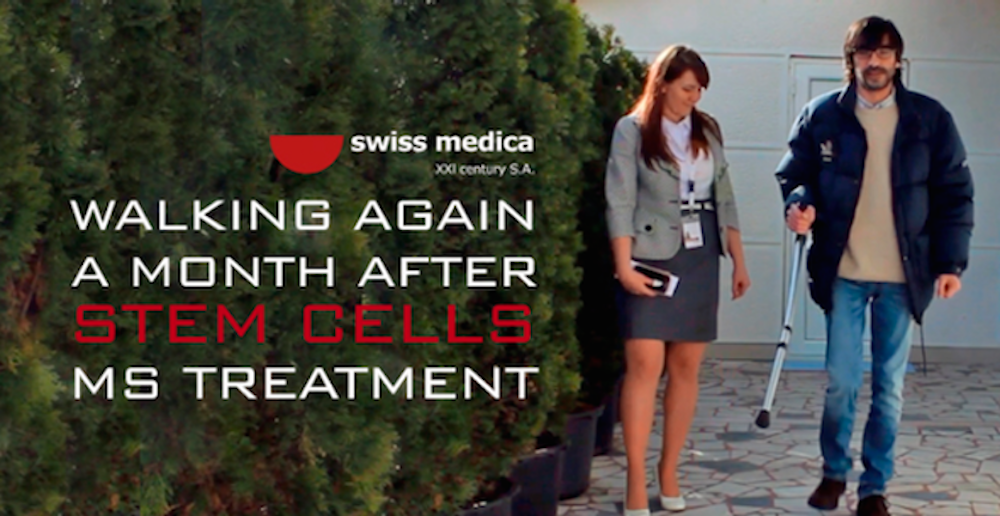 Stem cell clinics often rely on anecdotes and patient ‘testimonials’.
Screenshot, Swiss Medica website
Stem cell clinics often rely on anecdotes and patient ‘testimonials’.
Screenshot, Swiss Medica website
How is it these clinics have been able to flourish in Australia and provide unproven, expensive and potentially risky treatments to such a wide group of potential patients?
They have been able to exploit a loophole in TGA regulations that permits doctors to “transplant” a patient’s own tissue back into their body, without that tissue having been subjected to ordinary controls and standards that apply to the transplantation of biological tissue products.
This “exclusion” was intended to enable doctors to use patients’ own tissue to repair bone, joint, ligament and other injuries.
Stem cell risks
Some may argue adults should be able to make choices about their own health care, including to use innovative or unproven treatments. But there are harms in allowing stem cell clinics to operate as they do.
First, the collection and administration of stem cells is not without risk – some are very serious. In 2013, an Australian woman, Sheila Drysdale, died following complications from a liposuction used to the extract “fat stem cells” to treat her dementia – an indication that is not supported by any evidence.
More recently, three women have been left blind following “treatment” in Florida for a type of retinal disease with their own “fat stem cells”.
Second, stem cell “treatments” may cause other harms – including the financial burdens of these treatments (which are not Medicare rebated) on patients and their families, and the psychological harms vulnerable patients may feel from being tricked into paying for something that didn’t work.
Third, there are broader societal harms, including the erosion of public trust in established stem cell science, medical research and health care more generally.
 Private clinics shouldn’t be able to make claims without evidence.
Screenshot, ASC Treatment website
Private clinics shouldn’t be able to make claims without evidence.
Screenshot, ASC Treatment website
This doesn’t mean all stem cells are bad
The TGA has recognised the importance of enabling research and innovation in stem cell medicine. There is good work being done within hospitals and laboratories around the country, and patients should still have access to unapproved treatments through clinical trials and special access schemes.
But there remain some concerns. The TGA’s loophole may have provided the impetus for the explosion in clinic numbers, but it’s not the cause of some of the questionable behaviours engaged in by some clinics.
Laws exist to stop misleading and deceptive advertising, and there are strict regulations on the advertising of medical services. To date, these existing regulations haven’t been employed by regulators such as the Australian Competition and Consumer Commission or the Australian Health Practitioner Regulation Agency to crack down on dodgy practices.
Mechanisms for registering clinical trials are already being manipulated by stem cell clinics and the stem cell industry more widely, to cloak themselves in the authority of science and “satisfy” regulatory and ethical concerns about their practices.
The dangers here are clear. While regulatory reform is welcome, they will remain ineffective unless the TGA and other regulatory bodies have the will, power and resources to enforce them. And unless this happens – patients will continue to be harmed.
Selling stem cells has been a big business in Australia for too long. After two public consultations and much deliberation, we have some action. Researchers, health practitioners, patients and regulators have an interest in making sure the proposed changes to the regulations work.
Authors: Megan Munsie, Deputy Director - Centre for Stem Cell Systems and Head of Education, Ethics, Law & Community Awareness Unit, Stem Cells Australia, University of Melbourne
Read more http://theconversation.com/finally-unproven-stem-cell-clinic-practices-might-be-curtailed-86388


 Daily Bulletin


