FIFA, Blatter and Africa: a special relationship
- Written by: The Conversation
 Happier days in Africa. Amr Dalsh/Reuters
On Tuesday, June 2, Sepp Blatter announced his intention to resign as FIFA president just four days after winning reelection to a fifth term — an electoral victory that simply could not have happened without the support of FIFA’s African members.
According to unofficial calculations, the 133 votes secretly cast for Blatter came from Africa (53), Asia (46), and North America (minus the United States) and the Caribbean (34).
Why did Africans unanimously support the leader of a troubled, even loathed, organization which two days earlier witnessed the arrest of seven of its executives in Zurich on US bribery and corruption charges?
As an academic who has been researching, publishing and teaching the history and culture of African football for two decades, I want to offer a possible answer to this challenging question.
A long relationship
Africa’s allegiance to Blatter stems in part from the continent’s rich history of engagement with FIFA.
In the age of decolonization, newly independent African states asserted their national sovereignty and global citizenship by joining transnational institutions like the United Nations, the International Olympic Committee and FIFA.
By the mid-1960s, the Confederation of African Football (CAF, founded in 1957) comprised nearly half of FIFA’s membership and formed the largest voting bloc in the organization.
African nations went on to transform global football, or soccer, in a number of ways.
CAF made the sport more inclusive and representative. It introduced an anti-racist clause into FIFA’s constitution. It spearheaded a successful campaign that ostracized apartheid South Africa from world football from 1961 to 1992 (with a brief reprieve in 1963).
 Joao Havelange, the seventh president of FIFA, thanks to African support.Nationaal Archief Fotocollectie Anefo, CC BY-SA
It flexed its political muscle in 1974 as African votes helped propel Brazilian businessman João Havelange to the FIFA presidency in a closely contested race against the incumbent Stanley Rous, an English school headmaster unsympathetic to apartheid’s critics. Once at the helm, Havelange shrewdly stuck to his pledge to keep South Africa out of world football until apartheid’s demise.
At FIFA, Africans fought for guaranteed berths in the World Cup finals. FIFA allots a different number of places in the tournament to each continental confederation based on multiple rounds of qualifying matches – but to begin with did not do so for CAF. African nations boycotted the 1966 tournament in England over this issue. Finally, the Eurocentric world body awarded Africa a place at Mexico 1970 (taken up by Morocco).
With Havelange’s endorsement, the number of African teams in the World Cup gradually increased, reaching five in 1998. FIFA’s new youth World Cup tournaments and, later, women’s competitions, also prominently included an adequate number of African finalists.
Follow the money…
Africa’s backing of Blatter cannot be fully explained, however, without considering the economic dimension.
FIFA’s institutionalized system of patron-client relations, crafted by Havelange and expanded by Blatter, has been described by some observers as rewarding African football administrators with cash in exchange for votes.
Under Blatter, the revenue flow from the world body to African member national associations spiked exponentially
An illustrative example is the GOAL assistance program established in 1999 to fund football development projects.
Most of the hundreds of millions of dollars disbursed by the program have gone to resource-poor countries in Africa, Asia and the Caribbean. In these regions, the money paid for the construction of modern new headquarters for national associations and a number of pitches.
These are the kinds of financial mechanisms that lubricated the gears of FIFA-Africa relations.
…but also the heart
But loyalty to Blatter in Africa has also emotional roots: a collective affirmation of the extent to which Africans at FIFA have succeeded in making the world body their own.
Unlike at the UN (especially the Security Council) and the International Monetary Fund, Africans are kingmakers at FIFA. They wield real power, shape policy, and gain wealth and status on a global scale thanks to the sport’s planetary popularity.
In 1998, Blatter’s presidential campaign recognized this reality and paid his respects to African power brokers with the promise to hold an “African World Cup” in the near future.
This commitment was tested in 2000 when Germany acquired hosting rights for the 2006 tournament in controversial circumstances. Germany received 12 votes to South Africa’s 11, with Charles Dempsey of Oceania abstaining (despite instructions from his constituents to support South Africa).
This unprecedented decision prevented Blatter from casting the tie-breaking vote for South Africa. Blatter, a savvy politician, sprung into action, introducing a new procedural rule that awarded World Cup hosting rights on continental rotation, starting with Africa, of course.
 Celebrating in 2010Octagon, CC BY-SA
The former president endeared himself to African constituents from Algiers to Zululand by bringing the 2010 World Cup to South Africa.
He embraced vuvuzelas in local stadiums despite broadcasters’ complaints about the noise at the 2009 Confederations Cup.
“It is African culture,” Blatter told the media. “We are in Africa and we have to allow them to practice their culture as much as they want to.”
World Cup 2010
In the buildup to the tournament, Blatter announced the establishment of Football for Hope, a FIFA corporate social responsibility project that intends to build small artificial pitches in 20 African countries.
In an ironic twist, however, the successful South African World Cup may have undermined Blatter. On Monday, June 1, The New York Times reported information that “linked Mr. Blatter’s top deputy, Jérôme Valcke, to a series of payments that are believed to be bribes connected to South Africa’s winning the vote that gave it the 2010 World Cup.”
What now for African football?
With Blatter stepping down in the next few months, there is little doubt he will try to shape the future of FIFA by influencing the reform process as well as the selection of his successor.
Will a restructured FIFA weaken Africa’s and the global south’s position in world football? Will Issa Hayatou of Cameroon, FIFA senior vice president and CAF president since 1988, run in the special election? If not, then what is the likelihood that CAF will continue to vote as a united front?
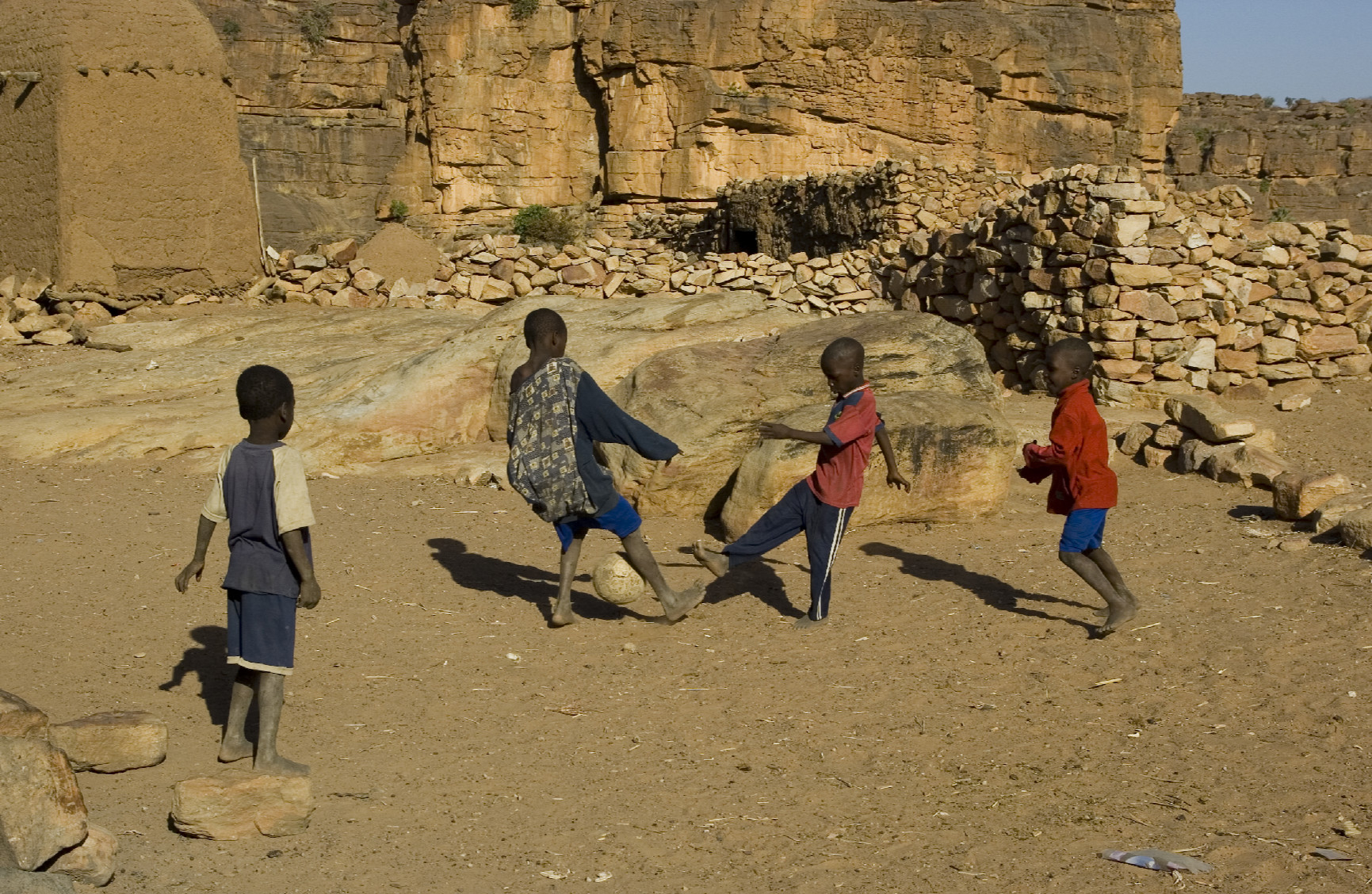
These are interesting and important questions. But the more fundamental issue for African football is the need to advocate for changes in FIFA leadership and structure that can tangibly address the widening disconnect between the luxurious lifestyles of football’s political elite and the everyday struggles of millions of male and female players in towns and villages across the continent.
 Playing the beautiful game in MaliJelle Jansen, CC BY-SA
“People live at grassroots level, not elite level,” Thabo Dladla, a youth coach and former professional player in Pietermaritzburg, South Africa, told me. “The [2010] World Cup was successful, but too many young people in this country still have no hope, they have no future.”
Peter Alegi does not work for, consult to, own shares in or receive funding from any company or organisation that would benefit from this article, and has no relevant affiliations.
Authors: The Conversation
Read more http://theconversation.com/fifa-blatter-and-africa-a-special-relationship-42785


 Daily Bulletin


.jpg)