

Read The Times Australia

Daily Bulletin

In Trump’s precarious world, NZ will need all the middle-sized friends it can get

  • Written by: Nicholas Ross Smith, Senior Research Fellow, National Centre for Research on Europe, University of Canterbury

When a local political commentator recently suggested (partly tongue-in-cheek) that New Zealand might respond to US President Donald Trump’s new world order by becoming the seventh state of Australia, it was dismissed by the prime minister and most political leaders.

But the fact their views were even sought shows how far the debate has moved since Trump began dismantling the old rules-based international order New Zealand has long considered the basis of its foreign policy.

At January’s World Economic Forum in Davos and more recently in his address to the Australian parliament, Canadian Prime Minister Mark Carney laid down a challenge for other “middle powers” to start finding practical solutions to the new global realities.

Carney’s clarion call matters also for smaller powers uneasy about the United States under Trump and rising great-power disorder. New Zealand, with its long-held preference for multiple alliances and foreign policy independence, is likely a keen ally in such a middle-power movement.

Yet the hard part remains: how can middle and smaller powers effectively work together when still mostly reliant on great powers for security, trade and technology?

The technological dimension, in particular, makes middle power cooperation harder today. Modern states are existentially dependent on semiconductors, AI systems, 5G infrastructure and cloud computing – technologies produced overwhelmingly by the two “technopoles” of the US and China.
In Trump’s precarious world, NZ will need all the middle-sized friends it can get
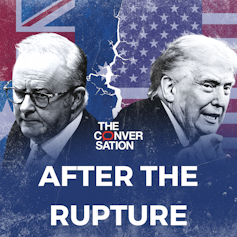
The world order has “ruptured”, Canadian Prime Minister Mark Carney has warned – so it’s time for countries like Australia and New Zealand to forge a new, less US-reliant future. In this new series, we’ve asked top experts to explain what that future could look like – and the challenges that lie ahead. Finding a ‘workaround’ In a forthcoming collection of essays about how middle powers might cooperate on vital technology in this turbulent world, the concept of “workarounding” describes how countries can pursue strategic objectives collectively, without routing everything through Washington or Beijing. For New Zealand, technology is already an area of real foreign policy concern. Military interoperability with Australia – a key driver behind potentially joining AUKUS Pillar Two – is a sticking point. More broadly, New Zealand risks being left behind in the AI revolution. The Indo-Pacific region, however, offers promising workaround partners. Beyond Australia – New Zealand’s oldest friend and only formal ally – there is a growing cluster of tech middle powers with which Wellington has positive relationships: India, South Korea and several key ASEAN states. India produces the world’s highest number of IT graduates, runs ambitious semiconductor and quantum computing programs, and maintains multiple alliances that allow it to resist being absorbed into either great power orbit. New Zealand’s relationship with India is burgeoning with the announcement at the end of 2025 of a free trade agreement. New Zealand also has a trade agreement with South Korea, and both countries are part of the Indo-Pacific Four group (with Australia and Japan). Home to Samsung, Hyundai and LG, South Korea is often heralded as the most successful tech middle power and occupies an important position in critical international tech supply chains. The ASEAN bloc – driven by key member states – also has a deep institutional instinct for hedging between great powers, and contains five major tech economies: Singapore, Indonesia, Malaysia, Thailand and Vietnam. New Zealand has strong relationships with ASEAN, including a trade agreement and a Comprehensive Strategic Partnership. The problem is that Australia, India, South Korea and ASEAN all face their own tech dependency constraints, and the group lacks a technologically capable anchor outside the US-China duopoly. Europe as a way forward A third party may be able to fill that anchor role – the European Union (EU). While it remains an imperfect geopolitical actor, long derided for being a hobbled giant or a geopolitical sleepwalker, the EU is still a potential ally to middle powers. That’s because it is not a conventional state and does not have the military capabilities of great powers. This forces it to take a multilateral and multi-stakeholder approach to geopolitics. Importantly, the EU has significant and growing technological weight, most clearly expressed in its regulatory frameworks. Its General Data Privacy Regulation has established a global data governance template that neither Washington nor Beijing can match. Such rules shape how data flows, how AI is governed and how digital markets are structured globally. The EU is also moving decisively into hardware to complement its regulatory power. The 2023 European Chips Act mobilises over €43 billion (A$70 billion) to double Europe’s share of global semiconductor production, spurred by the building of a semiconductor plant in Dresden. Dutch multinational ASML’s near-monopoly on crucial semiconductor manufacturing machines gives Europe genuine structural leverage over global chip supply chains. Furthermore, during the second Trump presidency, the EU has moved quickly to improve its strategic autonomy, as well as deepen its Indo-Pacific presence. It is building trade relationships and positioning European tech companies as alternatives to US and Chinese providers. New Zealand’s relationship with the EU is at an all-time high since a free trade agreement came into force in 2024. And there is significant convergence on how both view the Indo-Pacific. The NZ-EU trade agreement includes a dedicated digital trade chapter, and the inaugural trade committee meeting in October 2025 flagged cooperation on digital technologies and critical minerals as priorities. Carney was right about the old “fiction” being over. The task now for smaller powers such as New Zealand is not to mourn it, but to help construct something more durable in its place. This is a networked middle-power order built on shared standards, supply chain resilience and strategic diversification.

Authors: Nicholas Ross Smith, Senior Research Fellow, National Centre for Research on Europe, University of Canterbury

Read more https://theconversation.com/in-trumps-precarious-world-nz-will-need-all-the-middle-sized-friends-it-can-get-276391

Business News

How Australian Businesses Can Measure SEO ROI

SEO can feel vague when you are staring at a dashboard full of numbers that do not clearly connect to revenue. The key is to measure the right signals in the right order, then tie them back to outcome...

Daily Bulletin - avatar Daily Bulletin

How Commercial Roller Shutters Improve Site Security Without Slowing Operations

Security upgrades can be frustrating when they make everyday work harder. A door that takes too long to open, creates bottlenecks at shift change, or fails at the worst time can turn “better protectio...

Daily Bulletin - avatar Daily Bulletin

Why a Document Destruction Service Still Matters for Modern Businesses

Businesses generate large volumes of information every day, from staff records and contracts to invoices, reports and customer files. While attention often focuses on how documents are stored, the way...

Daily Bulletin - avatar Daily Bulletin

Bicycle Rack Safety and Space-Smart Storage

Bike storage problems usually show up as small annoyances first: tangled handlebars, scratched frames, and bikes that topple when you pull one out. Over time, those issues become safety risks, especia...

Daily Bulletin - avatar Daily Bulletin

How to Tell if a Childcare Centre Is a Good Fit for Your Child

Choosing childcare can feel like you’re making a huge decision with limited information. Tours are short, centres are often on their best behaviour, and your child might act differently in a new space...

Daily Bulletin - avatar Daily Bulletin

Car Import Timeline: What Usually Happens at Each Stage

Importing a car into Australia can feel confusing because multiple agencies and checkpoints are involved, and the timeline is shaped as much by paperwork quality as it is by shipping speed. The most u...

Daily Bulletin - avatar Daily Bulletin

Portable Toilet Hygiene Standards Explained: Clean vs Sanitised vs Disinfected

In portable toilet servicing, the words clean, sanitised, and disinfected often get used as if they mean the same thing. They don’t. And that difference matters because a unit can look tidy and still ...

Daily Bulletin - avatar Daily Bulletin

Options Available When a Company Faces Financial Distress

Financial distress can develop gradually or arrive suddenly, and when it does, the decisions made in the early stages often determine what options remain available later. Directors who act promptly ...

Daily Bulletin - avatar Daily Bulletin

What Healthcare Teams Look for When Choosing Specialist Surgical Supplies

In clinical environments, small details rarely stay small. A delayed instrument, a poorly matched device or inconsistent supply quality can affect theatre flow, staff confidence and patient outcomes. ...

Daily Bulletin - avatar Daily Bulletin

The Daily Magazine

Why Working With A Chatswood Tutor Can Improve Academic Performance

Academic expectations continue increasing for students across primary school, high school, and senio...

Is It Worth Getting Solar Panels in Melbourne?

The real question is not whether solar works in Melbourne. It works. The question is what it is co...

How A Diploma Of Project Management Builds Practical Skills For Modern Work Environments

Developing the ability to plan, execute, and deliver outcomes efficiently is a key requirement in to...

How to Choose the Right Football for Every Level

Choosing a football may seem straightforward, but the right option depends on who will be using it a...

What to Ask a Wedding Photographer Before You Book

Booking a wedding photographer can feel deceptively simple: you like the photos, you like the vibe...

Why Stress Relief For Dogs Is Essential For Emotional Balance And Long-Term Wellbeing

Managing emotional health is just as important as physical care when it comes to pets, which is why ...

Australia’s Best Walking Trails and the Shoes You Need to Tackle Them

Australia is not short on spectacular walks. You can follow ocean cliffs in Victoria, cross ancien...

Why Pre-Purchase Building Inspections Are Essential Before Buying a Home in Australia

source Have you ever walked through an open home and started picturing your furniture, family d...

5 Signs Your Car Needs Immediate Attention Before It Breaks Down

Car problems rarely appear without warning. In most cases, your vehicle gives clear signals before...