

This peace deal ended Europe’s last major war 30 years ago. It provides important lessons for today’s fractured world
- Written by: Ian Kemish, Adjunct Professor, School of Historical and Philosophical Inquiry, The University of Queensland
Thirty years ago this week, the Dayton Accords were signed in Paris, bringing an end to the Bosnian war, the most destructive conflict Europe had witnessed since 1945.
Weeks of intensive negotiations at an air base in Dayton, Ohio, finally produced a settlement to a conflict that accompanied the disintegration of Yugoslavia and saw more than 100,000 people killed and millions displaced.
The agreement was imperfect. But today, with war raging in Europe again and international cooperation appearing fragile, the Dayton Accords remind us that determined diplomacy can still prevail over violence.
Experiencing the conflict up close
In the early 1990s, Bosnia and Croatia were the sites of systematic ethnic cleansing and brutal siege warfare. It was a bitter and often confusing triangular conflict that saw Serb forces attacking both Bosnian Muslims (Bosniaks) and Croats for territorial control across both countries. There was also fighting between Bosniaks and Croats in Bosnia’s southwest.
Ian Kemish and Jasmina Joldić, the authors of this article, experienced the war from different vantage points.
Kemish served as an Australian diplomat accredited to Bosnia and Croatia, travelling regularly to Sarajevo and other towns during the conflict and its aftermath. He engaged with the rival factions and his international colleagues struggling to protect civilians within severely constrained mandates.
Though not a decisive player in the international deliberations to end the war, Australia was still an engaged participant. It accepted thousands of refugees from the region after the war. And Australians served with UN peacekeeping forces and aid agencies in Bosnia and other regional countries, as well as with the International Criminal Tribunal for former Yugoslavia (ICTY).
Joldić was nine years old when the war broke out in her hometown of Bijeljina – this was the first town in Bosnia taken over forcibly by Bosnian Serb forces.
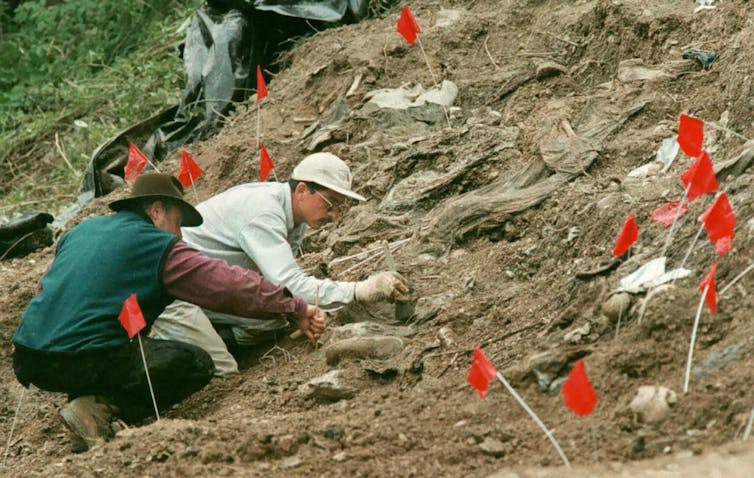
Overnight, their Serb neighbours became enemies – people she had grown up with and celebrated weddings and birthdays with turned against her family. They became the victims of what was the opening act for ethnic cleansing in Bosnia. Her father was taken to the nearby Batković concentration camp. For years, the full truth of such places remained hidden; their horrors only came to light long after the war.
Like many families, hers fled in stages, eventually finding precarious refuge in western Europe. From exile, Joldić experienced the war largely through television screens. International reporting became a lifeline, and a source of hope the world might finally act.
However, UN peacekeepers even failed to prevent the murders of more than 8,000 Bosnian Muslim men and boys in Srebrenica – the worst atrocity in Europe since the Holocaust. For Joldić‘s family and many like them, Srebrenica was the defining moment of the war. She remembers her family watching the news from Berlin in horror and disbelief. Human cruelty seemed to have reached a new, unimaginable level.
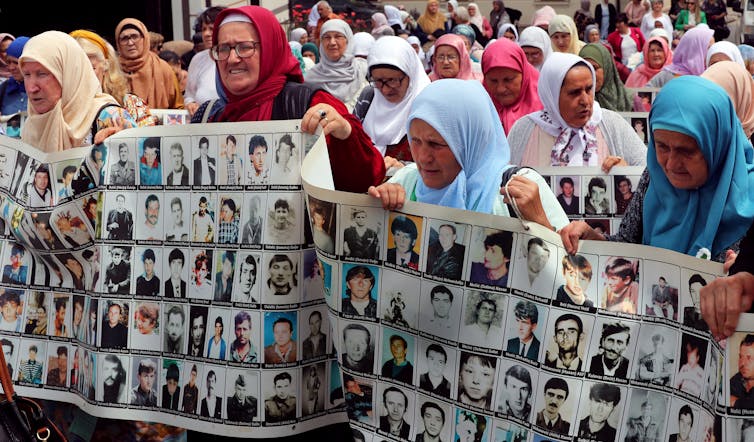
The family had lost everything – their house, their previous lives, their friends, their country. But they knew that in many respects they were the fortunate ones, because they had survived.
After clinging to the possibility of a return to Bijeljina, Joldić’s family eventually found a new home in Australia.
This story is not unique. It echoes the experience of hundreds of thousands of Bosnians who were displaced, dispossessed and scattered across the world.
What Dayton accomplished – and what it didn’t
At the end of 1995, international revulsion at the killings – amplified by relentless media coverage – spurred the United States and Europe into coordinated action. Working with regional leaders, they brought the fighting to an end.
The accords fulfilled the most fundamental task of any peace agreement: the fighting stopped. Bosnia survived as a single sovereign state, and the agreement established protections for its people.
But Dayton also entrenched a complex constitutional structure in the country that has often impeded reform and enabled nationalist politics. The division of the country into two entities – the Federation of Bosnia and Herzegovina and Republika Srpska – continues to shape its political life. Periodic threats of secession underline the fragility of the settlement.
Peace has required sustained external engagement. As global attention has shifted elsewhere, democratic backsliding and nationalist rhetoric have intensified.
Dayton also made possible a modern system of international criminal justice. The International Criminal Tribunal for the former Yugoslavia, established in 1993, became the first UN war crimes tribunal of its kind. More than 160 individuals were indicted and 92 were convicted of genocide and crimes against humanity. This laid the groundwork for the foundation of the International Criminal Court (ICC) in 2002.
Lessons for a troubled world
Thirty years on, Dayton offers lessons that are not only strategic, but deeply human.
First, peace requires sustained commitment from major powers – and timely action. Dayton succeeded in part because the US and Europe finally acted in concert. In today’s fractured geopolitical environment, that kind of unity is harder to achieve, but the cost of inaction remains just as high.
For many Bosnians, the prolonged international hesitation to intervene decisively bred fear and disbelief. It reinforced a lasting narrative the United States was slow to act because the violence posed no immediate threat to its own strategic or economic interests.
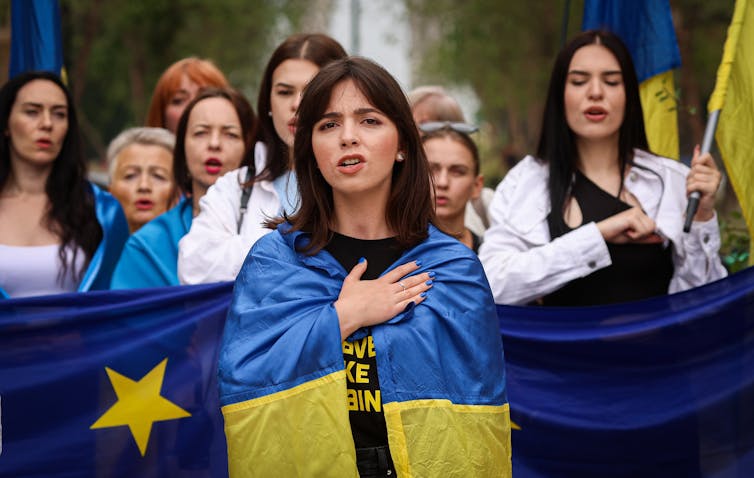
Echoes of that anxiety are now heard in Ukraine, where delays, conditions and debates over “escalation” have fed similar doubts about Western resolve.
Second, justice is not a luxury byproduct of a peace process – it is an essential condition for peace.
For survivors and displaced communities, accountability was a recognition that what happened mattered, and that it was wrong. The international criminal tribunal gave legal weight to people’s lived experience, transforming testimony into judgement.
At a time when the ICC is increasingly challenged or ignored, Dayton reminds us that justice can help societies move forward, even when wounds remain open.
Third, the displacement of people leaves long shadows.
Post-conflict recovery is not just about holding elections and rebuilding institutions; it’s also whether people can regain a sense of belonging and security, and contribute to their new countries.
More than two million Bosnians were displaced during the war, and over a million left the country permanently. They still measure time not in years, but in “before” and “after”. Countries across Europe, North America and elsewhere opened their doors to Bosnian refugees, allowing them to rebuild their lives.
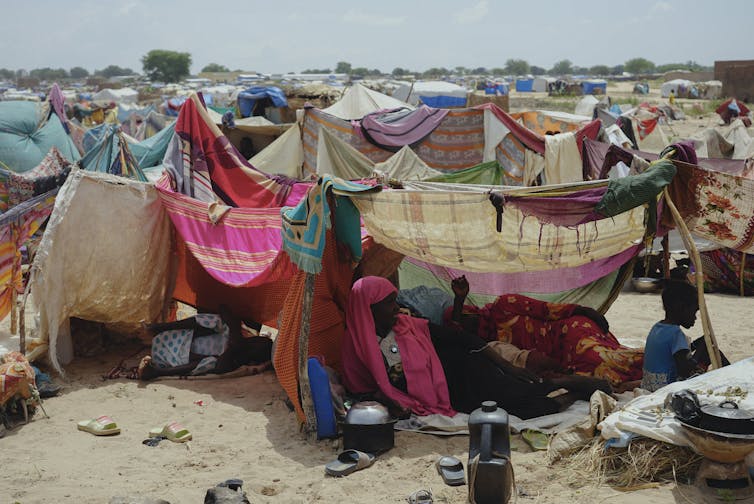
For those displaced by conflicts today – from Gaza to Ukraine to Sudan – the Bosnian experience offers a reminder of what is at stake when borders close and compassion falters. At a time when hesitancy about migration is hardening, this history stands as a powerful argument for keeping pathways to refuge open, even when doing so feels politically difficult.
Finally, Dayton cautions against complacency. Europe’s post-Cold War confidence that large-scale war was a thing of the past proved illusory. The war in Ukraine has reinforced how quickly norms can unravel.
Bosnia’s story warns of the dangers of unchecked nationalism and the enduring consequences when the international community looks away.
Dayton is not a perfect blueprint. But it stopped a war, enabled accountability for atrocities, and offered millions the chance to rebuild their lives.
Authors: Ian Kemish, Adjunct Professor, School of Historical and Philosophical Inquiry, The University of Queensland


 Daily Bulletin


