

Will the ‘military sleep method’ really help me fall asleep in 2 minutes?
- Written by: Dean J. Miller, Senior Lecturer, Appleton Institute, HealthWise Research Group, CQUniversity Australia
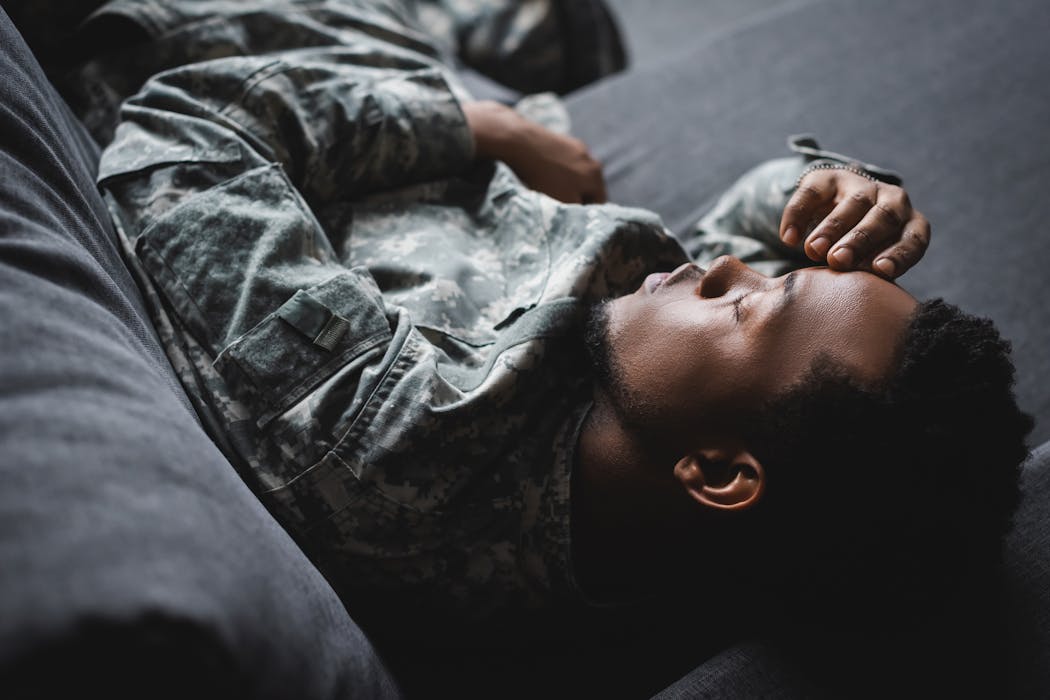
Has a camouflaged athlete running on a dirt road ever shouted health advice through your phone? Sometimes these videos are motivational and get you off the couch to start exercising; sometimes they’re educational. But can their advice help us civilians?
Let’s look at what it means to follow the “military sleep method”. There are various versions circulating on social media, including claims it can help you drop off in two minutes.
It certainly sounds appealing.
I research sleep and the body clock. And in field work, I have been part of several high-performance environments, helping athletes and military personnel counter fatigue and jet lag, and to get better sleep.
Here’s why the military sleep method might work for soldiers. But could it also work for you?
Just 3 steps to sleep?
The military sleep method, as the name suggests, is meant to help military personnel prime their body for sleep, regardless of the environment.
The first mention of the method is credited to a sports performance book called Relax and Win.
Reports of the military sleep method can vary slightly depending on the source. But three key components remain consistent:
progressive muscle relaxation: contracting and relaxing the muscles of the face, then the shoulders and arms, before moving down through the chest and legs
controlled breathing: breathing is slowed and controlled, emphasising longer exhalations
visualisation: imagining a calm environment, such as floating on calm water or lying in a quiet field.
Is this science or folklore?
As you may expect, the militaries of the world are not publishing their sleep techniques in open access journals. So there are no specific validations of the military sleep method in mainstream science.
So, let’s compare it to the recommended first-line treatment for insomnia, known as cognitive behaviour therapy for insomnia, or CBT-I.
This involves several key components:
cognitive therapy: challenging unrealistic beliefs and worries about sleep
stimulus control: strengthening the bed–sleep connection by avoiding non-sleep activities in bed and only lying down when sleepy
sleep restriction: initially limiting time in bed to build sleep pressure
sleep hygiene: maintaining healthy routines and environments, such as limiting caffeine and alcohol, keeping a consistent schedule, and making the bedroom a relaxing space, not associated with other activities
relaxation techniques: using techniques such as mindfulness, progressive muscle relaxation, or breathing, to reduce arousal and help you fall asleep.
Sounds familiar?
Notice the similarities between the military sleep method and CBT-I? Some context is also similar. For instance, soldiers may be sleep deprived, and sleep restriction is part of CBT-I. They have also been trained to have strong control of their thoughts, and CBT-I uses cognitive therapy.
Differences between the two also relate to the high-performance military environment. For instance, defence personnel will have no control of their sleep hygiene.
In other words, think of the military sleep method as sharing aspects of CBT-I, but tailored to defence personnel and focusing on three things they can control.
Can you really fall asleep in 2 minutes?
Based on these similarities, it is entirely possible the steps outlined in the military sleep method can help most of us fall asleep faster. But do we really need to fall asleep in two minutes?
In an unfortunate hit to the ego, most of us are not high-performance personnel. It is unlikely we experience the psychological and physiological demands the military sleep method was intended for. So for civilians, falling asleep in two minutes is an unrealistic goal.
As a general guideline, consistently falling asleep within eight minutes is considered unusual, and consistently falling asleep within five minutes can be a sign of excessive daytime sleepiness.
For civilians working nine-to-five and maintaining a regular schedule, falling asleep within ten to 20 minutes is considered normal.
But if you are a shift-worker, new parent, or have a diagnosed sleep disorder, these numbers may not apply.
So, should I sleep like a soldier?
Soldiers are trained extensively on how their physiology functions in challenging environments. The aim of this training is to give them as much control over their bodies as possible, including how best to fall asleep.
The military sleep method is a catchy way to package healthy sleep techniques. In practice it’s a blend of tools already grounded in sleep science (relaxation, breathing and visualisation).
It won’t harm your sleep to try it, but shift the goalposts away from the two-minute target.
If you’re fixated on falling asleep within two minutes, and start worrying when you don’t, that very worry can make it harder to sleep.
If you’re having ongoing problems with your sleep, or suspect you may have a sleep disorder, see a medical professional, such as your GP, for advice and assessment. If needed, they’ll refer you to a sleep specialist.
Authors: Dean J. Miller, Senior Lecturer, Appleton Institute, HealthWise Research Group, CQUniversity Australia


 Daily Bulletin


