

Read The Times Australia

Daily Bulletin

The climate crisis is fuelling extreme fires across the planet

  • Written by: Hamish Clarke, Senior Research Fellow, The University of Melbourne
The climate crisis is fuelling extreme fires across the planet

We’ve all seen the alarming images. Smoke belching from the thick forests of the Amazon. Spanish firefighters battling flames across farmland. Blackened celebrity homes in Los Angeles and smoked out regional towns in Australia.

If you felt like wildfires and their impacts were more extreme in the past year – you’re right. Our new report, a collaboration between scientists across continents, shows climate change supercharged the world’s wildfires in unpredictable and devastating ways.

Human-caused climate change increased the area burned by wildfires, called bushfires in Australia, by a magnitude of 30 in some regions in the world. Our snapshot offers important new evidence of how climate change is increasing the frequency and severity of extreme fires. And it serves as a stark reminder of the urgent need to rapidly cut greenhouse gas emissions.

The evidence is clear – climate change is making fires worse.

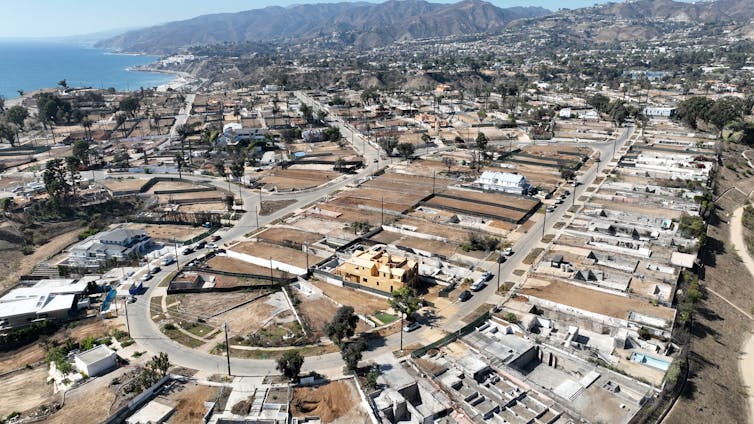
An aerial view of the Palisades fire zone in Los Angeles, showing burned building foundations.
A view of the Palisades fire zone in Los Angeles, where climate change fuelled the fires in January. Allen J. Schaben/Getty

Clear pattern

Our study used satellite observations and advanced modelling to find and investigate the causes of wildfires in the past year. The research team considered the role that climate and land use change played, and found a clear interrelationship between climate and extreme events.

Regional experts provided local input to capture events and impacts that satellites did not pick up. For Oceania, this role was played by Dr Sarah Harris from the Country Fire Authority and myself.

In the past year, a land area larger than India – about 3.7 million square kilometres – was burnt globally. More than 100 million people were affected by these fires, and US$215 billion worth of homes and infrastructure were at risk.

Not only does the heating climate mean more dangerous, fire-prone conditions, but it also affects how vegetation grows and dries out, creating fuel for fires to spread.

In Australia, bushfires did not reach the overall extent or impact of previous seasons, such as the Black Summer bushfires of 2019–20. Nonetheless, more than 1,000 large fires burned around 470,000 hectares in Western Australia, and more than 5 million hectares burned in central Australia. In Victoria, the Grampians National Park saw two-thirds of its area burned.

In the United States, our analysis showed the deadly Los Angeles wildfires in January were twice as likely and burned an area 25 times bigger than they would have in a world without global warming. Unusually wet weather in Los Angeles in the preceding 30 months contributed to strong vegetation growth and laid the foundations for wildfires during an unusually hot and dry January.

In South America, fires in the Pantanal-Chiquitano region, which straddles the border between Brazil, Bolivia and Paraguay, were 35 times larger due to climate change. Record-breaking fires ravaged parts of the Amazon and Congo, releasing billions of tonnes of carbon dioxide.

A man and woman hold cardboard signs with words and images protesting the burning of the Amazon forest.
Protestors march for climate justice and against wild fires affecting the entire country in Sao Paulo, Brazil. Faga Almeida/Getty

Not too late

It’s clear that if global greenhouse gas emissions continue to rise, more severe heatwaves and droughts will make landscape fires more frequent and intense worldwide.

But it’s not too late to act. We need stronger and faster climate action to cut fossil fuel emissions, protect nature and reduce land clearing.

And we can get better at responding to the risk of fires, from nuanced forest management to preparing households and short and long-term disaster recovery.

There are regional differences in fires, and so the response also need to be local. We should prioritise local and regional knowledge, and First Nations knowledge, in responding to bushfire.

Action at COP30

Fires emitted more than 8 billion tonnes of carbon dioxide in 2024–25, about 10% above the average since 2003. Emissions were more than triple the global average in South American dry forests and wetlands, and double the average in Canadian boreal forests. That’s a deeply concerning amount of greenhouse pollution. The excess emissions alone exceeded the national fossil fuel CO₂ emissions of more than 200 individual countries in 2024.

Next month, world leaders, scientists, non-governmental organisations and civil society will head to Belem in Brazil for the United Nations annual climate summit (COP30) to talk about how to tackle climate change.

The single most powerful contribution developed nations can make to avoid the worst impacts of extreme wildfires is to commit to rapidly cutting greenhouse gas emissions this decade.

Authors: Hamish Clarke, Senior Research Fellow, The University of Melbourne

Read more https://theconversation.com/the-climate-crisis-is-fuelling-extreme-fires-across-the-planet-267626

Business News

Designing Eco-Friendly Custom Water Bottles for Your Next Event

The Evolution of Sustainable Event Merchandise Event planning has undergone a massive transformation over the last decade. Gone are the days when organizers could hand out cheap, single use plastic...

Daily Bulletin - avatar Daily Bulletin

Why Choosing a Professional Florist Melbourne Makes Flower Delivery Impactful

Flowers have a great power to speak when humans cannot express their feelings with right words. Flowers are the best gifts when you are celebrating a birthday or welcoming a newborn child into your fa...

Daily Bulletin - avatar Daily Bulletin

The Business Case for Choosing Australian Fabricators Over Imported Alternatives

For a long time, you might have defaulted to overseas suppliers when sourcing fabricated metal components for a project. The unit price was lower on paper, and the maths seemed straightforward. That...

Daily Bulletin - avatar Daily Bulletin

Australian organisations are relying on business continuity plans built for a far more predictable world

Tariff escalations, supply chain fragility, geopolitical events, and the ongoing threat of cyber disruption have reshaped the risk environment facing Australian organisations. The problem is that ma...

Daily Bulletin - avatar Daily Bulletin

How to Rent a Car for Uber in Melbourne: What Every New Driver Needs to Know

Starting out as an Uber driver in Melbourne is not as complicated as it sounds but getting the vehicle right is where most new drivers get stuck. Uber has strict requirements around vehicle age, condi...

Daily Bulletin - avatar Daily Bulletin

When Should You Speak to a Lawyer About a Legal Issue?

Legal issues can begin with a simple question, then become harder to manage once formal steps are involved. Many people wait until a matter feels urgent before seeking guidance, even though earlier ...

Daily Bulletin - avatar Daily Bulletin

The strategic rise of Bali as Australia’s next essential healthcare support hub

As Australian healthcare providers grapple with unprecedented operational bottlenecks, a new nearshore model is quietly transforming patient care delivery. Forward-thinking organisations,  including...

Daily Bulletin - avatar Daily Bulletin

Cost Savings and Benefits of Using Used Pallets in Logistics

In today’s competitive logistics and supply chain industry, businesses are constantly looking for ways to reduce operational costs without compromising efficiency and reliability. One of the most prac...

Daily Bulletin - avatar Daily Bulletin

How Fulfilment Services in Australia Help Businesses Scale Efficiently

The growth of e-commerce and modern retail has transformed customer expectations. Consumers now expect fast shipping, accurate order processing, and seamless delivery experiences regardless of where...

Daily Bulletin - avatar Daily Bulletin

The Daily Magazine

Thermoplastic vs. Paint: The True Long-Term Cost Comparison

Line marking looks like a simple line item on a school maintenance budget, until the true cost of ...

Why Vetting Beats Volume: The Real Story Behind Australia's Growing Applicant Pools

On paper, hiring should be getting easier. Job ads across the country are pulling in more applicat...

Moving Out of a Rental in Melbourne? A Practical Moving Checklist

Moving out of a rental in Melbourne is one of those things that always feels further away than it ...

Why a Cordless Rebar Tying Machine Is a Smart Investment for Australian Construction Projects

Tying reinforcing steel by hand means spending hours bent over while making the same twisting moti...

How to Get a Document Notarised in Sydney: What to Bring, What It Costs and How Long It Takes

If an overseas bank, embassy, university, employer or land registry has asked you for a notarised ...

The 2026 Used-Car Market

For a few strange years, the used-car market rewrote its own rules. Supply shortages sent second-h...

Why CCTV Alone Is Not Enough for Modern Business Security

Cameras are usually the initial step that companies take to strengthen their physical security. If...

Top 4 Wheelchair Ramp Providers in the Boulder Area

Finding the right wheelchair ramp in Boulder will feel like a turning point. Whether you are plann...

Why Every Workplace Should Take Emergency Preparedness Seriously

Emergency planning is one of those things many workplaces know they should think about, but it oft...