

From frog saunas to butterfly puddles: 8 ways to turn your homes into a wildlife refuge
- Written by: Bethany Kiss, PhD Candidate, RMIT University
Native animals can make excellent neighbours. Blue banded bees pollinate our vegetable gardens. Microbats eat up to 1,200 mosquitoes a night and powerful owls keep rodents at bay. But could we go one step further, and change our homes to invite native animals in as housemates?
Cities are biodiversity hotspots and have an important role in tackling the extinction crises for animals, plants and insects. As cities continue to sprawl, our buildings have become increasingly important habitat for wildlife.
Animals are not the only ones to benefit. Evidence shows noticing wildlife at home can lead to better mental health. Co-habitating with wildlife can also help you feel more at home.
But how can we intentionally design our homes to co-inhabit with wildlife? That’s the question explored by When Wildlife Moves In, a new work at the National Gallery of Victoria. The work, created by the authors of this article, uses data from Wildlife Victoria to explore how homes can become shared ecological resources.
Here are eight easy ways to invite wildlife into your home and backyard.
1. Give butterflies a drink from your air con
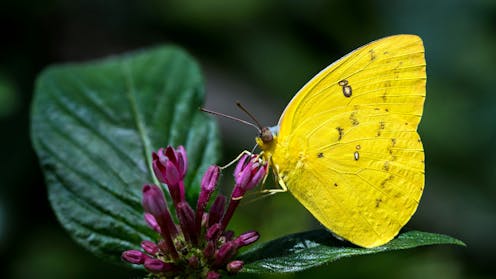
Urban butterflies are declining at alarming rates around the world. At the same time, water dripping from air conditioners wastes millions of litres of clean water daily. Studies show this water is safe to reuse for nature.
Butterflies, for example, like to sip water from shallow water sources because they tend to get stuck in deeper water.
Solution? Leave an area of gravel beneath your air conditioner vent to create a “puddling” station for butterflies. This will transform what would otherwise go down our drains into habitat for a beloved pollinator.
2. Provide city birds with scarce nesting material
The scarcity of natural nesting materials in cities poses challenges for some animals. Many are forced to get creative – sometimes incorporating dangerous or lethal alternatives such as plastics into their nests.
Solution? Leave a bowl out in your backyard providing nesting materials such as lawn clippings, native grasses, bark strips and untreated hair. This will help native birds such as the Australian magpie and the Pied Butcherbird
3. Move indoor plants away from windows
Glass doors and windows are a serious threat to birds. In the United States alone, as many as a billion birds each year are killed or badly injured flying into glass.
Solution? Move indoor plants out of view through windows and doors so birds don’t mistake them for habitat. Or put anti-collision stickers on your windows, ensuring they are high contrast in colour and spaced no more than 5–10 cm apart.
4. Remove the concrete from your backyard
Concrete slabs destroy soil microorganisms and prevent animals from digging and tunnelling to create nesting sites.
Wombats are ecosystem engineers. Their burrowing aerates soil, improves water infiltration and cycles organic material and nutrients. But urban development fragments their habitat and concrete foundations seal off natural soil ecosystems. When this happens, wombats adapt by creating alternative burrow systems under houses, decks and other human structures.
Solution? Remove the concrete slabs from your backyard and leave open soil with vegetation or a raised deck in its place.
5. Leave the cavities in your houses unsealed
Natural tree hollows are disappearing at an alarming rate due to urban sprawl and tree removals. It has forced microbats and other hollow-dependent species to seek refuge in dark spaces in our buildings, such as wall cavities, roof voids and building crevices.
Solution? Let the bats continue living in your building cavities. If you are bothered by them, wait until they leave, then provide a bat nesting box so they can safely continue living.
6. Plant the ‘missing’ layer birds need
Australian cities are missing a crucial habitat layer — the “middle storey” between ground cover and tall trees. This gap in coverage allows aggressive species such as noisy miners to dominate, pushing out smaller native birds and threatening endangered species.
Solution? Plant more shrubs and bushes to create a bushy layer of 2-4 metres. This helps smaller birds such as Superb Fairy-wrens find places to hide. It’s also useful to include habitat elements such as log piles and rocks.
7. Keep your cats inside
Every free-roaming cat is a threat to wildlife. Feral and free-roaming cats collectively kill more than three billion animals a year in Australia.
Cats have played a leading role in most of Australia’s 34 mammal extinctions since 1788, and are a big reason why populations of at least 123 other threatened native species are declining.
Solution? “Catios”, or cat patios, allow cats to experience nature but keep wildlife safe from predators.
8. Build a frog sauna
Some of the best wildlife-friendly ideas are surprisingly simple. Frog saunas, for instance, are small structures with frog-sized holes, made from black bricks or similar materials that heat up in the sun. These structures help fight chytrid fungus, a devastating disease that’s pushing many Australian frog species toward extinction.
Chytrid thrives in cold conditions but dies in heat, making these warm refuges potentially life-saving for local amphibians. Instructions for building your own frog sauna are free, requiring little more than recycled materials and a sunny spot in your garden.
A shared future
Australian cities are important for conserving biodiversity – and our homes can help. Thoughtful, intentional design can better support the species that need our support.
If you want to find ways to co-habitate with native wildlife, click here for more solutions.
When Wildlife Moves In is part of the exhibition Making Good: Redesigning the Everyday, showing at the NGV Ian Potter Gallery. The exhibition explores how designers are reshaping the products and systems that shape our daily lives.
Authors: Bethany Kiss, PhD Candidate, RMIT University


 Daily Bulletin


