

3D printed mini-placentas offer a new way to study pregnancy complications
- Written by: Claire Richards, Lecturer in Biotechnology, University of Technology Sydney
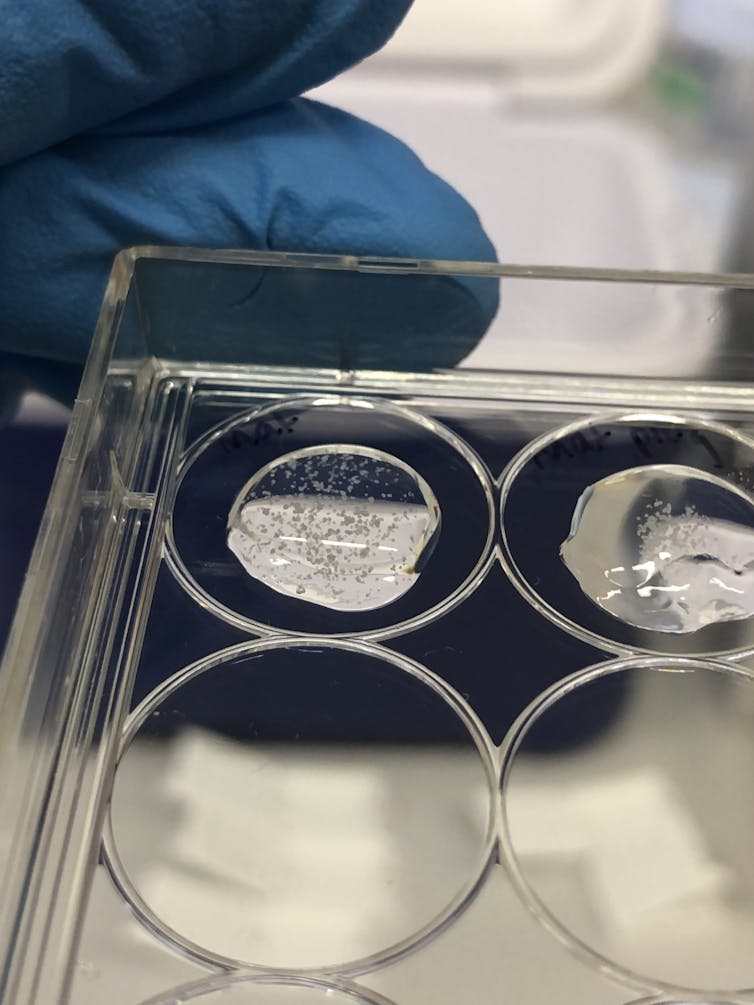
The placenta is a unique organ which exists only during pregnancy, growing at tumour-like speed to the size of a small dinner plate. The placenta is essential to the growth of every baby, but we’re missing key details about how it develops.
Studying the placenta during pregnancy is difficult, as taking samples risks introducing infection or triggering miscarriage. And placental tissue after birth is very different from its early form.
Animal placentas are often distinct from human ones, so studying them is of limited use. Pregnancy researchers have been left in the dark on the critical early stages of placental development.
In new research published today in Nature Communications, we report the first 3D-printed artificial mini-placentas. These “placental organoids” are an advance over earlier efforts, and will give scientists new ways to study pregnancy and shed light on complications like preeclampsia.
Tiny organs in the lab
First described in 2009, organoids were a breakthrough in medical research.
Since then, scientists have grown organoids from a wide range of human organs by taking stem cells and setting them in a gel, like sprinkles suspended in jelly. This gel mimics the tissue that cells are supported in and allows them to form clusters as they grow and divide.

In 2018, the first placental organoids were grown from trophoblasts – a type of cell found only in the placenta. Researchers have been using placental organoids to uncover hidden processes of early pregnancy by copying them in a dish.
However, most of this research relies on animal-derived gels which cannot be modified to reflect the growing environment of the real placenta. Also, manually suspending cells in gels makes it difficult to create many organoids.
3D printing placentas
Bioprinting is a type of 3D printing technology that uses living cells and cell-friendly materials to create 3D structures. We mixed trophoblast cells from the placenta with a synthetic, controllable gel and 3D printed them into a culture dish in precise droplets, much like an ink-jet office printer.
Our printed cells grew into placental organoids and we compared them to organoids made with existing manual methods.

The organoids we grew in the bioprinted gel developed differently to those grown in an animal-derived gel, and formed different numbers of cell sub-types. This highlighted that the environment organoids are grown in can control how they mature.
These organoids were very similar to human placental tissue, providing an accurate model of the early placenta. We could change how the cells organised themselves by taking young organoids out of the gel and letting them float in their liquid food.
Growing placental organoids creates a new way for researchers to study crucial processes in early pregnancy, unveil the causes of serious conditions like preeclampsia and find new treatments.
Why understanding the placenta is so important
In 2023, pregnancy complications led to over 260,000 maternal deaths and millions of infant losses globally.
One serious complication in pregnancy linked to placental dysfunction is preeclampsia, which affects 5–8% of pregnancies. It causes high blood pressure and can damage organs, often with little warning.
Preeclampsia can lead to early delivery and serious health risks for both mother and baby. It also increases the mother’s risk of long-term health problems like heart disease, diabetes, and kidney disease.
Right now, there’s no cure besides delivery because we still don’t fully understand what causes it.
Risk factors such as race, age, obesity, existing high blood pressure, diabetes, autoimmune disorders and use of assisted reproductive therapy can identify women who are more likely to develop preeclampsia. Women can sometimes prevent this by taking low doses of aspirin from early in pregnancy, but researchers haven’t yet found an effective way to prevent all cases.
If preeclampsia develops, a few drug options are available to treat blood pressure changes but the only cure is delivery of the baby. This often leads to premature birth and the challenges that come with being born early.
How better mini-placentas can help
With placental organoids, we can start piecing together the puzzle of pregnancy complications and test new drugs safely. For example, we exposed our bioprinted organoids to an immune signal found at high levels in women with preeclampsia, then tested potential treatments to see how the organoids grew and responded.
Building on this, bioprinted organoids could be expanded to better understand pregnancy by using tools like CRISPR to edit genes in cells and uncover important players in this tightly choreographed process. They could be used to study infections, and test drugs for their safety and effectiveness at scale.
Bioprinting improves accuracy, repeatability and reduces the need for animals in research – both for sourcing materials and for drug testing. While some animal research is still used for testing in a whole living body, this is an important step towards animal-free research.
As we refine these models, we move closer to a future where pregnancy complications can be predicted, prevented and treated before they put lives at risk.
Authors: Claire Richards, Lecturer in Biotechnology, University of Technology Sydney


 Daily Bulletin


