

Read The Times Australia

Daily Bulletin

A doctor’s story shows ‘late-term’ abortion access is politically charged – but crucial

  • Written by: Prudence Flowers, Senior Lecturer in US History, College of Humanities, Arts and Social Sciences, Flinders University
A doctor’s story shows ‘late-term’ abortion access is politically charged – but crucial

In the United States, around 1% of abortions occur after 21 weeks. Yet these abortions are intensely vilified. Recall Donald Trump’s graphic and false claim that US laws allowed doctors to “rip the baby out of the womb in the ninth month, on the final day”.

For two decades, Dr Shelley Sella provided abortion care in the US into the third trimester of pregnancy: that is, after 26 weeks gestation. Her new book Beyond Limits offers an intimate account of health care and politics, written from the front lines of America’s abortion wars.

Review: Beyond Limits: Stories of Third-Trimester Abortion Care – Shelley Sella, MD (Random House)

In Australia, abortion after 20 weeks gestation is also statistically rare – and most Australians agree that people need abortions after 20 weeks for a variety of medical and social reasons. However, in the last year or so, the focus on later abortions seems to be intensifying here, along with misinformation.

Every Australian jurisdiction but the ACT has a legal gestation limit (ranging from 16 to 24 weeks), after which two doctors must agree the abortion is necessary.

Yet a common claim made by abortion opponents like Tony Abbott and Barnaby Joyce is that Australia’s laws allow abortion “for any reason” “right up to the time of birth”.

Last year, the SA parliament narrowly voted down a so-called forced birth bill that would have banned abortion from 28 weeks. Simultaneously, during the Queensland state election, MP Robbie Katter boasted he would table legislation aiming to reduce the state’s gestation limit to 16 weeks or even a “clean repeal” of decriminalisation.

During this time, Senator Jacinta Price insisted abortion after the first trimester was “late term” – and called for abortion to be on the national agenda.

“Late-term abortion”, neither a medical or clinical term, has been a touchstone for US anti-abortion activism and lobbying. That rhetoric frequently dominates how this procedure is discussed – and not just in the US.

Humanising the issue

Sella’s book is part memoir, part activism – and at its core is the fundamental belief that empathy and understanding can overcome stigma and stereotype.

She aims to humanise the complicated, often desperate circumstances that mean people need abortion care later in pregnancy. She argues the procedure is “never, ever a casual decision”.

Quoting the mother of a young rape victim, Sella reminds us: “You don’t know the story until you are the story.”

Sella grew up in New York City in the mid-1950s, the daughter of two Israeli immigrants in an “unhappy household”.

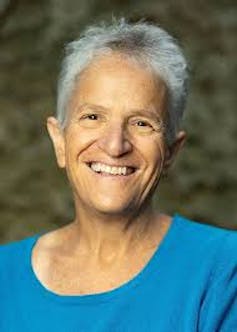
Shelley Sella writes that abortion is ‘never, ever a casual decision’. Orinda Books

From the ages of 12 to 15, she writes, she was sexually abused. When Sella was 14, she missed her period for several months. She remembers, “I absolutely knew I would kill myself if I were pregnant.” Although she managed to find a community clinic and learned she was not pregnant, this visit, including a painful pelvic exam, compounded her feelings of shame, fear and isolation.

Throughout the book, Sella returns to these experiences in her early teens, framing them as underpinning her approach to health care and interest in abortion. Her goal was always “to treat patients as I would have wished to have been treated as an abused, frightened girl – that is, with understanding, an open heart, and compassion”.

Sella first encountered abortion in her early twenties through her involvement in second-wave feminism and the women’s health care movement. She trained and briefly worked as a midwife before becoming an OB-GYN.

In her early 40s, feeling professionally unfulfilled, Sella decided to focus on abortion provision. Her life was then transformed by a chance conversation about abortion and midwifery with Dr George Tiller, the owner of a Kansas clinic that was one of three in the country that provided third-trimester abortions.

Superficially, they were an unlikely pair. Sella was an “obstinate” Jewish lesbian and Tiller was “prickly”, “deeply patriotic” and a devout Lutheran. But they developed a profound rapport – he became both mentor and like a “second father”.

Tiller’s oft-repeated motto was “trust women”. When training Sella, he emphasised the physical, emotional and spiritual needs of later abortion patients.

Dismantling stereotypes, fighting stigma

Later gestation abortions occur after a significant adverse medical diagnosis, or because of the complex and often traumatic circumstances of the woman or pregnant person. Sella believes patient stories are vital in helping people understand the importance of both this type of care and access to abortion more broadly.

Drawing from her diary to offer vivid composite portraits of patients, Sella explores the nuances of why people seek a third-trimester abortion.

In Part 1, she alternates between chapters that tell her own story alongside a “working week” in New Mexico, tracing the stories, emotions and experiences of six women. She introduces the reader to the multi-day nature of a third-trimester abortion and explores the centrality of patient-centred care. Sella also charts the immense logistical and financial barriers patients overcome to access these abortions. Roe v Wade (overturned in 2022) found abortion to be a constitutional right until viability, the point in pregnancy at which a fetus can theoretically survive outside the womb. The majority of US states banned abortion after 24 weeks and most of Sella’s third-trimester patients travelled far from home to access care. Read more: How abortion laws focusing on fetal viability miss the mark on women's experiences Mary and Christopher, Jamie and Robert, and Amrita and Arun are “fetal indication” patients, terminating wanted pregnancies after serious fetal anomaly diagnoses, such as lissencephaly (also known as smooth brain), a rare but severe congenital condition. Mary and Christopher’s story is particularly striking. Catholics who oppose abortion, they chose to terminate their pregnancy because “as long or as short as their child’s life might be, they did not want their child to suffer”. Their faith and politics meant they felt completely alone, in contrast to the other couples chronicled in the book, who have church, community and family support. Laura, Irene, and Noor are “maternal indication” patients, accessing abortion because of their life circumstances. Laura, a mother of four, was experiencing extreme domestic violence and had cancelled several earlier abortion appointments. Irene is a single mother whose pregnancy symptoms were masked by the return of her stomach cancer. She couldn’t begin chemotherapy while pregnant and was terrified she would die before her daughter finished high school. Noor, the 17-year-old daughter of Iranian immigrants, was unable to access abortion care because of state parental consent laws for minors. She believed her parents would disown her for having sex before marriage, yet when they eventually learned she was pregnant they supported her desire for an abortion. Her father accompanied her for the week. In the shorter Part 2, Sella addresses common assumptions about third-trimester abortion, including questions like “why did she wait so long?” and “why doesn’t she just give the baby up for adoption?” The book is filled with emotionally devastating stories. Sella reminds us “patients make their decisions based on the reality of their lives, not the fantasy version”. Throughout, Sella’s central theme is that if we are willing to sit and really take in other people’s experiences, they “should inspire compassion rather than judgement”. But Sella also asks the reader to view third-trimester abortion as health care that empowers, rather than simply as tragedy. She writes about the purpose and motivation that inspired and sustained her: I fully embraced my patients’ hopes, dreams, and aspirations for themselves and their families. I was proud to be able to provide them with care that could make that possible. Politics and abortion Even as Sella’s memoir honours and humanises the patients she has cared for and the people she has worked with, it is also a narrative of the intense impact of anti-abortion activism in the US. Tiller experienced extreme, violent harassment by opponents of abortion. In 2009, he was murdered in his church while attending Sunday services. Sella writes about this tragedy with spare, deeply moving prose. Sella and a colleague resolved to continue offering care, eventually establishing a third-trimester service in New Mexico. They, along with the other two doctors who openly performed third-trimester abortions in the US, agreed to be filmed in the award-winning documentary After Tiller. Beyond Limits also charts the broader impact of anti-abortion activism on people seeking care. Sella writes with grace about the way right-to-life rhetoric shapes the emotions and fears of her patients. The book chronicles the impact of events outside New Mexico. In the 2010s, there were mass clinic closures after anti-choice states passed laws targeting abortion providers. At the start of COVID, some states closed clinics because abortion was “not medically necessary”. Writing in the epilogue about the overturning of Roe v Wade in 2022 and the end of the constitutional right to abortion, Sella argues the effect has been to extend the difficulties and challenges that so many of my third-trimester patients always faced to all women in states that now have free rein to limit or ban abortion. As Australian anti-abortion politicians and activists increase their vilification of later gestation abortion and the people who access this care, we would do well to heed Sella’s message of compassion and empathy and resist the politicisation of healthcare. If this article has raised issues for you, or if you’re concerned about someone you know, call Lifeline on 13 11 14. Authors: Prudence Flowers, Senior Lecturer in US History, College of Humanities, Arts and Social Sciences, Flinders University

Read more https://theconversation.com/a-doctors-story-shows-late-term-abortion-access-is-politically-charged-but-crucial-263920

Business News

The Rise of Digital Marketplaces in the Australian Trade Sector

For decades, the Australian trade and construction sector operated almost entirely on word-of-mouth recommendations and local community networks. Small business owners typically relied on local newspa...

Daily Bulletin - avatar Daily Bulletin

How Immigration Lawyers Can Help

Introduction Visa decisions can shape employment, family life, study plans, travel, and future residence. A small omission can lead to delay, added expense, or refusal. Immigration lawyers assess l...

Daily Bulletin - avatar Daily Bulletin

How Industrial Drying Equipment Supports Efficient Processing

Many industrial processes require moisture to be removed from compressed air, products or process materials before they move to the next stage. Excess moisture can affect equipment performance, produc...

Daily Bulletin - avatar Daily Bulletin

Practical Ways a Whiteboard Can Improve Workplace Communication

Effective communication helps teams stay organised, share ideas and keep track of important information. While digital tools are now common in many workplaces, a whiteboard continues to provide a simp...

Daily Bulletin - avatar Daily Bulletin

Designing Eco-Friendly Custom Water Bottles for Your Next Event

The Evolution of Sustainable Event Merchandise Event planning has undergone a massive transformation over the last decade. Gone are the days when organizers could hand out cheap, single use plastic...

Daily Bulletin - avatar Daily Bulletin

Why Choosing a Professional Florist Melbourne Makes Flower Delivery Impactful

Flowers have a great power to speak when humans cannot express their feelings with right words. Flowers are the best gifts when you are celebrating a birthday or welcoming a newborn child into your fa...

Daily Bulletin - avatar Daily Bulletin

The Business Case for Choosing Australian Fabricators Over Imported Alternatives

For a long time, you might have defaulted to overseas suppliers when sourcing fabricated metal components for a project. The unit price was lower on paper, and the maths seemed straightforward. That...

Daily Bulletin - avatar Daily Bulletin

Australian organisations are relying on business continuity plans built for a far more predictable world

Tariff escalations, supply chain fragility, geopolitical events, and the ongoing threat of cyber disruption have reshaped the risk environment facing Australian organisations. The problem is that ma...

Daily Bulletin - avatar Daily Bulletin

How to Rent a Car for Uber in Melbourne: What Every New Driver Needs to Know

Starting out as an Uber driver in Melbourne is not as complicated as it sounds but getting the vehicle right is where most new drivers get stuck. Uber has strict requirements around vehicle age, condi...

Daily Bulletin - avatar Daily Bulletin

The Daily Magazine

South African Consular Services Expand to Six Australian Cities

South Africans living in Adelaide, Brisbane and Canberra will now be able to access passport, identi...

How Long Does a Solar Home Battery Last? LFP Cycles and Warranty Explained

A battery does not usually reach its advertised cycle count and suddenly stop working. Capacity ch...

How to Hire a Nanny: A Complete Guide for Families

Finding the right childcare professional can make everyday family life easier and give parents gre...

The Blue-Collar Shortage Employers Can't Solve With More Applicants

Australia's hiring market has cooled considerably since the post-pandemic frenzy of 2021 and 2022. F...

The Playground as Classroom: How Line Markings Are Reinforcing What Students Learn Inside

For a long time, the playground was treated as a break from learning rather than part of it. A place...

How Technology Is Changing the Way Gardens Are Maintained

Garden maintenance has always been a hands on ritual. Mowing on a schedule, watering by instinct, an...

One Blocked Drain Can Become a Whole House Plumbing Problem: How It Happens

A blocked hand basin feels local. So does a slow shower. Homeowners naturally focus on the fixture...

AI in Marketing: From Experiment to Everyday Tool

For the past couple of years, artificial intelligence in marketing has mostly lived in the "let's se...

What Businesses Can Do to Make Sustainability More Practical Day to Day

Sustainability can sound like a huge corporate project, something tied to annual reports, long-term ...