

Control fire and ferals in Australia’s tropical savannas to bring the small mammals back
- Written by: Alyson Stobo-Wilson, Research Adjunct in Conservation Ecology, Research Institute for the Environment and Livelihoods, Charles Darwin University
In remote central Arnhem Land, finding a northern brushtail possum is encouraging for the local Indigenous rangers. Though once common, such small native mammals are now rare. Many are threatened with extinction.
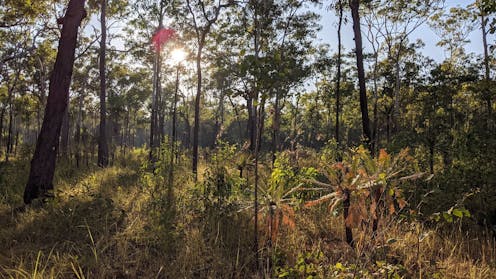
Over the past 30 years, small mammals have been disappearing from Australia’s tropical savannas. This landscape is among the nation’s most remote and seemingly untouched. But it is no longer safe from feral animals, overgrazing livestock, poor fire management and other threats.
Despite growing awareness of the problem, a lack of consensus on the most effective management actions has hindered efforts to reverse these losses. Our new research sought to overcome this hurdle and finally reach consensus on the best way forward.
We achieved this by working with experts from various land management groups and research institutes, including Traditional Owners and Indigenous rangers within the region.
Building on 15 years of targeted research
In 2010, the scale and severity of mammal declines in northern Australia became clear. Research in Kakadu National Park found the number of native mammal species at survey sites had halved, and the number of individual animals dropped by more than two-thirds.
This prompted a major review of the causes, and more research.
Advances in technology played a crucial role in efforts to gather further evidence. Motion-activated cameras known as camera traps enabled monitoring over vast areas.
Extensive surveys using camera traps provided data on the distribution and abundance of small mammals and feral cats. Meanwhile, collar-mounted GPS units and video cameras provided new information about feral cat behaviour.

What we did and what we found
Our new research concerns the higher-rainfall tropical savannas of the Northern Territory and Western Australia. This area covers 950,000 square kilometres from the Kimberley in the west to the Gulf of Carpentaria in the east.
First we reviewed the literature on the topic of small mammal declines in the region. We found more than 100 relevant studies had been published since 2010.
From these research papers, we identified 11 plausible threats to small mammals. Then we asked 19 experts to score and rank each threat according to severity and scale, and whether the threat could be effectively mitigated.
We found the most severe and widespread threat to small mammals was feral cats. But broad-scale cat control is not very effective.
Ranked second was the habitat destruction caused by livestock (buffalo, horses, donkeys and cattle) and by inappropriate patterns of fire.
Actions aimed at reducing feral livestock numbers and improving fire regimes would increase vital resources such as food and shelter. Such actions can also make it harder for cats to prey on small mammals.

Future threats and research priorities
Habitat loss from land clearing for urban, agricultural or industrial development currently affects only a small proportion of northwestern Australia. But proposed expansions — particularly for cotton and other intensive agriculture — are concerning. These developments overlap with high-rainfall areas in the Top End, where small mammal communities are still relatively intact.
Our expert group also expressed deep concern and uncertainty about the future as the climate changes. Rising temperatures and more intense rainfall events are expected to increase the frequency, extent and severity of fires. However, managing feral livestock and improving fire regimes can make the ecosystem more resilient to change.
Developing more effective tools to directly control feral cats remains a top research priority. It’s estimated cats kill around 452 million native mammals a year in Australia. About a third of these deaths occur in the tropical savannas. So while improved land management will alleviate some pressure, certain species will remain highly vulnerable unless cats can be better managed.
 Water buffalo were introduced to northern Australia in the early-1800s, becoming widespread by the mid-1800s.
Alyson Stobo-Wilson
Water buffalo were introduced to northern Australia in the early-1800s, becoming widespread by the mid-1800s.
Alyson Stobo-Wilson
Support Indigenous leadership on Country
Globally, Indigenous stewardship is closely linked to improved biodiversity outcomes.
In Australia, the historic disruption of Indigenous customary responsibilities — especially fire management — has contributed to the loss of small mammals.
Fortunately, Indigenous ranger programs and Indigenous Protected Areas have expanded in recent years. Increasingly widespread recognition and application of Indigenous knowledge has deepened and broadened our understanding of mammal declines.
In northern Australia, Indigenous ranger groups are global leaders in fire management. They monitor and manage some of the most remote and inaccessible parts of the continent. The land management actions needed to conserve our small mammals rely in large part on the continued support and funding of these groups.
Unfortunately, these programs are under threat. The NT government recently cut A$12 million from its Indigenous ranger funding program.
While the federal government has committed funding to expand ranger programs nationally, ranger groups say the investment falls short of what’s needed. Mimal Land Management Aboriginal Corporation chief executive officer Dominic Nicholls told us:
Given the scale at which Indigenous ranger groups operate – and the critical role they play in protecting Australia’s biodiversity and leading innovation in the carbon industry – the level of allocated funding is insufficient to meet the basic delivery costs of these programs.
 Mimal ranger Junior Redford undertaking savanna burning in central Arnhem Land.
Achraf Abid, France 24, Author provided (no reuse)
Mimal ranger Junior Redford undertaking savanna burning in central Arnhem Land.
Achraf Abid, France 24, Author provided (no reuse)
A clear path forward
Our research shows reducing feral livestock numbers and improving fire regimes in northern Australia currently offers the greatest benefit to small mammal populations — especially in the absence of effective cat controls.
But success will depend on sustained, long-term support for Indigenous rangers, who carry out much of this work. Investing in these programs is not just essential for conserving biodiversity — it also supports cultural connection, community wellbeing and climate resilience.
The authors gratefully acknowledge the Traditional Knowledge offered by participants from Mimal Land Management Aboriginal Corporation and Warddeken Land Management Limited as part of this research.
Authors: Alyson Stobo-Wilson, Research Adjunct in Conservation Ecology, Research Institute for the Environment and Livelihoods, Charles Darwin University


 Daily Bulletin


