

‘A defiant stand’: histories of Australia’s frontier wars are revealing their true complexity, but there’s more to be done
- Written by: Heidi Norman, Professor of Australian and Aboriginal History, Faculty of Arts, Design and Architecture, Convenor: Indigenous Land & Justice Research Group, UNSW Sydney
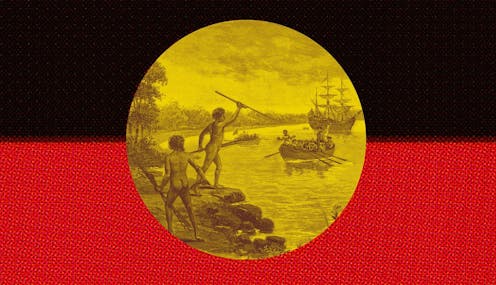
Historian Stephen Gapps’ latest book, Uprising: War in the Colony of New South Wales, 1838–1844, describes a coordinated Aboriginal military front across more than 20 different Aboriginal nations and language groups. The front extended for thousands of kilometres, from Port Phillip in the south to Moreton Bay in the north.
Over this extended arc, war raged for several years from the late 1830s.
Review: Uprising: War in the Colony of New South Wales, 1838–1844 – Stephen Gapps (NewSouth)
This history is revealed through detailed research of settler archives: reports, news stories, and survivor testimony. Gapps establishes that organised and coordinated bands of warriors waged a successful campaign across multiple sites, which forced the soldiers, shepherds and settlers to retreat. He calls this the “uprising” and those who waged it “warriors”.
The warriors deployed a range of tactics to terrorise the invaders, forcing many to flee their holdings. By the mid 1840s, however, the squatters became militarised and more accustomed to the warriors’ style of warfare. The parliament grew concerned to protect grazing profits. Gapps notes that the colonial population had doubled, from nearly 98,000 in 1838 to 181,556 in 1845. Horse, sheep and cattle numbers also exploded. The rush to claim land beyond the “limits of location” meant the warriors were increasingly outnumbered.
As I read Uprising, I thought about my Aboriginal family. My great-great-great-grandmother, Mary Anne Tidswell, was born in 1836, on the eve of the swarming of her Country by sheep and soldiers and the uprising of her people. By the time her second daughter was born in 1864 – my great-great-grandmother, Emma Dingwell – a new world had descended on the occupied plains of north western New South Wales.
Aboriginal and military history
In the 56 years since eminent anthropologist W.E.H. Stanner challenged historians to address the curious “silence” around the recent Aboriginal past, an enormous body of research by historians and others working in the field has transformed the discipline.
Aboriginal and Torres Strait Islander perspectives and experiences have been incorporated into accounts once dominated by colonial and settler perspectives, establishing the academic field widely referred to as Aboriginal history.


 Historian Stephen Gapps proposes a new interpretation of Australia’s frontier wars.
NewSouth Publishing
A highpoint of resistance
Gapps identifies two leading strategies in the warrior uprising. One was to destroy the squatters’ property and kill their stock, denying them thousands of pounds worth of cattle and sheep. As Gapps details, some squatters were “ruined” and “up and left”. Historians have attributed the squatting bust of the 1840s to drought and over-investment. Gapps offers a counter explanation: the warriors were a significant undermining factor.
The other tactic the warriors deployed was terror. Resistance fighters terrorised the invaders “forcing convict shepherds to cower in their hunts, swim rivers and flee for their lives, refuse to work for their overseer, destroy their firearms and go insane in the bush”.
The warriors could number as many as 1,000 in one camp alone. Not only did they successfully wage a war of terror; they sustained their camps and fighters on a diet of the invaders’ livestock. Soldiers travelling in the warriors’ wake came upon one camp that was strewn with the bones of sheep and cattle.
Gapps describes the uprising of 1838–44 as a “highpoint of resistance to the colonisers”. After this period, the colonisers deployed new strategies to overwhelm the resistance. Gapps reminds us of the terrible consequences of the deployment of the Queensland Native Mounted Police, established in 1849.
Further west, as the moving frontier and patterns of settlement encountered the Barkandji people, the Barka (Darling) river became a war zone. Warriors burnt down the invaders’ infrastructure and left stockyards in ruins. Gapps records that, in December 1845, Major Thomas Mitchell saw this as “humiliating proof that the white man had given way”.
Honour and remembrance
Gapps’ research is extensive. The bibliography and references make up nearly a quarter of the book. The richness of the archival evidence is impressive.
As the study of Australian and Aboriginal history continues, what remains outstanding is how this history is remembered and represented. While we might acknowledge the writing back of Aboriginal and Torres Strait Islander worlds into the history books, unease persists about how this history should become a remembered and honoured part of the nation’s story.
The significance of the uprising of 1838–44 has been poorly understood. Australian military history is still unsure how to represent the frontier wars. There are no monuments, plaques or markers of the uprising, no inclusion of these conflicts in Australia’s many war memorials.
There is still much more work to be done in the field of Aboriginal and Australian history. Uprising, with its emphasis on military tactics, provides a new interpretation of this period of intense conflict. How it can be represented in military history, and in the towns where these events played out, remains as outstanding work for communities and historians.
Authors: Heidi Norman, Professor of Australian and Aboriginal History, Faculty of Arts, Design and Architecture, Convenor: Indigenous Land & Justice Research Group, UNSW Sydney
Historian Stephen Gapps proposes a new interpretation of Australia’s frontier wars.
NewSouth Publishing
A highpoint of resistance
Gapps identifies two leading strategies in the warrior uprising. One was to destroy the squatters’ property and kill their stock, denying them thousands of pounds worth of cattle and sheep. As Gapps details, some squatters were “ruined” and “up and left”. Historians have attributed the squatting bust of the 1840s to drought and over-investment. Gapps offers a counter explanation: the warriors were a significant undermining factor.
The other tactic the warriors deployed was terror. Resistance fighters terrorised the invaders “forcing convict shepherds to cower in their hunts, swim rivers and flee for their lives, refuse to work for their overseer, destroy their firearms and go insane in the bush”.
The warriors could number as many as 1,000 in one camp alone. Not only did they successfully wage a war of terror; they sustained their camps and fighters on a diet of the invaders’ livestock. Soldiers travelling in the warriors’ wake came upon one camp that was strewn with the bones of sheep and cattle.
Gapps describes the uprising of 1838–44 as a “highpoint of resistance to the colonisers”. After this period, the colonisers deployed new strategies to overwhelm the resistance. Gapps reminds us of the terrible consequences of the deployment of the Queensland Native Mounted Police, established in 1849.
Further west, as the moving frontier and patterns of settlement encountered the Barkandji people, the Barka (Darling) river became a war zone. Warriors burnt down the invaders’ infrastructure and left stockyards in ruins. Gapps records that, in December 1845, Major Thomas Mitchell saw this as “humiliating proof that the white man had given way”.
Honour and remembrance
Gapps’ research is extensive. The bibliography and references make up nearly a quarter of the book. The richness of the archival evidence is impressive.
As the study of Australian and Aboriginal history continues, what remains outstanding is how this history is remembered and represented. While we might acknowledge the writing back of Aboriginal and Torres Strait Islander worlds into the history books, unease persists about how this history should become a remembered and honoured part of the nation’s story.
The significance of the uprising of 1838–44 has been poorly understood. Australian military history is still unsure how to represent the frontier wars. There are no monuments, plaques or markers of the uprising, no inclusion of these conflicts in Australia’s many war memorials.
There is still much more work to be done in the field of Aboriginal and Australian history. Uprising, with its emphasis on military tactics, provides a new interpretation of this period of intense conflict. How it can be represented in military history, and in the towns where these events played out, remains as outstanding work for communities and historians.
Authors: Heidi Norman, Professor of Australian and Aboriginal History, Faculty of Arts, Design and Architecture, Convenor: Indigenous Land & Justice Research Group, UNSW Sydney


 Daily Bulletin


