

Read The Times Australia

Daily Bulletin

A lost woman looks for purpose in a Guatemalan lakeside town, in Rachel Morton’s gripping novel

  • Written by: Shady Cosgrove, Associate Professor, Creative Writing, University of Wollongong
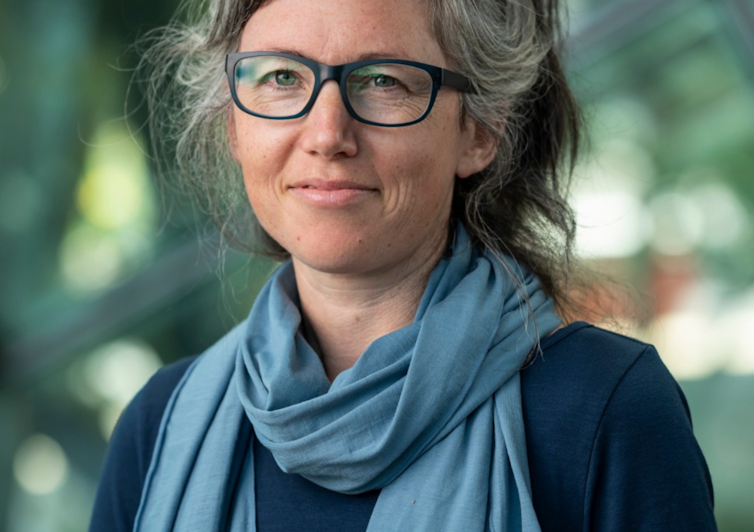
A lost woman looks for purpose in a Guatemalan lakeside town, in Rachel Morton’s gripping novel

Rachel Morton’s The Sun was Electric Light is a novel about figuring, becoming, belonging and grieving. We follow 30-something narrator Ruth as she relocates to the Guatemalan lakeside town Panajachel, struggling with the question of how to live and what it might mean to live with purpose.

Ruth has left New York and arrives at Lake Atitlán a loner-searcher. Quickly, though – in spite of herself, perhaps – Ruth befriends fellow traveller Emilie. Emilie is solid and capable, a caring companion and lover. They fall into an easy routine, but Emilie soon leaves to work in Pátzcuaro and Ruth stays at the lake, befriending Carmen and Dwain.

Review: The Sun was Electric Light – Rachel Morton (UQP)

Carmen and Dwain, Americans who have never lived in the United States, are gregarious and beautiful. They have both grown up in Guatemala, born of hippie parents. And while Ruth’s new friends are mysterious, they are struggling with their own issues around purpose and identity.

They’ve grown up by the lake – their parents could afford to buy houses there – but they aren’t fully Guatemalan. Caught between places, cultures and possible lives, Carmen and Dwain echo Ruth’s unease. Even their partying and frivolity are undercut with a sense of sombre reckoning, as though they are moving towards something irrevocable and dangerous.

But Ruth is drawn to them: in part, because Carmen and Dwain understand the power of the lake. It is the lake that has pulled Ruth back to Guatemala, as though it could represent an earlier, less careworn version of herself.

The novel’s first paragraph tells us, “The first time I went was ten years ago, when I still thought life would bring me things.” This gets at one of the fundamental tensions of the novel: does life bring us things, or are we responsible for manifesting those things ourselves?

Rachel Morton’s novel is about about figuring, becoming, belonging and grieving. UQP

The lake as ‘a powerful teacher’

Ruth discovers the lake is not a site for nostalgic fantasy, and it is not an anthropocentric reflection of self. Instead, it is a powerful entity in its own right, which guides her in figuring out how she wants to live her limited time on the planet. As she says roughly midway through the novel: “Something was happening to me but I didn’t know what, and it didn’t seem to be coming from me.”

Morton does a stunning job of writing about landscape. The lake is not passive – it is not a resource to be photographed, consumed or exploited. It is not something to fear in the gothic tradition, either. Instead, it is a powerful teacher: the catalyst for Ruth’s journey.

When finances become an issue, Ruth moves out of her hotel and into a modest house on the outskirts of town; she works babysitting three boys. Then, as her relationship with the lake deepens and things fray with the boys’ mother, she moves across the water to the town of Jaibalito to live in a one-room hut with no electricity, and to teach English at a small school.

It is telling that her two jobs are in providing education and care: throughout the novel, Ruth is learning how to care for herself. Despite these changes, Ruth keeps in touch with Emilie – a friend who models a very different path than Carmen and Dwain. Through this contrast, and Ruth’s internal narration, Morton poignantly describes the intricacies and intimacies of friendship.

Distance, longing and sadness

Morton’s narration is pulled back: Ruth appears to filter her thoughts carefully before imparting them to the reader. This reserve is intriguing; it also highlights the novel’s often lyric observations.

For example, Dwain is “good in the way that people are good when they have suffered a lot without knowing it”. Ruth is distanced from the people and events she recounts, so the narrated world often feels out of reach.

Frequently, I found myself wondering what other characters thought of Ruth and how their points of view might differ from hers. Morton does a great job of using their reactions to leave space for interpretation, but this narratorial distance means the longing and sadness of the text can be confronting.

Also, the novel explores what it means to be a tourist and the longing to belong. Because of that, it struck me that Ruth doesn’t often engage with the local Guatemalan and Indigenous residents at the lake. We see her strong relationships with the three boys she babysits. She describes Miguel, a local resident with connections who facilitates her job at the school. But there is a sense that Ruth is not interested in the people and communities that tend the lake. When describing her teaching position, she says: I made an effort not to get to know the children or to develop any special relationships. I loved them as one whole group, rather than individually. This, perhaps, represents her larger engagement with the people of the region. A book can’t be all things to all readers, but this insularity – perhaps linked with Ruth’s depression – stands out. Nonetheless, The Sun Was Electric Light was a gripping read. I devoured it on a long-haul flight: reading, sleeping, then waking up to read again. During my time in the air, I spent just over two years with Ruth as she wrestled with how to live, and what it might mean to live with purpose. By stripping back all of the busyness and distraction of life, Ruth comes to the lake – but also, she comes to herself. Authors: Shady Cosgrove, Associate Professor, Creative Writing, University of Wollongong

Read more https://theconversation.com/a-lost-woman-looks-for-purpose-in-a-guatemalan-lakeside-town-in-rachel-mortons-gripping-novel-257114

Business News

Inside the Icon: The BridgeMuseum Officially Opens at the Sydney Harbour Bridge

A bold new way to experience one of Australia’s most recognisable landmarks has arrived, with BridgeClimb Sydney officially opening the all-new BridgeMuseum.  Located inside the Sydney Harbour Brid...

Daily Bulletin - avatar Daily Bulletin

Is Your Brand Showing Up in AI Search? Most Melbourne Brands Aren't.

The New Front Door Nobody Told You About Something changed. Quietly. Without a press release. The way buyers find businesses in Australia has been rewired. Not replaced, rewired. Google isn't dead...

Daily Bulletin - avatar Daily Bulletin

How Australian Businesses Can Measure SEO ROI

SEO can feel vague when you are staring at a dashboard full of numbers that do not clearly connect to revenue. The key is to measure the right signals in the right order, then tie them back to outcome...

Daily Bulletin - avatar Daily Bulletin

How Commercial Roller Shutters Improve Site Security Without Slowing Operations

Security upgrades can be frustrating when they make everyday work harder. A door that takes too long to open, creates bottlenecks at shift change, or fails at the worst time can turn “better protectio...

Daily Bulletin - avatar Daily Bulletin

Why a Document Destruction Service Still Matters for Modern Businesses

Businesses generate large volumes of information every day, from staff records and contracts to invoices, reports and customer files. While attention often focuses on how documents are stored, the way...

Daily Bulletin - avatar Daily Bulletin

Bicycle Rack Safety and Space-Smart Storage

Bike storage problems usually show up as small annoyances first: tangled handlebars, scratched frames, and bikes that topple when you pull one out. Over time, those issues become safety risks, especia...

Daily Bulletin - avatar Daily Bulletin

How to Tell if a Childcare Centre Is a Good Fit for Your Child

Choosing childcare can feel like you’re making a huge decision with limited information. Tours are short, centres are often on their best behaviour, and your child might act differently in a new space...

Daily Bulletin - avatar Daily Bulletin

Car Import Timeline: What Usually Happens at Each Stage

Importing a car into Australia can feel confusing because multiple agencies and checkpoints are involved, and the timeline is shaped as much by paperwork quality as it is by shipping speed. The most u...

Daily Bulletin - avatar Daily Bulletin

Portable Toilet Hygiene Standards Explained: Clean vs Sanitised vs Disinfected

In portable toilet servicing, the words clean, sanitised, and disinfected often get used as if they mean the same thing. They don’t. And that difference matters because a unit can look tidy and still ...

Daily Bulletin - avatar Daily Bulletin

The Daily Magazine

What Actually Makes a Good Criminal Lawyer in Melbourne

Most people only think about this question once. That is usually too late. Most people charged wi...

Why Working With A Chatswood Tutor Can Improve Academic Performance

Academic expectations continue increasing for students across primary school, high school, and senio...

Is It Worth Getting Solar Panels in Melbourne?

The real question is not whether solar works in Melbourne. It works. The question is what it is co...

How A Diploma Of Project Management Builds Practical Skills For Modern Work Environments

Developing the ability to plan, execute, and deliver outcomes efficiently is a key requirement in to...

How to Choose the Right Football for Every Level

Choosing a football may seem straightforward, but the right option depends on who will be using it a...

What to Ask a Wedding Photographer Before You Book

Booking a wedding photographer can feel deceptively simple: you like the photos, you like the vibe...

Why Stress Relief For Dogs Is Essential For Emotional Balance And Long-Term Wellbeing

Managing emotional health is just as important as physical care when it comes to pets, which is why ...

Australia’s Best Walking Trails and the Shoes You Need to Tackle Them

Australia is not short on spectacular walks. You can follow ocean cliffs in Victoria, cross ancien...

Why Pre-Purchase Building Inspections Are Essential Before Buying a Home in Australia

source Have you ever walked through an open home and started picturing your furniture, family d...