

Don’t click without thinking – and 4 other ways to keep yourself safe from scams
- Written by: Meena Jha, Head Technology and Pedagogy Cluster CML-NET, CQUniversity Australia
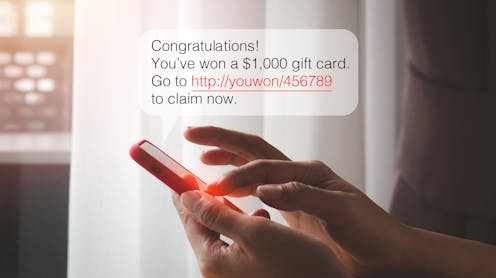
Think about how many things you have done online today. Paid a bill? Logged into your bank account? Used social media or spent time answering emails? Maybe you have used your phone to pay at a supermarket or train station.
We are all plugged in, and that’s not necessarily a bad thing. But with all these conveniences comes a growing risk many Australians are unprepared for: cyber crime.
According to the most recent cyber threat report by the Australian Cyber Security Centre, more than 87,000 reports of cybercrime were made in 2023-2024. That’s a report every six minutes. And that’s just what gets reported. Many people do not even realise they have been hacked or scammed until it’s too late.
Earlier this year, Scamwatch, run by the Australian Competition and Consumer Commission, revealed Australians lost nearly A$319 million to scams in 2024 alone. In a recent example, cyber criminals used stolen login details to hack several major superfunds in Australia and steal a collective A$500,000 of people’s retirement savings.
A big part of this worsening problem is poor “digital hygiene”. Here are five easy ways to improve yours.
First, what exactly is ‘digital hygiene’?
Just like brushing your teeth keeps cavities away, digital hygiene is all about keeping your online life clean, safe and protected from harm.
It is a simple idea: the better your habits when using technology, the harder it is for scammers or hackers to trick you or get access to your personal information.
It means being aware of what you are sharing, whom you are trusting, and how your devices are set up. Unfortunately, most of us are probably more hygienic in bathrooms than we are online.
How should you protect yourself?
Good news: you do not need to be a computer whizz to keep clean online. Here are five simple practical steps anyone can take:
1. Stop and think before clicking
Got an unexpected message from your bank asking you to verify your account? Or a text about a missed parcel delivery with a link? Scammers love urgency. It gets people to click before they think. Instead of rushing, pause.
Ask yourself: was I expecting this? Is the sender’s email or phone number legitimate? Do not click the link, go directly to the official website or app.
2. Use strong, unique passwords
Using your pet’s name or “123456” is not going to cut it. And if you reuse passwords across websites, a breach on one site means hackers can try the same password everywhere else. This is called a credential stuffing attack, and it is how the cyber attack on superannuation funds happened earlier this year.
The best move? Begin securing your online accounts by using a password manager and updating any reused passwords, prioritising your most sensitive accounts such as emails, banking and cloud storage first.
3. Turn on multi-factor authentication
Multi-factor authentication means you need something more than just a password to login, such as a code sent to your phone or an app such as Google Authenticator or Microsoft Authenticator.
It is a simple step that adds a powerful layer of protection. Even if someone guesses your password, they cannot log in without your second factor.
Read more: What is multi-factor authentication, and how should I be using it?
4. Update your apps and devices
Yes, those software updates are annoying, but they are important. Updates fix security holes that hackers can use. Make it automatic if you can, and do not ignore update prompts, especially for your operating systems such as Windows, iOS or Android. However, it is important to recognise that older devices often stop receiving updates because manufacturers stop supporting older models or are not developing updates for older devices as it can be costly.
Outdated software harbours known vulnerabilities that hackers actively can target. While keeping devices longer supports sustainability, there is a balance to strike. If your device no longer receives security updates, it may be safer to responsibly recycle it and invest in a newer supported model to maintain your digital safety.
5. Be mindful of what you share
Oversharing on social media makes you an easy target. Public posts that include your birthday, where you went to school, or your pet’s name can be used to guess security questions or build convincing fake messages. Think before you post – would a stranger need to know this?

What should I do if I have been hacked?
To check if your passwords have been leaked in a breach, you can use HaveIBeenPwned – a free tool trusted by security experts.
If you have been hacked, follow the tips provided by Australian Cyber Security Centre. For example, you should change all your passwords and passcodes and use software to scan for malware on your computer.
Need more help? Visit esafety.gov.au for practical guides, especially for parents, teachers and young people.
Digital hygiene is not a personal responsibility, it is a collective one. We are connected through emails, group chats, workplaces and social media. One weak link can put others at risk. Talk to your family and friends about the risk of scams and how to avoid them. The more we talk about this, the more normal and effective digital hygiene becomes.
Because just like washing your hands became second nature during the COVID-19 pandemic, keeping your online life clean should be a habit, not an afterthought.
Authors: Meena Jha, Head Technology and Pedagogy Cluster CML-NET, CQUniversity Australia


 Daily Bulletin


