

Read The Times Australia

Daily Bulletin

Farmers fear dingoes are eating their livestock – but predator poo tells an unexpected story

  • Written by: Rachel Mason, PhD candidate in Conservation Biology, Deakin University
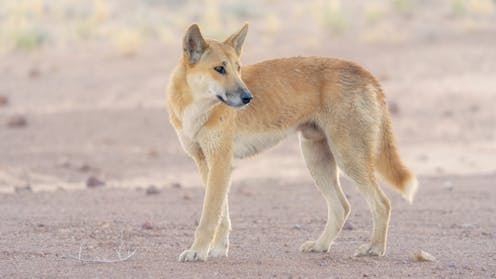
Farmers fear dingoes are eating their livestock – but predator poo tells an unexpected story

Killing carnivores to protect livestock, wildlife and people is an emotive and controversial issue that can cause community conflict. Difficult decisions about managing predators must be supported by strong scientific evidence.

In Australia, predators such as dingoes and foxes are often shot or poisoned with baits to prevent them from killing sheep and cattle. Feral cats and foxes are also killed to protect native wildlife.

But research elsewhere suggests public perceptions of how predators affect ecosystems and livestock are not always accurate.

Our recent study sought to shed light on these controversies. We examined the scat, or poo, left behind by dingoes, foxes and cats. We focused on the mallee region of Victoria and South Australia where there are calls to resume dingo culling to stop them killing livestock.

Sheep in a dry landscape eating in a line.
Culling carnivores to protect livestock is an emotive issue. Rural Aid

A contentious issue

Our study took place in the Big Desert-Wyperfeld-Ngarkat reserve complex in the semi-arid mallee region of Victoria and South Australia. This continuous ecosystem comprises about 10,000 km² of protected native mallee bushland, and is entirely surrounded by crop and livestock farming areas.

Fox-baiting is conducted along the boundaries of Victorian-managed reserve areas. Dingo baiting occurs in the South Australian-managed section of the park.

Since March 2024, the small dingo population has been protected in Victorian-managed areas due to their critically low numbers in the region.

Prior to the change, Victorian farmers and authorised trappers could control dingoes on private land and within public land up to 3km from farms. Farmers say they have lost livestock since dingoes were protected.

Mallee eucalyptus trees and healthy shrubs in the Big Desert-Wyperfeld-Ngarkat park complex.
Typical mallee vegetation in the Big Desert-Wyperfeld-Ngarkat park complex. Rachel Mason

What are predators eating in the mallee region?

We collected and analysed 136 dingo, 200 fox and 25 cat scats to determine what each predator in the area was eating and how their diets differed.

Livestock was not a major part of the diet of dingoes, foxes or cats. Some 7% of fox scats contained sheep or cattle remains. This was more than that of dingoes, at 2% of scats. No feral cat scats contained livestock remains.

The dingo diet was dominated by kangaroos, wallabies and emus, which comprised more than 70% of their diet volume.

Cats and foxes consumed more than 15 times the volume of small native mammals compared with dingoes, including threatened species such as fat-tailed dunnarts.

Diagram showing a breakdown of the frequency of occurrence of threatened and near-threatened species in the diet of dingoes, foxes and cats in this study.
Frequency of occurrence of threatened and near-threatened species in the diet of dingoes, foxes and cats in the Big Desert-Wyperfeld-Ngarkat park complex. R T Mason

Our data must be interpreted with caution. Scat analysis cannot differentiate between livestock killed by predators and those that are scavenged. It also can’t tell us about animals that a predator killed but did not eat.

In 2022–23, when we collected the scats, rainfall in the area was high and prey was abundant. So, while we found livestock were not likely to be a substantial part of these predators’ diets at the time of our research, this can change depending on environmental conditions.

For example, fire and extended drought may force predators to move further to find food and water. They may move from conservation areas to private land, where they could prey on livestock.

Coloured pie-chart figures showing a breakdown of the volume of prey categories in the diet of dingoes, foxes and cats in the Big Desert-Wyperfeld-Ngarkat  complex in the Victorian/South Australian Mallee region.
Volume of prey categories in the diet of dingoes, foxes and cats in the Big Desert-Wyperfeld-Ngarkat complex. Rachel Mason

A taste for certain prey

A predator’s poo doesn’t tell the full story of how it affects prey populations.

To understand this further, we used motion-sensing wildlife cameras to assess which prey were available in the ecosystem. We compared it to the frequency they occurred in predator’s diets. This allowed us to determine if dingoes, foxes or cats target specific prey.

We found foxes and cats both consumed small mammals proportionally more than we expected, given the prey’s availability in the study area. Cats consumed birds at a higher rate than expected, and dingoes consumed echidnas more than expected.

Further intensive monitoring work is needed to determine how these dietary preferences affect the populations of prey species.

Wildlife camera trap images of a red fox (left) and feral cat (right) from the Big Desert-Wyperfeld-Ngarkat park complex in the Victorian/South Australian Mallee region.
Red foxes and feral cats are common in the Big Desert-Wyperfeld-Ngarkat park complex and can have big impacts on native small mammal populations. Rachel Mason/Deakin University

Embracing the evidence

The findings build on a substantial previous research suggesting foxes and cats pose a significant threat to native mammals, birds, reptiles and other wildlife, including many threatened species. Our results suggest foxes may cause more harm to sheep than dingoes overall – a finding consistent with research elsewhere in Victoria.

Dingoes were the only predator species that regularly preyed on kangaroos and wallabies. These species are abundant in the region. They can also compete with livestock for grazing pastures, consume crops and degrade native vegetation.

Currently, dingoes are killed on, or fenced out of, large parts of Australia due to their perceived threat to livestock.

Lethal control of invasive species remains important to protect native wildlife and agriculture. But such decisions should be based on evidence, to avoid unforeseen and undesirable results.

For example, fox control can lead to increased feral cat numbers and harm to native prey. Fewer dingoes may mean more feral goats and kangaroos.

Non-lethal and effective alternatives exist to indiscriminately killing predators to protect livestock, such as protection dogs and donkeys. These measures are being embraced by farmers and graziers globally, often with high and sustained success.

In Australia, governments should better embrace and support evidence-based and effective approaches that allow farming, native carnivores and other wildlife to coexist.

Authors: Rachel Mason, PhD candidate in Conservation Biology, Deakin University

Read more https://theconversation.com/farmers-fear-dingoes-are-eating-their-livestock-but-predator-poo-tells-an-unexpected-story-254787

Business News

Designing Eco-Friendly Custom Water Bottles for Your Next Event

The Evolution of Sustainable Event Merchandise Event planning has undergone a massive transformation over the last decade. Gone are the days when organizers could hand out cheap, single use plastic...

Daily Bulletin - avatar Daily Bulletin

Why Choosing a Professional Florist Melbourne Makes Flower Delivery Impactful

Flowers have a great power to speak when humans cannot express their feelings with right words. Flowers are the best gifts when you are celebrating a birthday or welcoming a newborn child into your fa...

Daily Bulletin - avatar Daily Bulletin

The Business Case for Choosing Australian Fabricators Over Imported Alternatives

For a long time, you might have defaulted to overseas suppliers when sourcing fabricated metal components for a project. The unit price was lower on paper, and the maths seemed straightforward. That...

Daily Bulletin - avatar Daily Bulletin

Australian organisations are relying on business continuity plans built for a far more predictable world

Tariff escalations, supply chain fragility, geopolitical events, and the ongoing threat of cyber disruption have reshaped the risk environment facing Australian organisations. The problem is that ma...

Daily Bulletin - avatar Daily Bulletin

How to Rent a Car for Uber in Melbourne: What Every New Driver Needs to Know

Starting out as an Uber driver in Melbourne is not as complicated as it sounds but getting the vehicle right is where most new drivers get stuck. Uber has strict requirements around vehicle age, condi...

Daily Bulletin - avatar Daily Bulletin

When Should You Speak to a Lawyer About a Legal Issue?

Legal issues can begin with a simple question, then become harder to manage once formal steps are involved. Many people wait until a matter feels urgent before seeking guidance, even though earlier ...

Daily Bulletin - avatar Daily Bulletin

The strategic rise of Bali as Australia’s next essential healthcare support hub

As Australian healthcare providers grapple with unprecedented operational bottlenecks, a new nearshore model is quietly transforming patient care delivery. Forward-thinking organisations,  including...

Daily Bulletin - avatar Daily Bulletin

Cost Savings and Benefits of Using Used Pallets in Logistics

In today’s competitive logistics and supply chain industry, businesses are constantly looking for ways to reduce operational costs without compromising efficiency and reliability. One of the most prac...

Daily Bulletin - avatar Daily Bulletin

How Fulfilment Services in Australia Help Businesses Scale Efficiently

The growth of e-commerce and modern retail has transformed customer expectations. Consumers now expect fast shipping, accurate order processing, and seamless delivery experiences regardless of where...

Daily Bulletin - avatar Daily Bulletin

The Daily Magazine

Why Businesses Are Choosing Virtual Reception Services

In today’s fast-paced digital world, businesses are constantly evolving to meet the needs of their...

Why Concrete Pools Offer Endless Design Possibilities

Imagine stepping into your backyard and being greeted by a stunning pool that reflects your person...

How Legal Advice Can Help with Driving Offences

Driving is a part of everyday life for many people. It allows us the freedom to travel, commute, a...

How Experienced Lawyers Support Criminal Defence

Facing criminal charges can be one of the most daunting experiences in a person's life. The stakes...

How media and Digital Marketing agencies Help Brands Stand Out

In today’s hyper-connected world, standing out is more challenging than ever. Brands are competing...

How to Choose the Perfect Honeymoon Destination

Your wedding day is just the beginning of an incredible journey together. After saying "I do," it’...

Walking Shoes vs Running Shoes: Which Are Better for Daily Walking?

Running shoes have become the default athletic footwear for a lot of people who rarely run. That ...

What Happens to Your Rubbish After It Leaves the Kerb

Most of us don’t think much about rubbish once the bin lid closes. The truck arrives, the bins are e...

Thermoplastic vs. Paint: The True Long-Term Cost Comparison

Line marking looks like a simple line item on a school maintenance budget, until the true cost of ...