

5 years on from its first COVID lockdown, NZ faces hard economic choices – but rebuilding trust must come first
- Written by: Dennis Wesselbaum, Associate Professor, Department of Economics, University of Otago
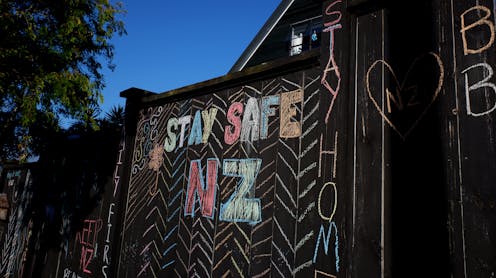
Five years after New Zealand’s first COVID-19 lockdown, it is clear there will be no going back to the pre-pandemic “normal”.
The pandemic amplified existing fractures and inequities in New Zealand and elsewhere. It also revealed new fissures in society.
The early effects of the pandemic were clear. There were lockdowns, economic downturns, disrupted education and public health challenges. But as the country moves further into the post-pandemic era, the true consequences of the government’s emergency measures have become more evident.
Work became flexible – for some
The shift to flexible work has improved work-life balance and productivity for some.
But its impact has been uneven. Many remote workers, especially parents, have reported worsened mental health due to social isolation and blurred work-life boundaries.
Working from home can also lead to overwork and stress. The lack of in-person environments has hindered on-the-job training, particularly for younger employees. Managers have also struggled with monitoring performance and building team culture.
Shopping shifted online
The pandemic shifted consumer behaviour towards increased online spending. Small and medium-sized businesses rapidly adapted by launching online platforms or boosting their digital presence.
By 2021, there was a 52% growth in online spending compared to 2019.
This digital shift helped many businesses survive during lockdowns. But it also created a competitive landscape that favoured those who could invest in a strong online presence.
Urban centres have continued to see a decline in foot traffic, affecting traditional stores. This may lead to a permanent change in city layouts.
Hard trade-offs after big spending
The effect of COVID-19 related monetary and fiscal policy responses continue to have a lasting impact on the economy.
To reduce the effects of the immediate downturn caused by the pandemic response, the government introduced several stimulus packages, including wage subsidies and NZ$3 billion for “shovel ready” infrastructure projects.
These measures were essential in maintaining economic stability, given the pandemic and pandemic-related policies. But this persistent stimulus injected cash into a country already struggling with efficiency and productivity.
This move contributed to rising inflation. Higher interest rates followed, raising borrowing costs and leading to a recession and stagflation (a mix of low growth and rising inflation).
What made things worse was that this fiscal stimulus was debt-financed, raising questions about whether it was fiscally sustainable.
In the post-pandemic period, policymakers have faced the delicate task of balancing economic recovery with the need to reduce debt levels over time. This requires careful adjustments, either via tax increases or reductions in spending.
The government has actively sought to reduce spending, especially on low-value programs (such as cutting contractor and consultant spending) and non-essential spending (for example, cuts to public sector back-office functions). It’s also targeted “fiscal adjustments”, such as delaying or phasing some infrastructure projects or adjusting the timing of capital expenditure. Overall, their policy-mix appears to be right for the current economic environment.
In the long-run, the high debt levels may limit the government’s ability to respond to future crises or invest in other critical areas such as infrastructure, education and healthcare.
The need to manage inflation and debt simultaneously has necessitated difficult trade-offs. This could potentially influence future government priorities and policy decisions.
Falling trust in institutions
The pandemic highlighted the importance of trust in government, science and media. Early on, New Zealanders supported the government’s measures, benefiting from high levels of trust in politicians, scientists and journalists.
However, with prolonged lockdowns in cities such as Auckland and the imposition of vaccine mandates, cracks began to appear in this trust. This contributed to resistance against some policies, even non-COVID related ones, and an erosion of trust.
Nowhere was this more evident than the 2022 anti-COVID-19 vaccine mandate protests that resulted in the occupation of parliament grounds.
This erosion of trust has far-reaching consequences. For example, we have already seen a drop in childhood immunisation rates with concerns about measles and other preventable diseases resurfacing.
This distrust can have long-term implications for future policy responses across various sectors, potentially affecting areas such as public health, economic growth, trade and social cohesion.
Risks of entrenching inequality
The long-term impact of COVID-19 policies on inequalities in education, unemployment and health, to name a few, is likely to persist well beyond the immediate recovery.
In education, the shift to online learning during the lockdowns exposed deep inequalities in access to technology, digital literacy and home learning environments, particularly for lower-income students. Over time, these disparities could affect future career opportunities and limit social mobility for marginalised groups.
The shift towards more digital and remote work models may further disadvantage those that don’t have the skills or resources to participate in these new economies, entrenching existing inequality.
Given that socioeconomic status is an important determinate of health outcomes, the former effects could result in increased physical and mental health inequalities in the long-run.
The long tail of the pandemic
In essence, the pandemic has amplified existing vulnerabilities. But it has also revealed emerging fissures between those who have the capacity to adapt to the new digital world, and those that don’t.
It is not enough for New Zealand to simply move on from the pandemic-era policies. Policymakers need to address the consequences of both COVID-19 and the decisions made in responses to the health emergency.
At an economic level, the government needs to embrace policies that will increase the productivity and efficiency of the economy.
But five years on from the pandemic, it is clear that rebuilding trust in institutions is vital. Clear communication, transparency and true expert involvement will help restore public confidence – helping the country to truly move on from the global pandemic.
Authors: Dennis Wesselbaum, Associate Professor, Department of Economics, University of Otago


 Daily Bulletin


