

Tonnes of microplastics infiltrate Australia’s agricultural soils each year, study shows
- Written by: Shima Ziajahromi, Advance Queensland Research Fellow, Australian Rivers Institute, Griffith University
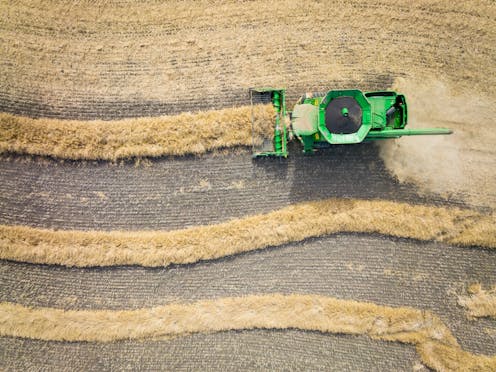
Compost applied to agricultural soils in Australia each year contains tonnes of microplastics, our research has revealed. These microplastics can harm soil and plant health and eventually enter food crops, potentially posing a risk to humans.
In Australia, more than 51% of organic waste – including garden and food waste from households – is recovered and processed. Much of it is turned into compost.
However, every kilogram of compost we sampled in our study contained thousands of tiny pieces of plastic, invisible to the naked eye. They come from a range of potential sources, including compostable waste bags used by households to store food scraps.
Without swift and effective action, composting may become an environmental crisis, rather than a solution.
The problem with microplastics in compost
As Australia’s landfill sites become exhausted, finding new uses for organics waste has become crucial.
Composting is widely promoted as a solution to managing organic waste. It is comprised of decomposed plant and food waste and other organic materials, which is applied to farms and gardens to enrich the soil and improve plant growth.
Many local councils provide residents with kitchen caddies and “compostable” plastic bags to collect food waste. These bags can also be bought from supermarkets.
These bags usually contain some plant-based substances. However, some contain fossil-fuel based material. Others may contain “bioplastics” such as that made from corn starch or sugarcane, which require very specific conditions to break down into their natural materials.
Research shows some compostable bags are a source of microplastics – plastic particles smaller than 5 millimetres.
Once applied to soil, microplastics can accumulate over time, posing risks to soil health. For example, research shows microplastics can alter soil structure, limit plant growth, hinder the cycling of nutrients and disrupt microbial communities. This in turn may affect farm productivity.
Microplastics can also further degrade into “nanoplastics” small enough to be absorbed by plant roots. From there they can enter stems, leaves, and fruits of agricultural products consumed by humans, posing potential health risks.
Internationally, evidence is growing that compost can introduce significant amounts of microplastics into soil. However, little is known about whether organics applied to farm soils in Australia contain microplastics. This study sought to shed light on this.
What we found
My colleagues and I investigated microplastics in processed organic waste. We took samples from 11 composting facilities in Victoria.
We found every kilogram of compost contains between 1,500 and 16,000 microplastic particles. In weight, this equates to between 7 and 760 milligrams of microplastics per kilogram of compost.
In Australia, about 26% of compost produced at organic waste processing facilities is used in agriculture. So, we estimate that between 2.7 and 206 tonnes of microplastics is being transported to Australian agricultural land from compost each year.
Most microplastic particles we found were “microfibres” and “microfragments”. Microfibres usually derive from synthetic fabrics. Microfragments come from larger plastics, such as packaging material.
We then analysed bin bags marketed as compostable or biodegradable, and found their physical and chemical characteristics were very similar to some microfragments we found in organic waste.
The microfragments may be coming from other sources as well, such as plastic containers and bags, and plant string scooped into the bin when people collect garden waste.
Where to now?
This study provides the first evidence of microplastics in processed organic waste in Australia. It underscores the need to better understand what happens to microplastics during the composting processes, and how microplastics affect soil health.
Policies such as the National Plastic Plan and the National Waste Policy Action Plan promote composting as a key strategy for reducing landfill waste and supporting a circular economy.
But these policies do not adequately address the risks of contaminants such as microplastics. In fact, there are no national standards in Australia regulating microplastics in processed organics.
The absence of clear guidelines leaves composting facilities, waste processors, and end users vulnerable to unintended plastic pollution.
To address this serious environmental issue, urgent action is needed.
Authorities should take steps to limit the flow of microplastics into compost, including developing guidelines for composting facilities, waste management companies and households.
Monitoring should also be used to track microplastic levels in processed organics, identify their sources and assess the impact on soils and food safety.
Authors: Shima Ziajahromi, Advance Queensland Research Fellow, Australian Rivers Institute, Griffith University


 Daily Bulletin


