

Business Blockbuster - Helpng business to be more visible on Google

Daily Bulletin

Devastating landslides have hit Milford Sound in the past – if it happened today, the impact would dwarf Whakaari/White Island

  • Written by: Tim Davies, Adjunct Professor of Disaster Risk and Resilience, University of Canterbury
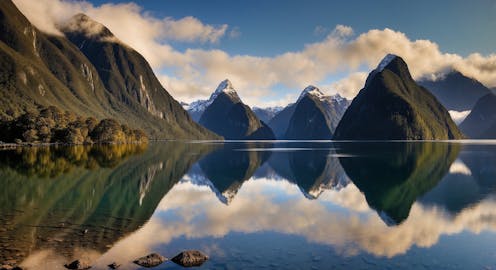
Devastating landslides have hit Milford Sound in the past – if it happened today, the impact would dwarf Whakaari/White Island

The 2019 volcanic explosion on Whakaari/White Island, which killed 22 people touring the crater and severely injured 25, is one of New Zealand’s worst disasters.

But an even more devastating catastrophe could happen at one of New Zealand’s most iconic tourism destinations, Piopiotahi/Milford Sound. And it is unclear how this disaster can be prevented.

The outcome of the Whakaari tragedy was that tourism on the island ceased immediately. The risk of tourism-related deaths there was considered too high to be acceptable to New Zealand society.

This is also clear from the inquiry and prosecutions that followed the tragedy and the civil law suits initiated on behalf of those killed or injured.

Our new analysis backs this up. We estimate the risk to life on Whakaari in 2019 was more than a hundred times greater than international risk acceptability criteria used to calculate tolerable risk levels from natural hazards.

Our research also estimates the statistical risk of tourism-related fatalities at Milford Sound to be about 50 times higher than at Whakaari.

This is because an earthquake-generated landslide can fall into the sound and turn it into a violent, long-lasting maelstrom of waves up to 17 metres high. This would devastate the shoreline and any vessels present, including cruise ships.

Our hazard estimate is based on the 16 landslide deposits of more than a million cubic metres that lie on the bed of Milford Sound. All of these must have fallen since the sound became ice-free about 17,000 years ago.

This animation shows how a landslide triggers a maelstrom of tsunami waves in a Norwegian fiord. Milford Sound would be similar.

The number of visitors (more than a million per year) and employees exposed to this hazard means that, on average, such an event could kill about 750 people every 1,000 years (based on visitor numbers at 2019 levels). Obviously, this would be catastrophic.

The consequences of this catastrophe would be much more severe and far-reaching than the Whakaari tragedy because of the large number of likely fatalities. Also, any cruise ships, with thousands on board, would be severely affected, perhaps even sunk.

Currently New Zealand has no specific regulations governing the degree of risk to which tourists may legitimately be exposed. But there is widespread international agreement that the maximum level of societally acceptable risk to life from natural hazards at a site is about one death per 10,000 years.

Passengers gatehr on deck of a cruise ship in Milford Sound
About a million people visit Milford Sound each year. Shutterstock/lembi

The occurrence of an earthquake-triggered landslide tsunami at Milford Sound cannot be predicted in advance. Nor can preventive measures ameliorate it.

The only warning would be the earthquake itself, giving people, at most, about seven minutes before the tsunami waves arrived. Because the wave run-up onto the shore would be about 100 metres high, escape would be impossible.

The only way to mitigate this catastrophe is to reduce the number of people exposed to the risk to about 1,000 per year, which in effect means closing Milford Sound to mass tourism.

This would, however, be an extremely contentious measure because of the international status of Milford Sound as part of a UNESCO world heritage area under New Zealand government auspices, and because the catastrophe might not occur for many centuries.

Stopping tourism has been the chosen solution at Whakaari. But the much smaller scale of the tourist operations there, and the correspondingly lower national impact of closure, contrast starkly with the Milford situation.

The alternative strategy at Milford would be for New Zealand society to collectively decide to accept the risk that, at any time in the future, hundreds of tourists could be killed. Beyond that, there would be the corresponding impacts on tourism and New Zealand’s reputation.

However, if we know a landslide-triggered tsunami at Milford Sound has the potential to kill hundreds of people and cause severe damage, the risk to life ought to be grossly unacceptable and only manageable by abandoning mass tourism at the site. These are the choices we face.

Authors: Tim Davies, Adjunct Professor of Disaster Risk and Resilience, University of Canterbury

Read more https://theconversation.com/devastating-landslides-have-hit-milford-sound-in-the-past-if-it-happened-today-the-impact-would-dwarf-whakaari-white-island-251700

Business News

The Growing Demand for Durable Plastic Packaging Supplies Across Australia

Why Do Australian Businesses Need Reliable Plastic Packaging Supplies? Businesses need packaging that can withstand everyday handling, storage, and distribution without creating avoidable delays. Pla...

Daily Bulletin - avatar Daily Bulletin

Office Cleaning Melbourne: Choosing the Right Scope for Your Office

A well-planned office cleaning Melbourne arrangement starts with a clear understanding of the premises and the people who use it. An office may include private work areas, shared desks, reception, mee...

Daily Bulletin - avatar Daily Bulletin

How Businesses Can Prepare for Unexpected Power Outages

Power failures can occur quickly. The supply may be interrupted by bad weather, issues with the electricity network, damaged equipment or local construction work. This can be just a hassle for a fam...

Daily Bulletin - avatar Daily Bulletin

How Chatswood Tutoring Can Fit Into a Student’s Weekly Routine

Create a Predictable Weekly Structure A consistent weekly routine can make study easier to manage when students are balancing several subjects. Chatswood tutoring can provide a fixed learning point a...

Daily Bulletin - avatar Daily Bulletin

The Rise of Digital Marketplaces in the Australian Trade Sector

For decades, the Australian trade and construction sector operated almost entirely on word-of-mouth recommendations and local community networks. Small business owners typically relied on local newspa...

Daily Bulletin - avatar Daily Bulletin

How Immigration Lawyers Can Help

Introduction Visa decisions can shape employment, family life, study plans, travel, and future residence. A small omission can lead to delay, added expense, or refusal. Immigration lawyers assess l...

Daily Bulletin - avatar Daily Bulletin

How Industrial Drying Equipment Supports Efficient Processing

Many industrial processes require moisture to be removed from compressed air, products or process materials before they move to the next stage. Excess moisture can affect equipment performance, produc...

Daily Bulletin - avatar Daily Bulletin

Practical Ways a Whiteboard Can Improve Workplace Communication

Effective communication helps teams stay organised, share ideas and keep track of important information. While digital tools are now common in many workplaces, a whiteboard continues to provide a simp...

Daily Bulletin - avatar Daily Bulletin

Designing Eco-Friendly Custom Water Bottles for Your Next Event

The Evolution of Sustainable Event Merchandise Event planning has undergone a massive transformation over the last decade. Gone are the days when organizers could hand out cheap, single use plastic...

Daily Bulletin - avatar Daily Bulletin

The Daily Magazine

Independent Living Vs. Aged Care Vs. Retirement Village — Which Is Right For Your Parents?

The conversation often begins with a small observation rather than a crisis. A garden that has becom...

How To Transport Vehicles Across Borders: USA To Australia Imports & New Zealand Shipping

Shipping a classic car, a modern caravan, or a luxury yacht across international borders requires me...

Why Garage Cabinets Get Used When Power, Light, and Drawers Sit Within Reach

A bench earns its place by what is within arm's reach In plenty of Australian homes the garage is...

Work Boots vs Safety Shoes: Which Footwear Is Right for Your Workplace?

Not every job calls for a heavy pair of boots. Walk through a modern warehouse, factory floor or dis...

Master Bedroom Wall Decor Guide: Sizing, Layouts and Styling Ideas for Every Space

The main bedroom is often the last room in the house to get any attention. The living room gets the ...

What to Consider Before Installing a Built-In Wardrobe

Living in a modest home teaches you a lot. You learn how to keep a small kitchen tidy, where to hi...

Top 5 Mortgage Brokers in Sydney: How to Choose the Right One in 2027

Finding a mortgage broker in Sydney is not particularly difficult. Finding one who understands your ...

How Much Life Does Your Roof Have Left? Recognizing When Replacement Becomes Necessary

A roof can age quietly for years. From the street, everything may look reassuringly ordinary, even w...

How Australian Drivers Can Make Their Cars Harder to Steal

Most people don't think much about car theft until it happens to them, or to someone they know. Th...