

The longer the race, the closer it gets: women are closing in on men when it comes to ultra-endurance events
- Written by: Caitlin Fox-Harding, Lecturer/Researcher, Edith Cowan University
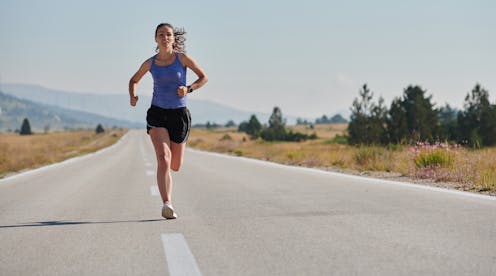
Men are dominant at most athletic events but ultra-endurance sports (exercising for six hours or more) represent a unique domain where the performance gap between men and women is narrowing significantly.
In traditional endurance events like marathons, men consistently outperform women by about 10%.
However, in ultra-distance competitions this disparity can be as small as 4%.
In some cases, women have even outpaced men.
What explains this shift? The answer lies in a combination of physiology, metabolism and strategy.
Fatigue resistance: an advantage for women
Women’s muscle composition is optimised for endurance. They have a higher proportion of type I (slow-twitch) muscle fibres, which are more efficient and resistant to fatigue during prolonged activity compared to type II (fast-twitch) fibres.
This gives women an edge in maintaining muscle function during prolonged activities, reducing the risk of muscle failure as events progress.
Women can also experience less neuromuscular fatigue and accumulate fewer anaerobic by-products (lactate and hydrogen ions) during sustained effort. While lactate itself doesn’t cause muscle fatigue, the accumulation of hydrogen ions can contribute to the sensation of fatigue.
Even womens’ respiratory muscles like the diaphragm experience less fatigue than men.
Men still have an edge in shorter, more intense events due to their greater muscle mass and higher aerobic capacity – factors that contribute to better performances in marathons and shorter distances.
Nevertheless, the metabolic advantages women display in ultra-endurance sports are narrowing this gap as events lengthen.
A metabolic edge
Ultra-endurance events rely heavily on oxidative metabolism, which uses both carbohydrates and fats as fuel.
Women are more efficient in this regard, exhibiting up to 56% higher fat oxidation rates than men.
Estrogen, a predominant hormone in women, enhances fat metabolism and promotes glycogen conservation, which refers to the body’s ability to save or preserve glycogen (a stored form of sugar in muscles and the liver) for use during physical activity.
This is important because glycogen is the body’s preferred fuel source for exercise. By conserving it, the body can use fat as an alternative energy source, allowing glycogen to last longer and helping improve endurance.
During ultra-endurance events, these benefits become increasingly important as the body shifts from carbohydrate-based energy to fat utilisation.
Estrogen also helps reduce inflammation and muscle damage, allowing women to recover more quickly during prolonged exertion.
While men generally benefit from higher levels of testosterone, which enhances muscle mass and strength, these attributes are less crucial in ultra-endurance events compared to anaerobic or power-based sports.
In long-duration races, women’s hormonal profile may better support sustained energy use and resilience, allowing them to compete more closely with men.
Despite these advantages, the hormonal fluctuations women experience, particularly during menstrual cycles or hormonal shifts related to menopause, can present additional challenges in endurance events.
Managing these factors effectively will be crucial as women continue to push the boundaries in ultra-endurance sports.
Body composition and performance
Women’s higher fat mass, often viewed as a disadvantage in traditional endurance sports, may offer benefits in certain ultra-endurance events like swimming. This is because more body fat can enhance thermoregulation by conserving heat in cold water, enabling women to maintain performance during prolonged exposure to challenging conditions.
Increased buoyancy, reduced drag and smaller body sizes and shorter lower limbs are also advantageous for women. This can allow for smoother and more energy-efficient movement through the water.
Psychological resilience
Ultra-endurance events test not only physical stamina but also mental toughness. In this area, women often shine.
Research in sports psychology highlights women’s superior ability to modulate pain sensitivity, maintain focus, and stay motivated during lengthy and gruelling competitions.
Emotional resilience, a trait linked to women’s coping mechanisms, plays a crucial role in overcoming the psychological challenges in ultra-endurance sports.
Anecdotal evidence and race outcomes demonstrate women’s ability to remain mentally composed, even under extreme fatigue, which allows them to push through the later stages of competition.
Although men still hold records in many ultra-endurance events, women’s psychological strength may be helping to close the gap.
Smarter pacing and decision-making
Pacing is crucial in ultra-endurance sports. Women often excel in this area, too.
Studies show women adopt more conservative and consistent pacing strategies compared to men, who are more likely to start strong but risk burnout as the race progresses.
This difference may be partly physiological but also psychological.
Testosterone, linked to risk-taking behaviour, may influence men to adopt overly aggressive strategies. In contrast, women’s more cautious and consistent pacing minimises energy wastage and optimises long-term performance.
Nonetheless, men still tend to achieve faster overall times in shorter endurance events, thanks to their higher peak speed and power.
In ultra-endurance though, where pacing strategy often influences outcomes, women continue to close the gap as they refine their approaches and gain more competitive opportunities.
The road ahead
While men remain the top performers in ultra-endurance events, the gap between genders is much smaller compared to marathons and shorter racing distances.
Women’s ability to metabolise fat efficiently, their hormonal advantages, strong psychological resilience and effective pacing strategies are all factors driving this progress.
However, continued advancements are necessary to fully level the playing field. These include:
- improved training regimens
- targeted research on female athletes
- increased participation opportunities.
Addressing challenges such as hormonal fluctuations and societal barriers (such as gender stereotypes and media representation) will also be crucial in empowering women to compete at the highest levels.
Ultra-endurance sports are unique in their ability to challenge traditional notions of gendered athletic performance.
While men still hold the edge, women’s rapid progress suggests a future where they may outperform men in extreme endurance events.
For now, they are proving that the longer the race, the closer the competition.
Authors: Caitlin Fox-Harding, Lecturer/Researcher, Edith Cowan University


 Daily Bulletin


