

Menstrual cups are safe and sustainable – but they can be tricky for first-time users, our new study shows
- Written by: Julie Hennegan, Senior Research Fellow; Co-Head, Global Adolescent Health Working Group, Burnet Institute
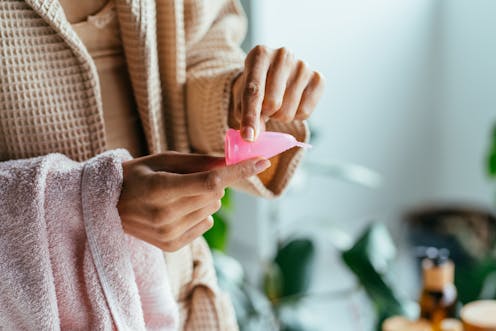
Many young women and other people who menstruate are turning to menstrual cups to manage their periods.
In 2021, my colleagues and I surveyed 15- to 29-year-olds in Victoria and found 17% had used a menstrual cup during their last period. A study in Spain published in 2022 found 47% of 18- to 25-year-olds had used a menstrual cup in the past year.
Menstrual cups are small, flexible cups that are inserted into the vagina to catch menstrual blood. Most are made of medical-grade silicone. They can be emptied, rinsed and reused, and sterilised using boiling water or a microwave steriliser.
A 2019 review of the research found menstrual cups are safe and effective. They also reduce environmental waste and are cheaper over time compared to single-use products such as pads and tampons.
However, our recent study found young people often face difficulties and discomfort that can discourage them from continuing to use menstrual cups. This highlights the need for better education and support.
We wanted to know what young people thought of menstrual cups
My colleagues and I surveyed 530 young people living in Australia between the ages of 15 and 24 who had ever tried using a menstrual cup.
To find participants we used the menstrual cycle tracking app Clue. Clue users received a pop-up message when they opened the app inviting them to join the study.
Using Clue meant we could reach a large group of young people. It also avoided the risk of our survey being shared to networks online that might be more biased, such as groups advocating for the use of cups.
At the same time, we relied on volunteers. We know more of our participants were from cities and wealthier areas than average. And it’s possible those who had more negative or positive experiences were motivated to complete the survey.
Pain, leaks and cups getting stuck
Lots of young people had difficulties with menstrual cups, particularly the first time they used them. During the first period participants used a menstrual cup:
only 10% successfully inserted their cup on the first try
more than half (54%) reported the cup leaked
one in four (25%) reported pain or discomfort when the cup was in place
45% could not get the menstrual cup out on their first attempt, with 17% reporting they needed help to remove it
12 young people (2%) reported their IUD was displaced (IUDs are small contraceptive devices inserted into the uterus).
Participants described these difficulties as distressing. One said:
I kept being told the cup was a one size fits all and I really hurt myself trying to fit it in all the time and feeling anxiety that I was different somehow.
Almost one-third (29%) of young people had stopped using a cup by the time of the survey. Of this group, 40% stopped after trying the cup for just one menstrual period.
A learning curve
Experiences got better for those who kept using a menstrual cup. By the time they had used a cup for more than six cycles, 40% of young people reported no issues.
Of participants who kept using a cup, 48% felt confident after one to three cycles, and another 21% after four to six cycles. As one explained:
The first time trying to pull it out was scary because the grip is very different to a tampon. Feel like it is stuck and you won’t ever get it out […] all my friends have had the same first scary experience but then afterwards it’s fine!
Some participants switched to a different menstrual cup and found this helpful – 75% of those who switched reported it improved their experience.
Our findings are consistent with past research which has reported menstrual cups have a learning curve and users become more comfortable using them over time.
Education is important
We found many young people didn’t know enough about how to choose or use a menstrual cup.
Just 19% of young people strongly agreed when we asked whether they had enough information to make an informed choice about which menstrual cup to buy. Less than half (44%) knew different menstrual cups had different characteristics (such as different sizes, firmness, and that different ones are designed for different cervix heights).
We need better information on how young people can find the right cup fit more easily. Online resources such as the website “Put A Cup In It” aim to provide comparisons across cups to inform users.
More broadly, young people need more information about reusable menstrual products such as menstrual cups.
Providing realistic information about the learning curve and potential discomforts when starting out can help young people feel prepared and make informed product choices.
Better information could also help governments and other organisations that are considering providing free or subsidised menstrual cups as part of initiatives to make menstrual products more affordable.
Comprehensive menstrual health education should start in our schools, empowering young people with the knowledge to make informed choices about their bodies.
Authors: Julie Hennegan, Senior Research Fellow; Co-Head, Global Adolescent Health Working Group, Burnet Institute


 Daily Bulletin


